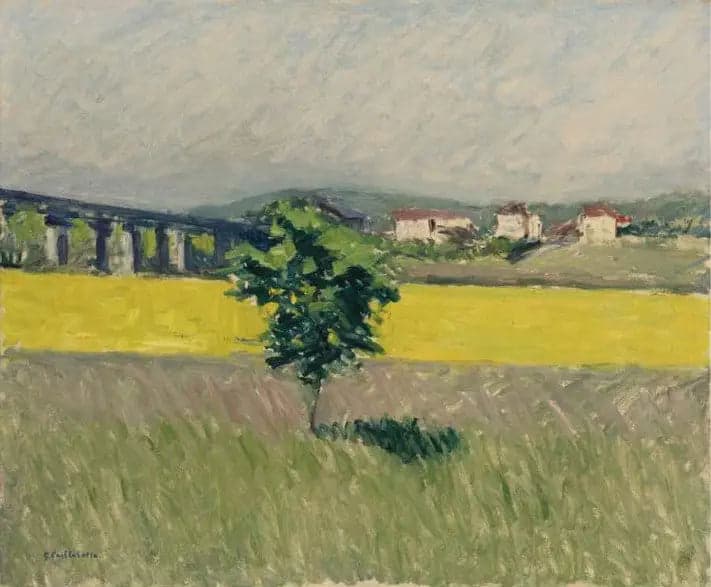
Prairie at the Argenteuil Bridge
- Original dimensions
- 65.4 x 54.3 cm
- Museum
- Not specified
- Year
- 1882
Scene depicted
The composition of this painting reveals a bucolic scene where nature and humanity delicately intertwine. With a bridge in the background, the characters engage in leisure activities, while a soft light caresses the wild grasses and the reflections of the water. The painting evokes a feeling of peace, a simplicity rediscovered in the heart of a changing world.
Historical context
Created in 1882, this painting emanates from Argenteuil, a charming town located on the banks of the Seine, emblematic of the Impressionist movement. Gustave Caillebotte , an avant-garde painter, fits into this era where art broke free from academic conventions, capturing the immediacy of modern life. To this day, the painting remains in a private collection, a precious work, of significant size 65.4 x 54.3 cm that reflects the peak of this artistic movement.
Place in the artist's career
Positioned in the heart of Caillebotte's career, this painting represents an essential phase, marked by an innovative style. Compared to “The Floor Scrapers” and “The Boulevard de la Madeleine,” it illustrates a technical and emotional evolution, oscillating between a realistic approach and a free expression of the imagination.
Anecdote
“Nature is a painting vibrant with emotions, you just have to open your eyes,” said Caillebotte. It was on the edges of a spring morning that the inspiration for this masterpiece emerged, a stroll along the river, where subtly he captured the dancing light and the gentle murmur of the water. This painting is a reflection of this vital momentum, a tribute to the beauty of fleeting moments.