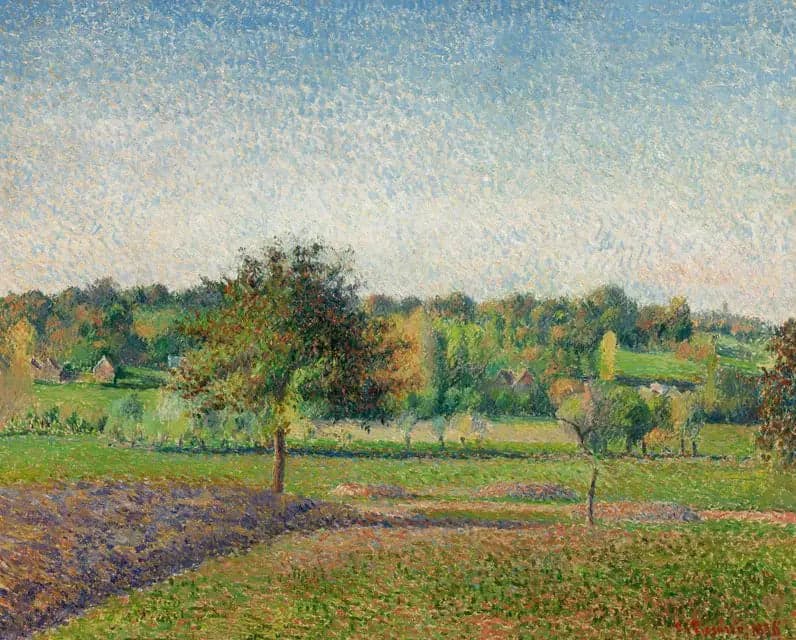
Prairie at Éragny
- Original dimensions
- 73 x 59.5 cm
- Museum
- South Australian Art Gallery
- Year
- 1886
Scene depicted
"Prairie à Éragny" reveals a pastoral scene, where a lush meadow with vibrant colors can be seen. Peasants go about their daily tasks, harmonizing work and the beauty of the natural world. The play of light, contrasting with the shadows of the trees, testifies to Pissarro's relentless pursuit of the sensory perception of the landscape. An atmosphere of calm reigns, inviting the viewer to immerse themselves in this living nature.
Historical context
Created in 1886, the painting "Prairie à Éragny" is set in the heart of France, more precisely in the region of Éragny-sur-Oise. This canvas is emblematic of the Impressionist movement, flourishing at the end of the 19th century. Pissarro, a leading figure of this movement, captured the attention of critics and art lovers with his unique style. Currently, this painting rests in the South Australian Art Gallery, carefully preserved and respected for its historical and artistic value.
Place in the artist's career
This painting is situated in a period of maturity for Camille Pissarro . After promising beginnings, Pissarro evolved towards a sharper technique, as evidenced by his earlier works such as "Boulevard Montmartre, Spring" and "The Gardener," which showcased his ability to capture the essence of everyday life. "Prairie à Éragny" stands out for its harmony of color and subtle composition, marking the peak of his creativity.
Anecdote
“Nature is my greatest master, it teaches endlessly.” This phrase from Pissarro resonates throughout his work, particularly with the masterpiece "Prairie à Éragny," created one spring morning. While contemplating the landscape, bathed in a soft golden light, he immortalized this harmony between man and nature, a communion whose spirit continues to shine through in every brushstroke of this painting .