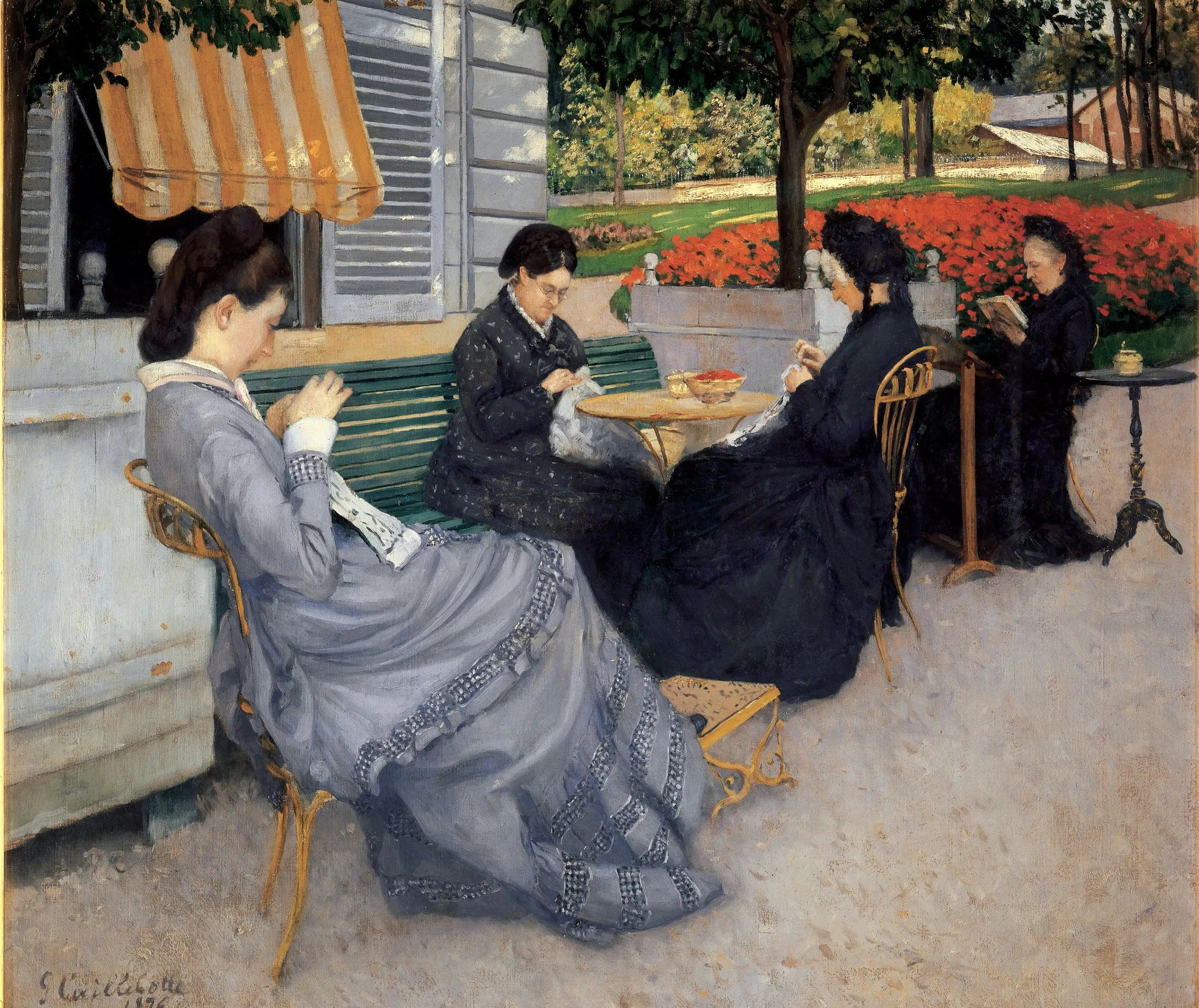
Portraits in the Countryside
- Original dimensions
- 111 x 95 cm
- Museum
- musée Baron-Gérard
- Year
- 1876
Scene depicted
The painting “Portraits à la campagne” transports us to a bucolic scene, where the simplicity of rural life meets art. The figures stand in a characteristic posture, blending intimacy and distance, reflecting a drive towards nature. Every detail, every touch of color invites us to feel the breath of the countryside, resonating with memories of a bygone era.
Historical context
Created in 1876, this painting emerges in the heart of Paris, at a time when the impressionist movement is taking shape with strength. Gustave Caillebotte , a dynamic representative of this movement, is situated in a rich artistic context, where capturing light and everyday life becomes an essential quest. The canvas, currently exhibited at the musée Baron-Gérard, bears witness to the creative energy of this vibrant period.
Place in the artist's career
Situated at the crossroads of youth and artistic maturity, “Portraits à la campagne” stands as a significant milestone in Caillebotte's career. This painting, comparable to “Les Raboteurs de parquet” and “L’assez de la mode,” illustrates his technical and emotional evolution, marked by a passionate exploration of light and perspective.
Anecdote
“Nature inspires me, every promise of light at dawn is a canvas to capture.” Thus recalls Caillebotte his morning strolls, amidst a flourishing spring. This moment, delicate and fragile, infuses an evocative strength into this pictorial work, making the spirit of the painting palpable.
Major exhibitions
third exhibition impressionist