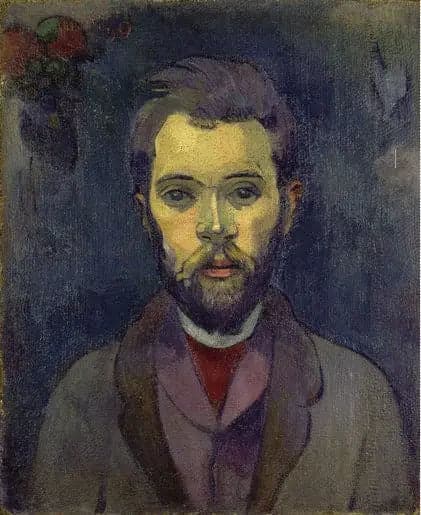
Portrait of William Molard
- Original dimensions
- 38 x 46 cm
- Museum
- Orsay Museum
- Year
- 1893
Scene depicted
This painting, which tenderly and deeply represents William Molard, a friend of the artist, resonates as an ode to friendship and contemplation. The composition highlights the unique personality of the subject, while using colors and shadows that invite reflection, a true reflection of the soul of the time.
Historical context
Created in 1893, this iconic painting is the result of an artistic movement that profoundly marked the pictorial scene at the end of the 19th century: post-impressionism . The canvas, imbued with Gauguin's Breton inspirations, evokes his immersion in a quest for vibrant colors and more symbolic forms. Currently, this masterpiece is exhibited at the Orsay Museum in Paris, testifying to the invaluable cultural heritage of the City of Light.
Place in the artist's career
The Portrait of William Molard fits into a key period of Gauguin's work, marked by a search for expressiveness and color. Alongside the famous canvas “Vision after the Sermon” and the portraits of Tahiti, this work testifies to the artist's evolution towards bolder themes and techniques.
Anecdote
“The spirit of art is found in every gaze, every breath of a moment.” This could be a quote from Gauguin, inspired by a fresh spring morning in Paris, where a simple face crossed on his path became the soul of the portrait . The magic of this moment was translated onto the canvas , capturing the intensity of the instant that only great painters can immortalize.