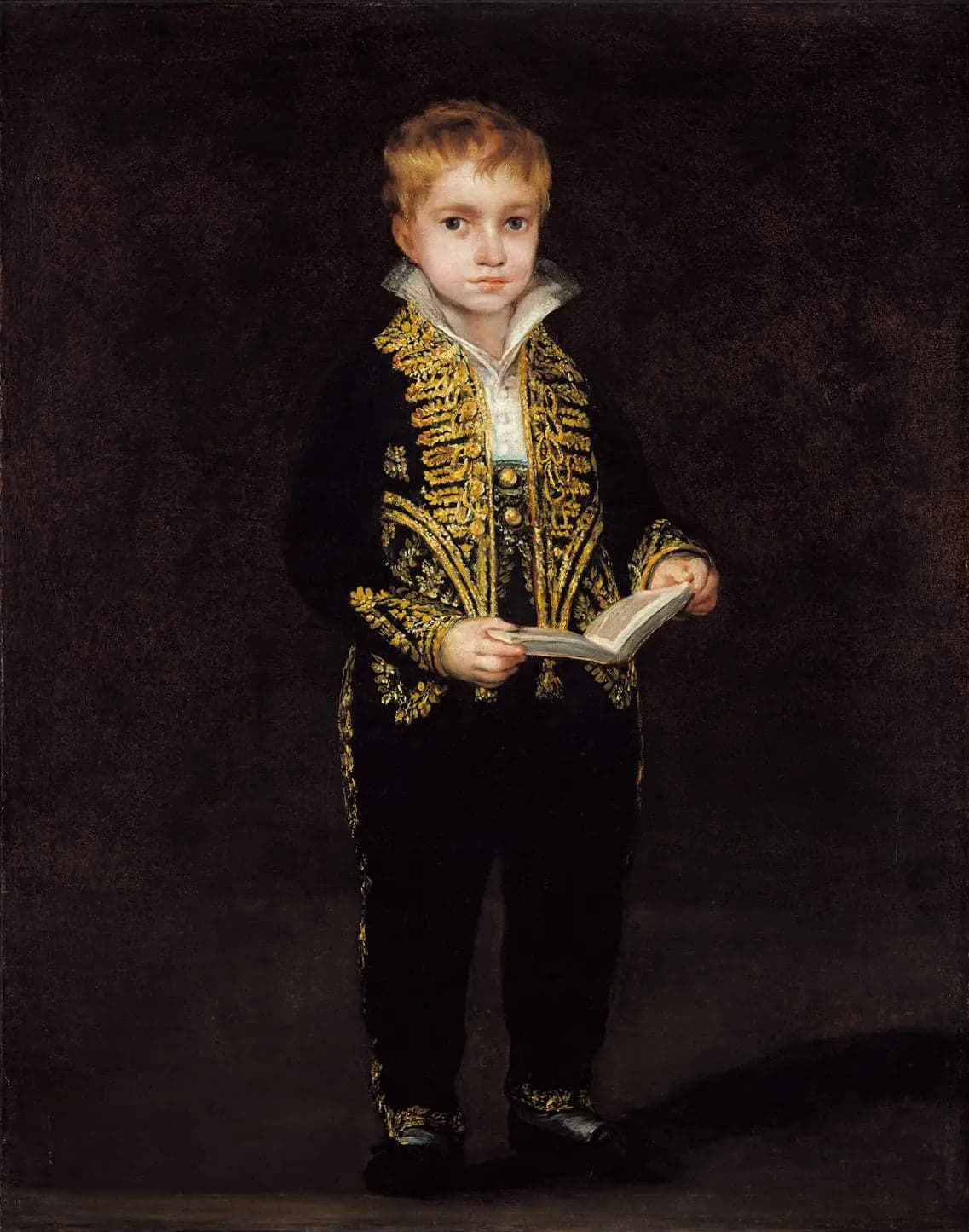
Portrait of Victor Guye
- Original dimensions
- 84.5 x 103.5 cm
- Museum
- National Gallery of Art
- Year
- 1810
Scene depicted
This poignant portrait of Victor Guye not only testifies to the high status of its subject but also to Goya's extraordinary sensitivity. The scene depicts a confident man, framed by delicate shadows and illuminated by soft, warm light. Every detail of the painting tells a story, inviting the viewer to contemplate the soul of the man and the era.
Historical context
Created in 1810 in the heart of Madrid, this canvas is emblematic of the romantic movement that inspired the artist. Goya, at the peak of his career, captures the very essence of the Spanish nobility while revolutionizing portraiture with his vibrant palette and bold use of light. The painting is currently on display at the National Gallery of Art, a true sanctuary for art lovers.
Place in the artist's career
The Portrait of Victor Guye is situated at a major turning point in Goya's career, combining technical skill and raw emotion. Alongside works such as The Naked Maja and The Disasters of War , this painting illustrates the evolution of his style, marking the transition from an academic technique to a more personal and introspective expression.
Anecdote
“To see, to feel, and to immortalize,” said Goya, speaking of art. This masterpiece was born on a fresh spring morning when the sun gently rises over the cobbled streets of Madrid. The sounds of merchants and the cries of children blend with the scents of flowers, inspiring the artist to capture this fleeting moment in his masterpiece . The intensity of the subject's gaze transcends time, and the raw emotion of this painting resonates through the centuries.