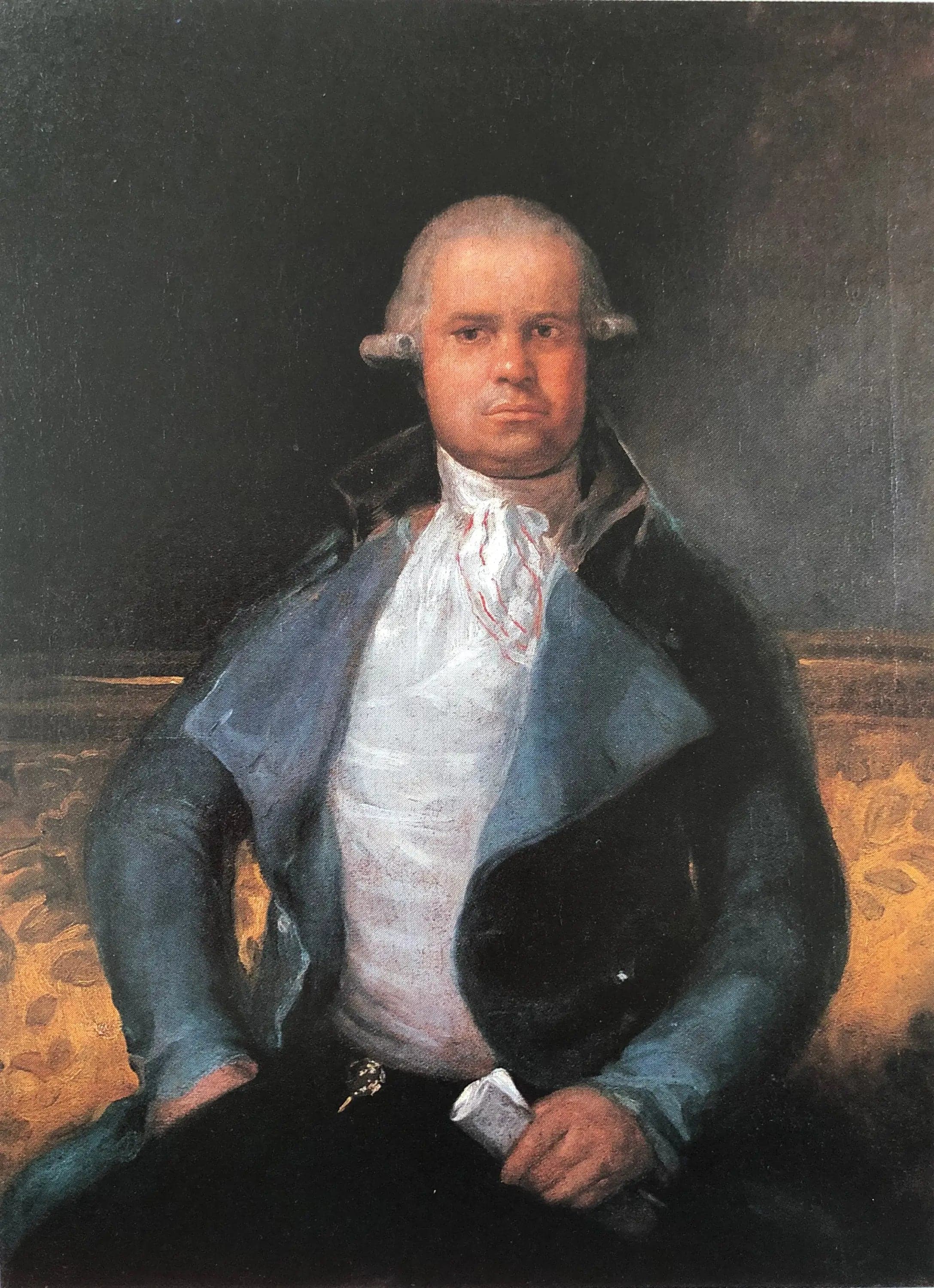
Portrait of Tomás Pérez de Estala
- Original dimensions
- 77.5 x 99 cm
- Museum
- Not specified
- Year
- 1798
Scene depicted
This painting features Tomás Pérez de Estala, a nobleman from Spain, elegantly dressed. The composition subtly reveals his social status while exploring his interiority, thanks to the mastery of shadows and lights that makes Goya renowned. The introspection of the character, inspired by the era, provokes reflection on identity and social roles.
Historical context
Created in 1798 in the vibrant city of Madrid, this painting is part of the neoclassical period, where Goya begins to explore the nuances of humanity through his art . At that time, Spain, plagued by political and social tensions, serves as the backdrop for this emblematic work. The painting remains in situ, its dimensions making it masterful and captivating.
Place in the artist's career
The Portrait of Tomás Pérez de Estala is part of a pivotal period in Goya's career, where he evolves towards a new pictorial approach. In parallel with his previous works, such as “La Maja Desnuda” and his famous frescoes, this masterpiece marks a turning point, combining realism and a psychological gaze on the subject.
Anecdote
“The true essence of man lies in his gaze.” pronounced Goya one summer morning, as he crossed the gaze of Tomás Pérez de Estala, a man among many whose soul shone with a rare intensity. This painting was thus conceived, capturing the inner strength and complexity of the individual.