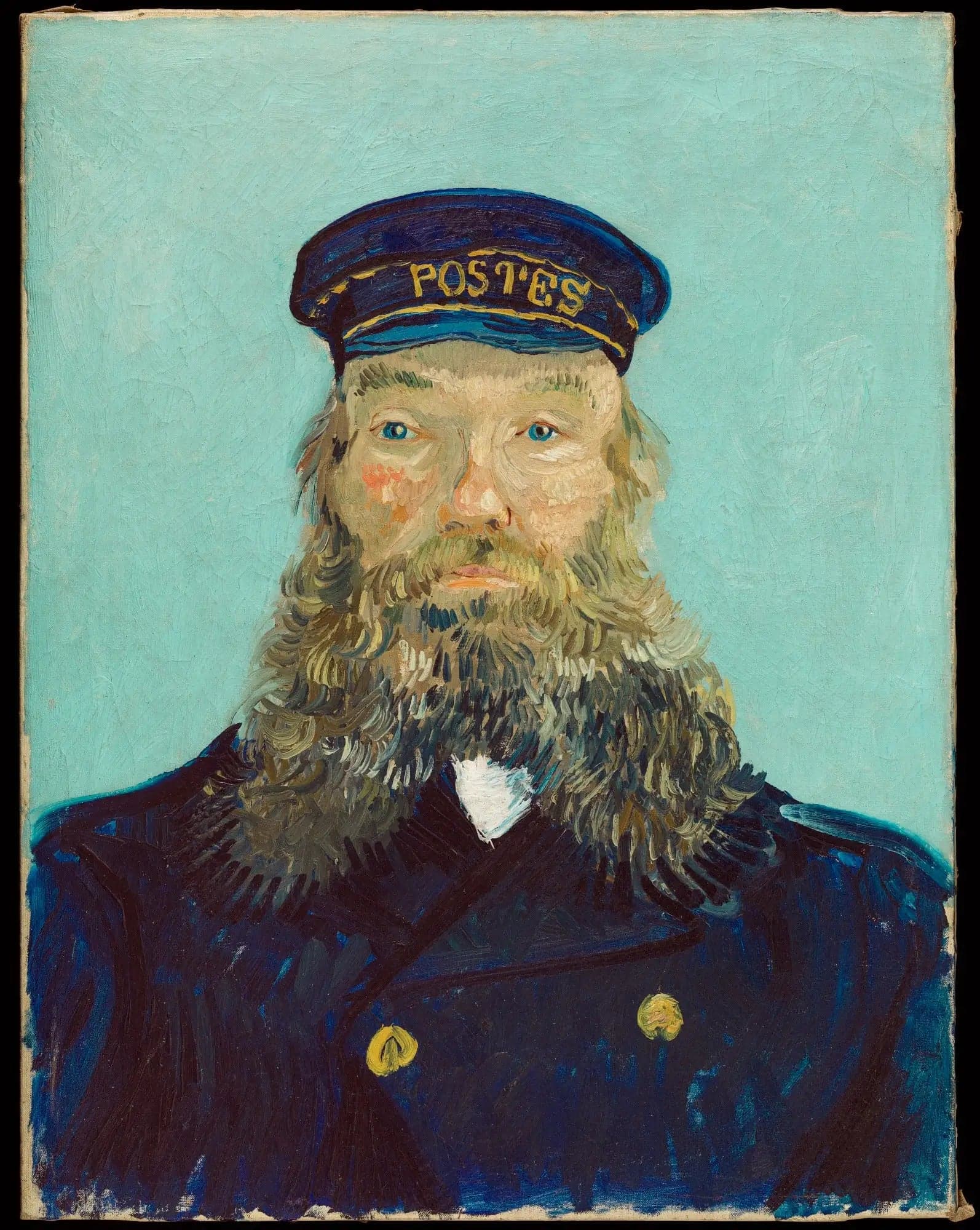
Portrait of the Postman Joseph Roulin
- Original dimensions
- 47.9 x 64.1 cm
- Museum
- Detroit Institute of Arts
- Year
- 1888
Scene depicted
This painting reveals a man of great warmth, with an imposing stature, wearing the distinctive uniform of his profession. Van Gogh manages to capture not only Roulin's face but also the soul of a man dedicated to his art every day. The composition, vibrant and colorful, makes the letter carrier an almost mythical figure, enveloped in a halo of light and emotion.
Historical context
Created in 1888 in the fascinating city of Arles , this iconic work is at the heart of the post impressionist movement. For van Gogh, this period is crucial, marked by bold experimentation with colors and shapes. The painting is currently housed at the Detroit Institute of Arts , where it continues to amaze visitors with its evocative power.
Place in the artist's career
The Portrait of the postman Joseph Roulin is situated at a turning point in Van Gogh's career. It marks a phase of maturity where the artist explores new emotional and technical dimensions. Compared to his early works like The Starry Night or later compositions such as The Sunflowers , this painting reflects an increased depth and a close human connection.
Anecdote
Vincent van Gogh once said: "I put my heart and soul into my painting, and I get lost like a shipwrecked man on a raft." He captured the essence of his friend, the postman Joseph Roulin, on a sunny morning, in the vibrant streets of Arles . The strength of his gaze and the movement of his body inspired this masterpiece which, much more than a simple portrait , becomes an intimate dialogue between the model and the artist.