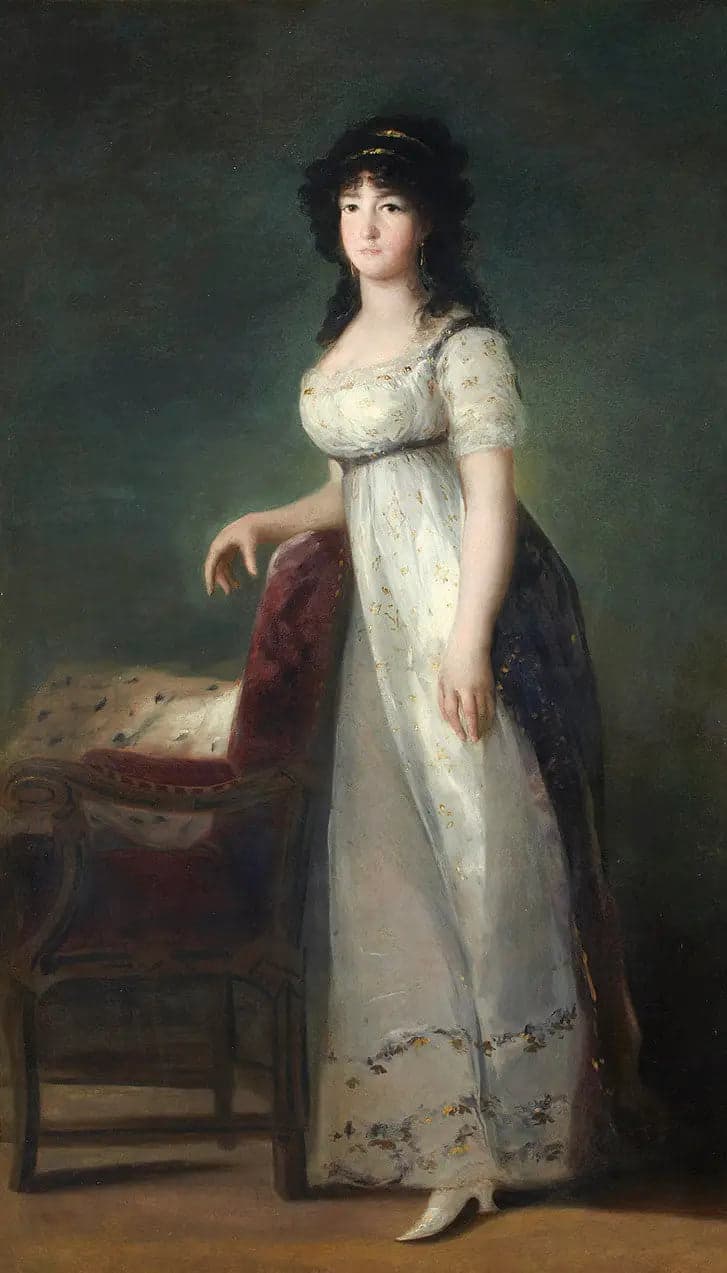
Portrait of the Marchioness of Lazán
- Original dimensions
- 115 x 193 cm
- Museum
- Edificio Garrido
- Year
- 1804
Scene depicted
In this pictorial work , the Marquise de Lazán presents herself in all her splendor. She wears a richly adorned dress, a perfect reflection of the manners and opulence of Spanish high society. The depth of her gaze and the mastery of the light that bathes her face make this composition an intimate portrait, conjuring the aura of a woman who is both feared and respected.
Historical context
Created in 1804, in the vibrant city of Madrid, this iconic work is part of the romantic movement, which redefined the artistic conventions of the time. This portrait was set against a cultural backdrop where the Andalusian nobility was distinguished by its sophistication and grandeur. Currently, this canvas inhabited by history rests within the prestigious collection of the Edificio Garrido, inviting everyone to dive into the intimacy of a bygone era.
Place in the artist's career
The portrait of the Marquise de Lazán marks a turning point in Goya's career. A pioneer of an innovative style, this work stands as a pinnacle in his artistic evolution, placing him alongside his famous paintings , such as La Maja Desnuda and The Executions of May, where his line and emotions unfold with rare intensity.
Anecdote
“The light of a sunny morning can depict more than a face; it can capture the essence of a soul.” This is how Francisco de Goya might have described his inspiration for this captivating painting . As he strolled through a fragrant garden one spring morning, he crossed paths with the deep gaze of the Marquise de Lazán, a fleeting encounter that would give life to a painting of unprecedented emotional power.