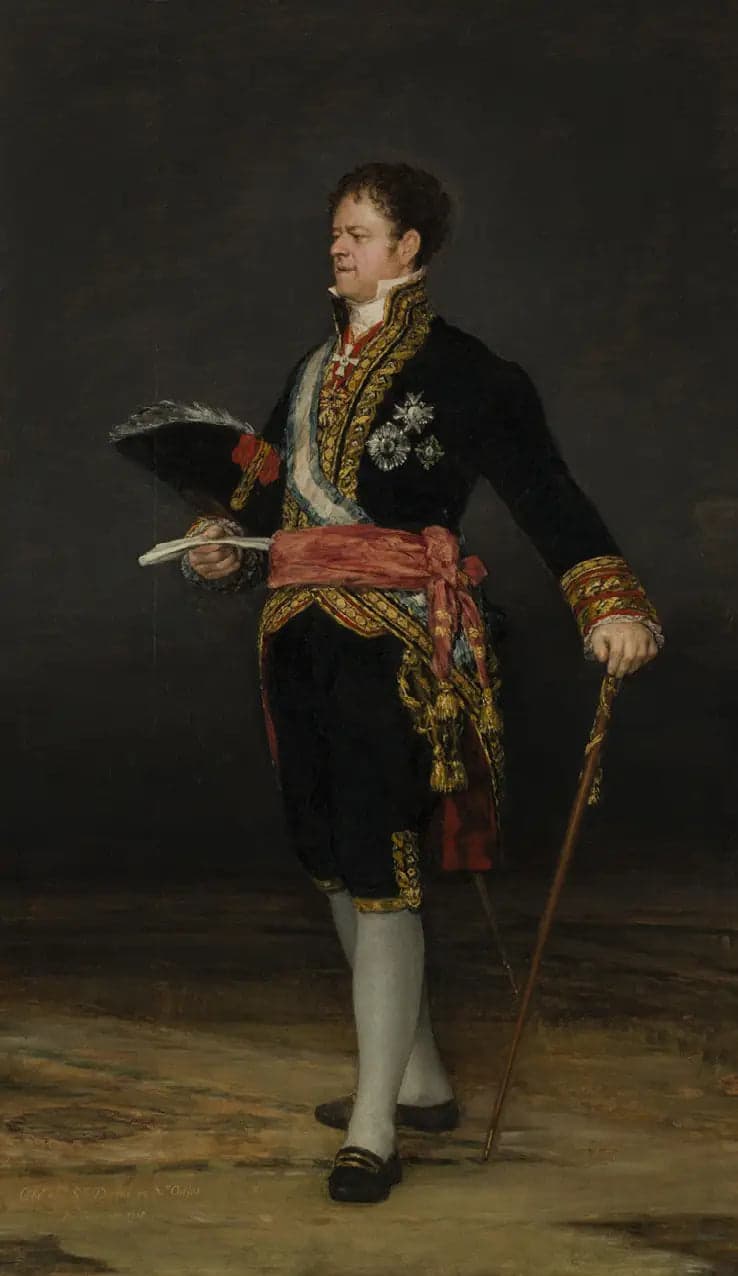
Portrait of the Duke of San Carlos
- Original dimensions
- 153 x 237 cm
- Museum
- Museum of Zaragoza
- Year
- 1815
Scene depicted
This painting , majestically composed, illustrates the Duke of San Carlos, a man of power and undeniable elegance, in a pose that is both imposing and reflective. The artwork captures the moment when the nobleman stands, dressed in a sumptuous court robe, exuding an aura of dignity and strength. The subtly nuanced background creates a distinguished atmosphere, allowing the subject to shine even more, while the spirit of the 18th century inhabits every detail of the work.
Historical context
It was in 1815, in the heart of Zaragoza, Spain, that Francisco de Goya created the dazzling painting "Portrait of the Duke of San Carlos." This iconic canvas is set against a rich historical backdrop, that of the romantic movement, where the artist stands out with his unique and introspective style. Today, this pictorial work is proudly displayed at the Museum of Zaragoza, attracting the admiring gazes of visitors for its imposing dimensions of 153 x 237 cm.
Place in the artist's career
This Portrait of the Duke of San Carlos represents a turning point in Goya's career, a testament to an accomplished artistic maturity. While his earlier works, such as "La Maja Desnuda" and "The Caprices," reflect his exploration of human mores, this painting marks a stylistic peak where the artist merges portrait and narrative, highlighting the complexity of his subject while enriching his emotional repertoire.
Anecdote
“Light is the heart of my painting ,” Goya is said to have declared one day. It was in a quiet alley in Madrid, cradled by the morning birdsong, that he found inspiration for this masterpiece . The vibrant face of the Duke of San Carlos still resonates with the echo of this revelation, a fleeting moment made immortal through the canvas .