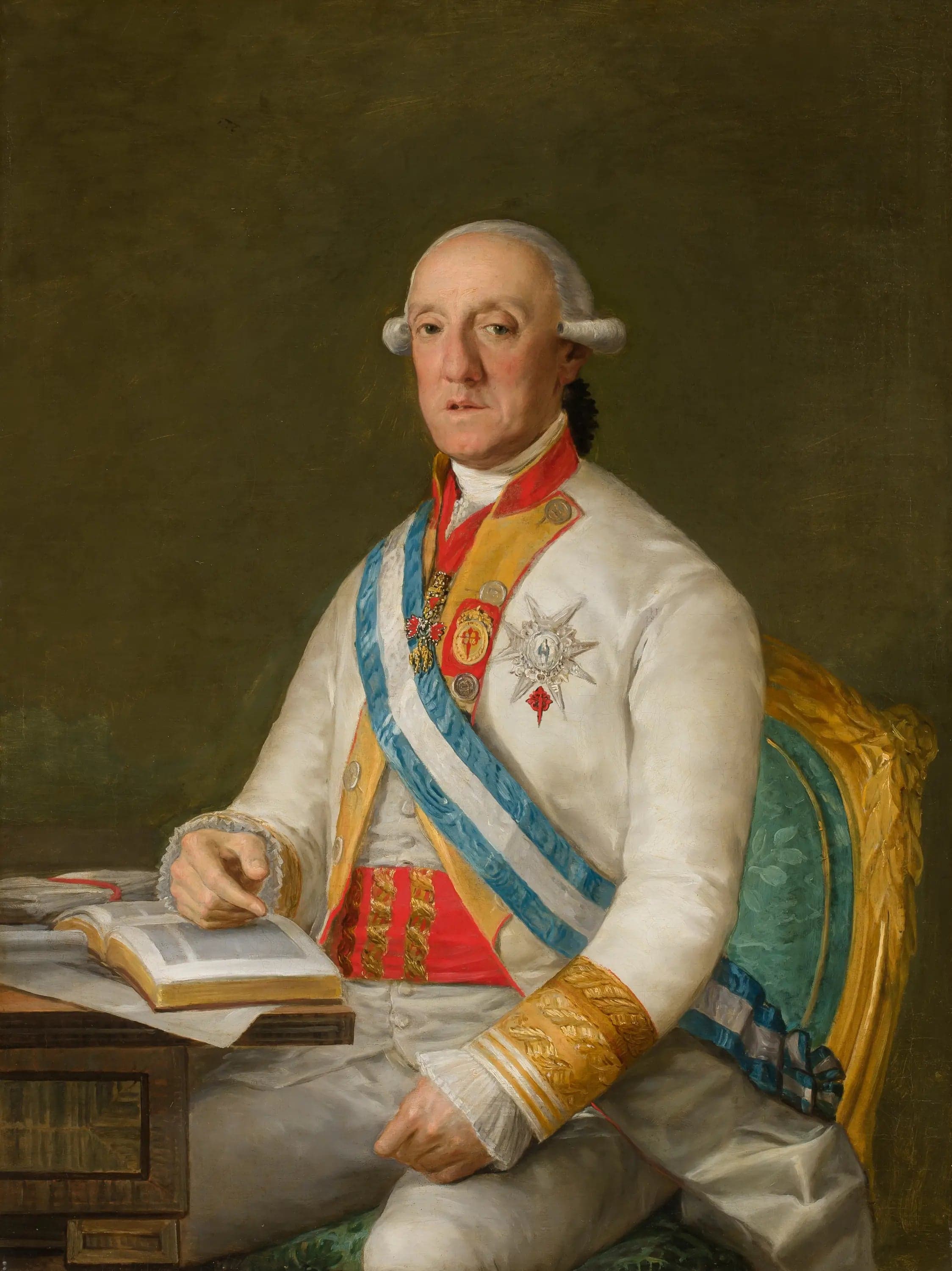
Portrait of the Duke of Roca
- Original dimensions
- 82.6 x 108.3 cm
- Museum
- San Diego Museum of Art
- Year
- 1795
Scene depicted
The painting "Portrait of the Duke of Roca" depicts an aristocrat with a posture that exudes both confidence and wisdom. The duke is circumscribed by a beautifully worked background where every detail reflects the Baroque era, revealing a deeply felt humanity. Goya, in his skill at capturing the nuances of human personality, enriches the depth of this work with a subtle rendering of textures and a caressing light that highlights the dignity of his subject.
Historical context
Created in 1795, the painting "Portrait of the Duke of Roca" by Francisco de Goya is a masterful work that lies at the heart of Enlightenment Spain. In a setting where art became a reflection of political and social aspirations, this canvas illustrates the exceptional craftsmanship of the painter, at a time when he begins to establish himself as one of the pillars of the Romantic movement. The painting is now preserved at the San Diego Museum of Art, where it continues to evoke human power and depth in its dimensions measuring 82.6 x 108.3 cm.
Place in the artist's career
The Portrait of the Duke of Roca is at the heart of Goya's mature period, marking a powerful stylistic evolution, contrasting with earlier works such as "La Maja Desnuda" and "The Executions of May 3, 1808." Each of his canvases reflects an increasingly introspective and emotional approach, testifying to his growing mastery of light and color.
Anecdote
Francisco de Goya once declared: "A portrait is the reflection of the soul, a window to immortality." This masterpiece , created one spring morning, was inspired by the brightness and beauty of the duke's face. This intimate moment of creation, enveloped by the scent of freshly mixed paints and the sweet song of birds, makes it a corridor to a fascinating collective memory. It is this emotion that infuses every brushstroke in the painting .