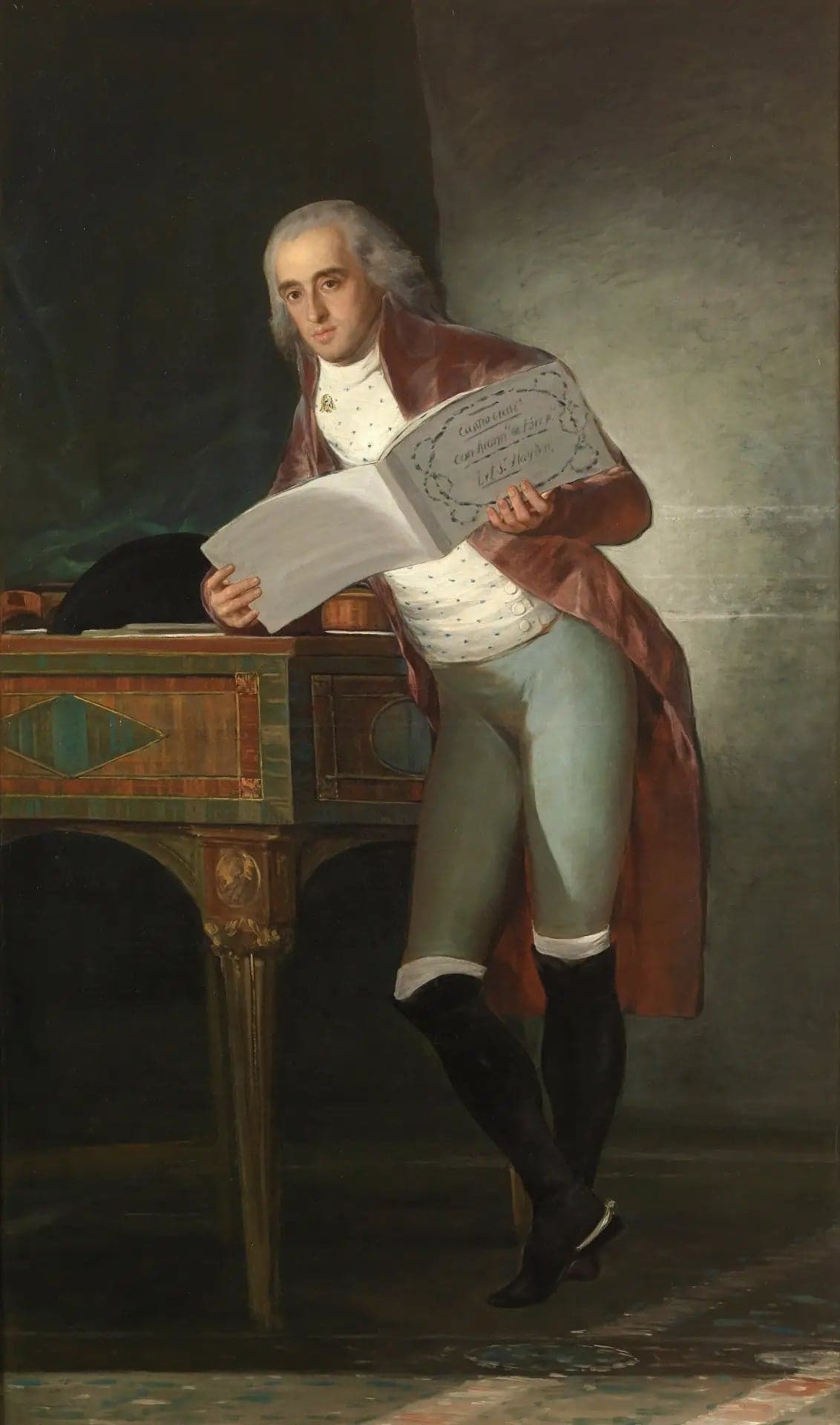
portrait of the Duke of Alba
- Original dimensions
- 126 x 195 cm
- Museum
- Prado Museum
- Year
- 1795
Scene depicted
The canvas presents a striking composition where the Duke of Alba, dressed in a rich aristocratic outfit, seems to be deep in thought. His gaze, supported by a subtle play of light, creates a dialogue between him and the viewer, inviting each to explore the intimacy of the thoughts of this man of power. This canvas embodies not only a portrait but a true reflection of an era and a complex human psychology.
Historical context
Created in 1795 and anchored in the historical walls of Madrid, this painting stands out for its affiliation with the artistic movement of Romanticism , a period marked by a deep affection for human experience and emotions. Currently preserved within the prestigious Prado Museum, this canvas measures a majestic 126 x 195 cm, testifying to a time when art was committed to capturing the human soul in all its complexity.
Place in the artist's career
The portrait of the Duke of Alba is part of a pivotal stage in Goya's career. With this canvas , he reveals his mastery of human emotion, akin to The Naked Maja and The Executions of May 3, 1808 , where his fascinating brushstrokes and bold use of light allowed him to assert himself as one of the undisputed masters of Romanticism . This masterpiece illuminates his artistic evolution towards a more personal and introspective style.
Anecdote
Goya often stated: “I paint what I feel, what I live.” This masterpiece came to life on a gentle spring morning, inspired by the light filtering through the foliage of a blooming garden. This warm atmosphere is embodied in the evocative strength of the painting , capturing not only the face of the Duke of Alba but also the very essence of a moment suspended in time.