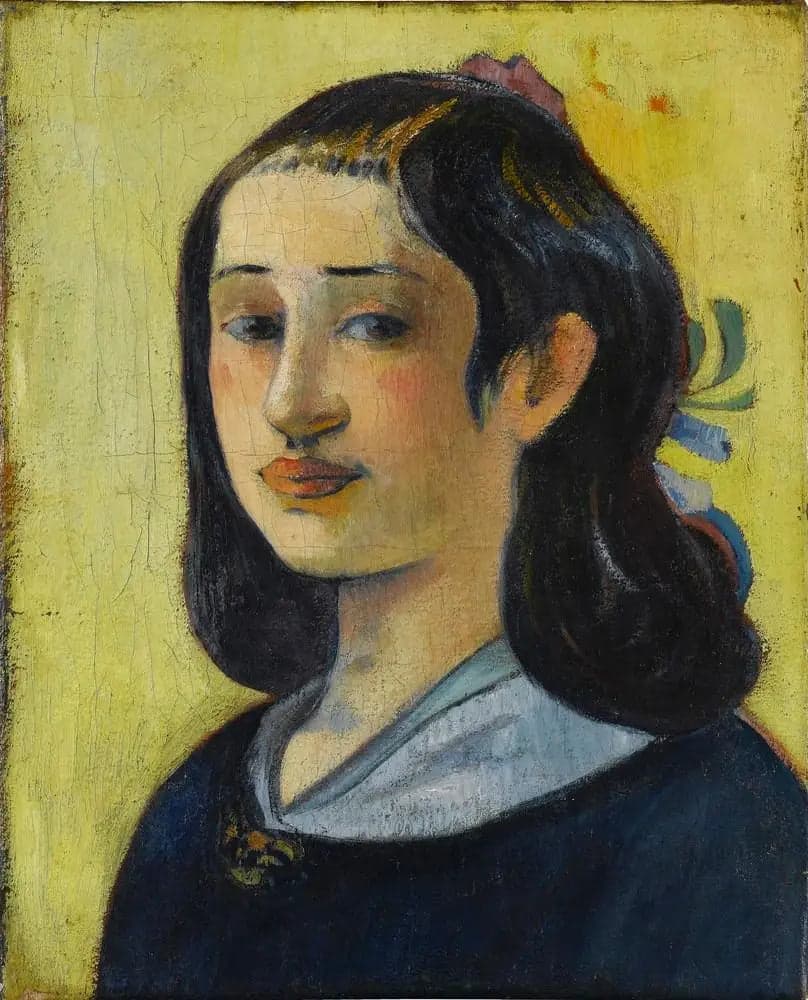
Portrait of the Artist's Mother
- Original dimensions
- 33 x 41 cm
- Museum
- Staatsgalerie Stuttgart
- Year
- 1890
Scene depicted
In this painting , Gauguin presents his mother with poignant simplicity. The scene, imbued with softness, depicts a woman whose deep gaze holds centuries of memory and emotion. Each brushstroke on the canvas echoes reflections on motherhood and the soothing presence that a mother can embody, an invitation to contemplation and gratitude.
Historical context
Created in 1890, this painting celebrates both the family heritage and the artistic roots of Gauguin. Located in Stuttgart, the canvas is part of the precious collection of the Staatsgalerie, a museum situated in the heart of Germany. This singular painting comes from a time when modern art was imposing its style, thus fitting into the post-impressionist movement that favored emotions and subjectivity.
Place in the artist's career
The Portrait of the Artist's Mother represents a turning point in Gauguin's career, marking a period of introspective reflection. While his earlier works like “The Vision of the Sermon” and “The Card Players” were distinguished by their colorful complexity, this painting embodies a more personal and emotional approach, reflecting his maturity as an artist.
Anecdote
“True life lies in the expression of what one loves.” These words resonate like an echo in Gauguin's creative process. Inspired by a soft light filtering through the shutters of his home, the artist tenderly captured his mother's face, seeking to immortalize not only her appearance but also the very essence of their bond. The painting becomes an ode to vulnerability and strength, a true testament to the artist's intuition.