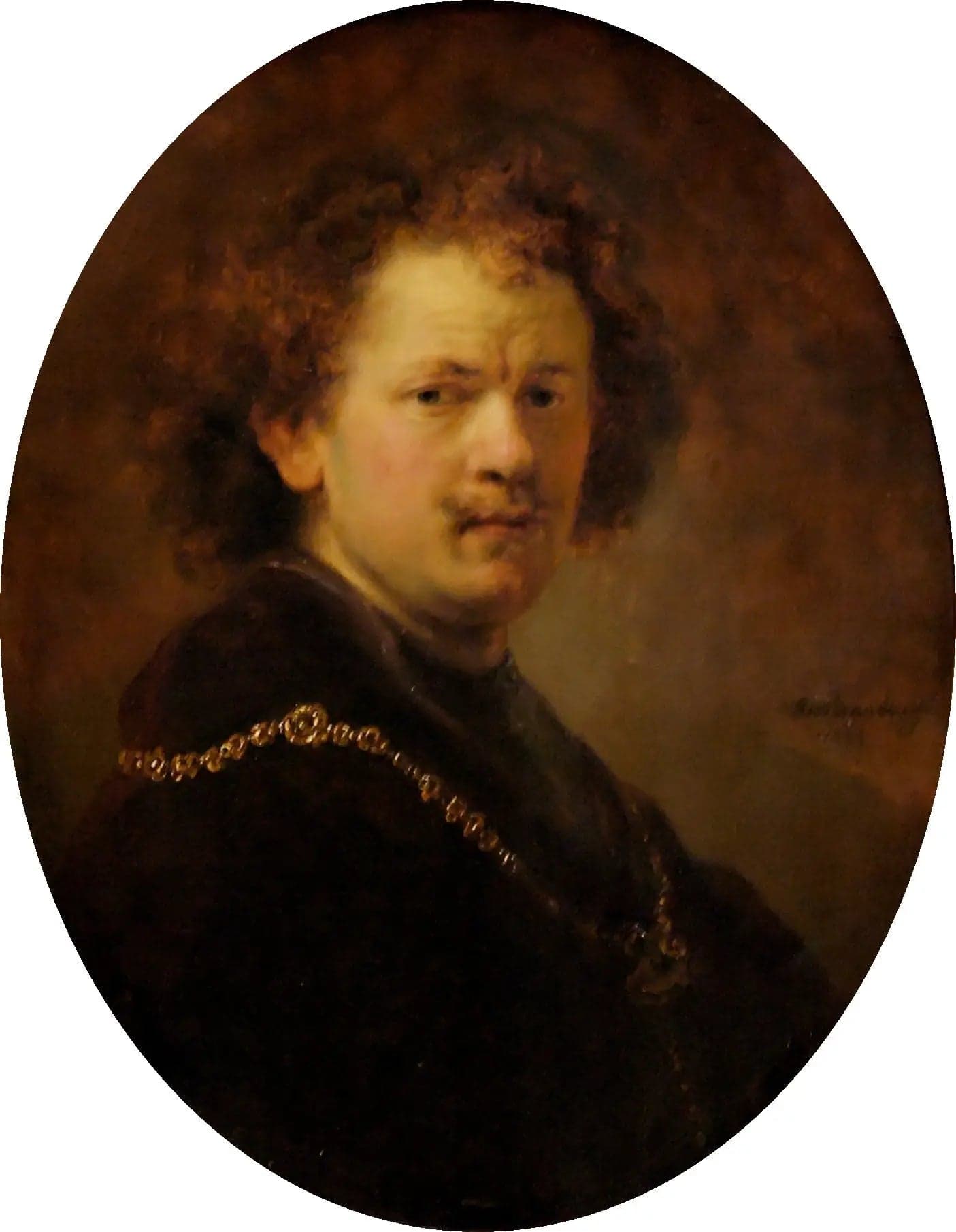
Portrait of the Artist with Bare Head
- Original dimensions
- 47 x 60 cm
- Museum
- room 844
- Year
- 1633
Scene depicted
This painting represents a self-portrait of Rembrandt with a bare head, a bold representation where the artist chooses to reveal himself without artifice. The dark background accentuates the face marked by age and emotions, highlighting the psychological depth of his expression. This composition is not simply a reflection but a true dialogue with the viewer, awakening a multitude of feelings.
Historical context
Created in 1633 in the city of Amsterdam, this painting is emblematic of the great master Rembrandt and is part of the baroque movement, characterized by a strong contrast of light and great expressiveness. This masterpiece is currently located in the museum, room 844, where it testifies to the artistic heritage of its time, immersing the viewer in a moment of reflection in the face of the power of the pictorial work.
Place in the artist's career
The Portrait of the Artist with Bare Head is situated at a pivotal moment in the career of Rembrandt , as he explores new forms of light and shadow. This masterpiece is positioned between other works such as *The Night Watch* and *The Man with the Turban*, marking the unique evolution of his style and his bold imprint on the art world.
Anecdote
“Light reveals, light conceals” could have been said by Rembrandt . The artist was undoubtedly inspired one spring morning, in his studio bathed in soft light, in front of the mirror that reflected his own image. This canvas, the Portrait of the Artist with Bare Head , is the fruit of this introspection, capturing the very essence of the human soul and its introspection.