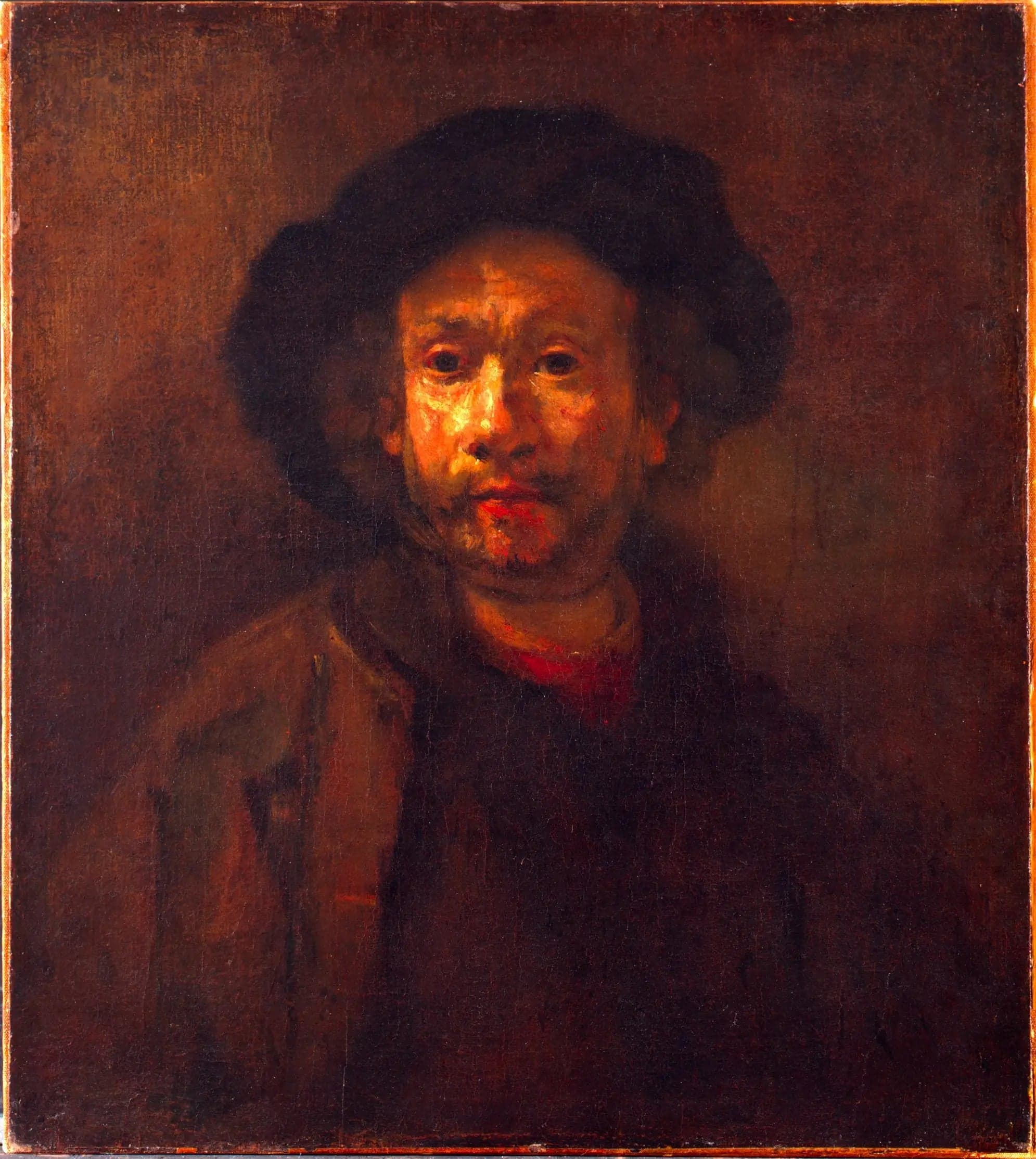
Portrait of the Artist
- Original dimensions
- 67.2 x 75 cm
- Museum
- Fogg Art Museum
- Year
- 1660
Scene depicted
The painting depicts a contemplative author, scrutinizing himself with striking intensity. He becomes both subject and observer, inviting the viewer to engage in an intimate reflection on self and art. This masterpiece evokes not only the artist but also the artist within us all, ready to reveal ourselves. The light gently caresses the features of the face, plunging the gaze into a disturbing depth.
Historical context
Created in 1660, the painting titled Portrait of the Artist takes root in the splendor of the Netherlands, at a time when the baroque was flourishing, marking the peak of Dutch painting. Immersed in a thriving artistic context, this canvas magnifies the mastery of chiaroscuro that characterizes the style of Rembrandt . The painting is currently displayed at the Fogg Art Museum , a place that celebrates the cultural heritage of European art, where every corner evokes the passion of a bygone era.
Place in the artist's career
In the career of Rembrandt , Portrait of the Artist stands as a centerpiece of a period of maturity. It juxtaposes other iconic works such as The Night Watch, proving the harmonious evolution towards an unparalleled mastery of light, as well as The Anatomy Lesson of Dr. Tulp, where the technique boldly refines. This painting shines in this period, highlighting the emotional and technical turning points of one of the greatest masters in the history of art.
Anecdote
“Every shadow hides the light that desires to emerge,” would have once declared Rembrandt in a moment of dazzling creativity. Imagine the scene: a gentle spring morning, the song of birds mingling with the soft sound of a brush grazing the canvas , gradually revealing the contours of a face that harbors a story within. Thus, the emotion captured in this masterpiece becomes timeless.