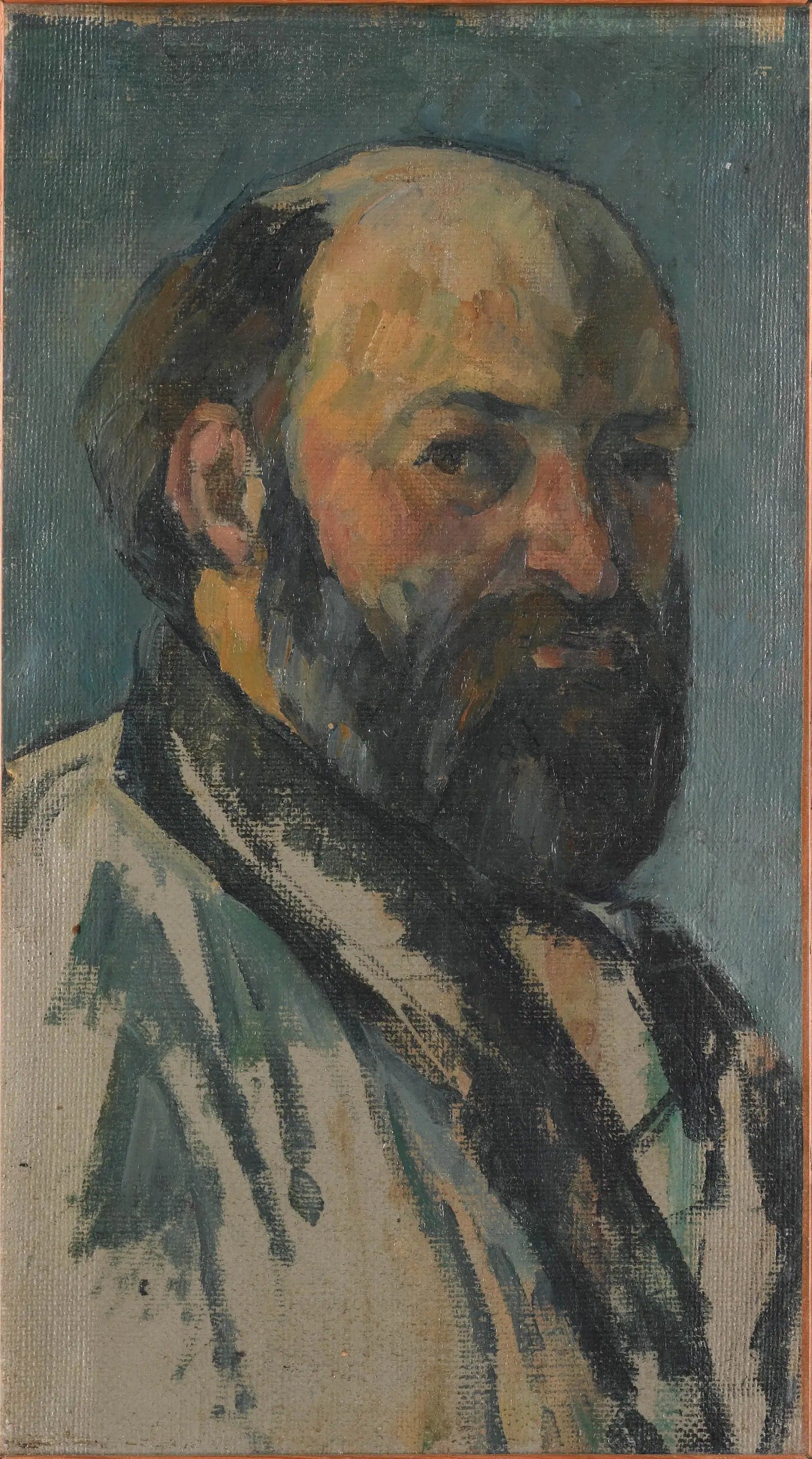
Portrait of the Artist
- Original dimensions
- 53 x 64 cm
- Museum
- musée d'Orsay
- Year
- 1875
Scene depicted
The painting “Portrait de l'artist - Paul Cézanne ” represents a unique moment of introspection, capturing the artist's vision of himself. In this composition, the viewer is enveloped by a play of light and shadow, revealing the complexity of human emotions. The work unveils this internal struggle between perception and reality, offering a reflection on artistic identity.
Historical context
Created in 1875, this iconic painting by Paul Cézanne reflects a vibrant era, that of the 19th century in Paris. Evoking the beginnings of the Impressionist movement, this painting embodies not only the artistic journey of its creator but also the breath of freedom that swept through art at that time. Hung in the musée d'Orsay , this painting invites every visitor to dive into the intimacy of art.
Place in the artist's career
This painting marks a crucial step in Cézanne's career, not only as a declaration of his style but also as a fusion of techniques that are uniquely his. In parallel, works such as “Le Déjeuner sur l'herbe” and “La Montagne Sainte-Victoire” illustrate his evolution. Each painting , while distinct, questions the relationship to perspective and form.
Anecdote
Paul Cézanne once stated: “I want to seek the truth at the heart of nature.” It was on an April morning, while wandering the streets of his native Aix-en-Provence, that he conceived the idea for this masterpiece . The inspiring face encountered at the turn of a narrow alley touched him deeply. This painting is thus the echo of that fleeting encounter, transcribed onto canvas.