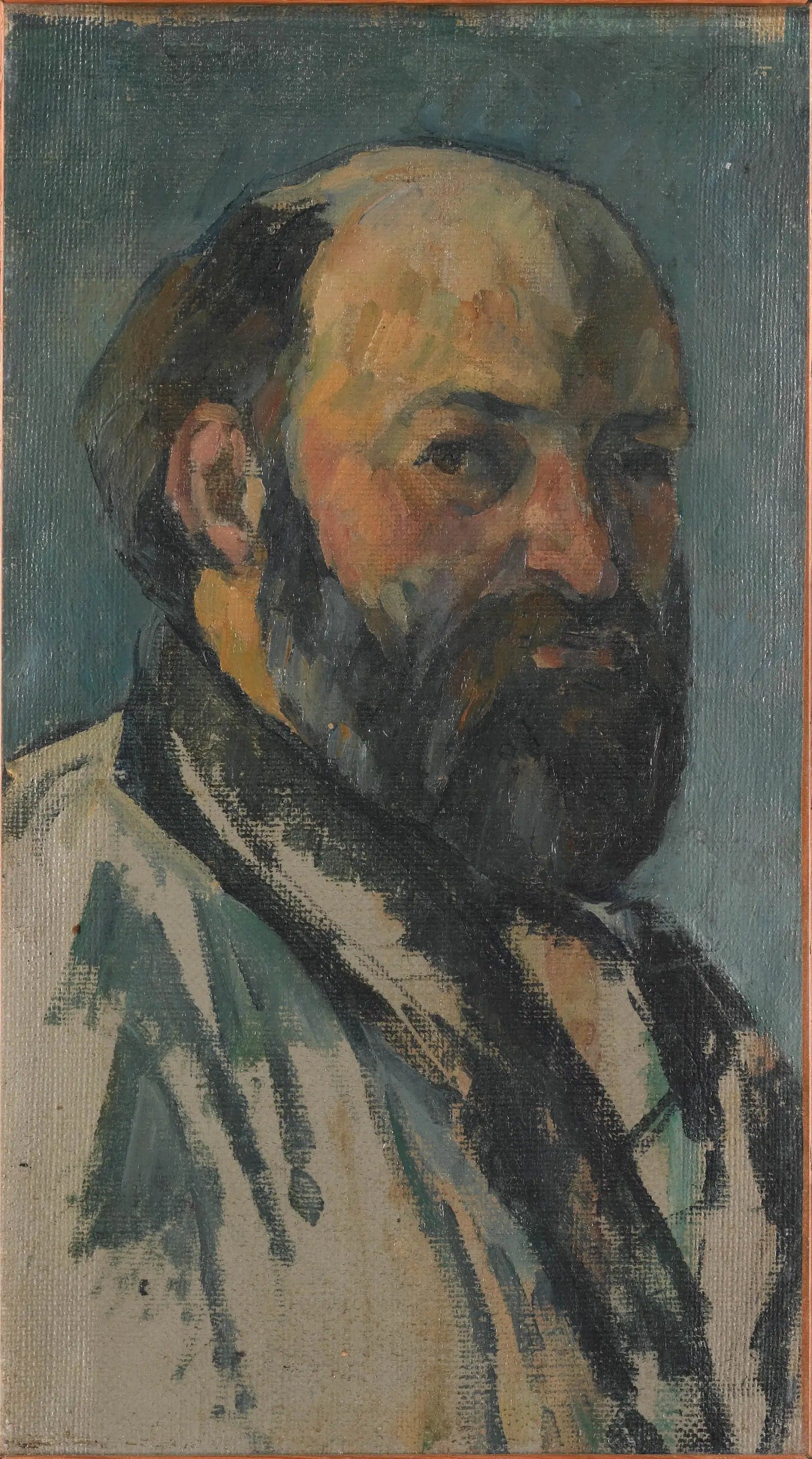
Portrait of the Artist
- Original dimensions
- 24.5 x 33.5 cm
- Museum
- Oskar Reinhart Museum "Am Römerholz"
- Year
- 1879
Scene depicted
The painting “Portrait of the Artist” captures not only Cézanne's face but also the intensity of an introspective gaze. In this painting , the composition unfolds through soft hues and bold brushstrokes, revealing a unique psychological depth. Each brushstroke is an affirmation, an exploration of oneself that conveys raw and sincere emotions.
Historical context
Created in 1879 in a France undergoing an artistic turning point, Portrait of the Artist bears witness to the emergence of Post-Impressionism . In this historical context, Cézanne, one of the founding fathers of modernity, plunged his brush into the depths of the human soul. Today, this painting resides at the Oskar Reinhart Museum "Am Römerholz" , a setting that enhances the intensity of this pictorial work, measuring 24.5 x 33.5 cm.
Place in the artist's career
“Portrait of the Artist” is situated in the midst of a career that evolves between Impressionism and modernism. It represents a turning point where Cézanne masters colors and forms with unparalleled ease. Looking at this painting , one can see echoes of his other notable works, such as “The Large Bathers” and “The Montagne Sainte-Victoire,” reflecting his constant search for a deeper truth.
Anecdote
“Art is a means of placing nature before our eyes.” Such could be the inspiring breath of Cézanne one spring morning, as he crosses the face of a young man, his own reflection. This fleeting moment became the very essence of the masterpiece , a painting that evokes the quest for identity through art.