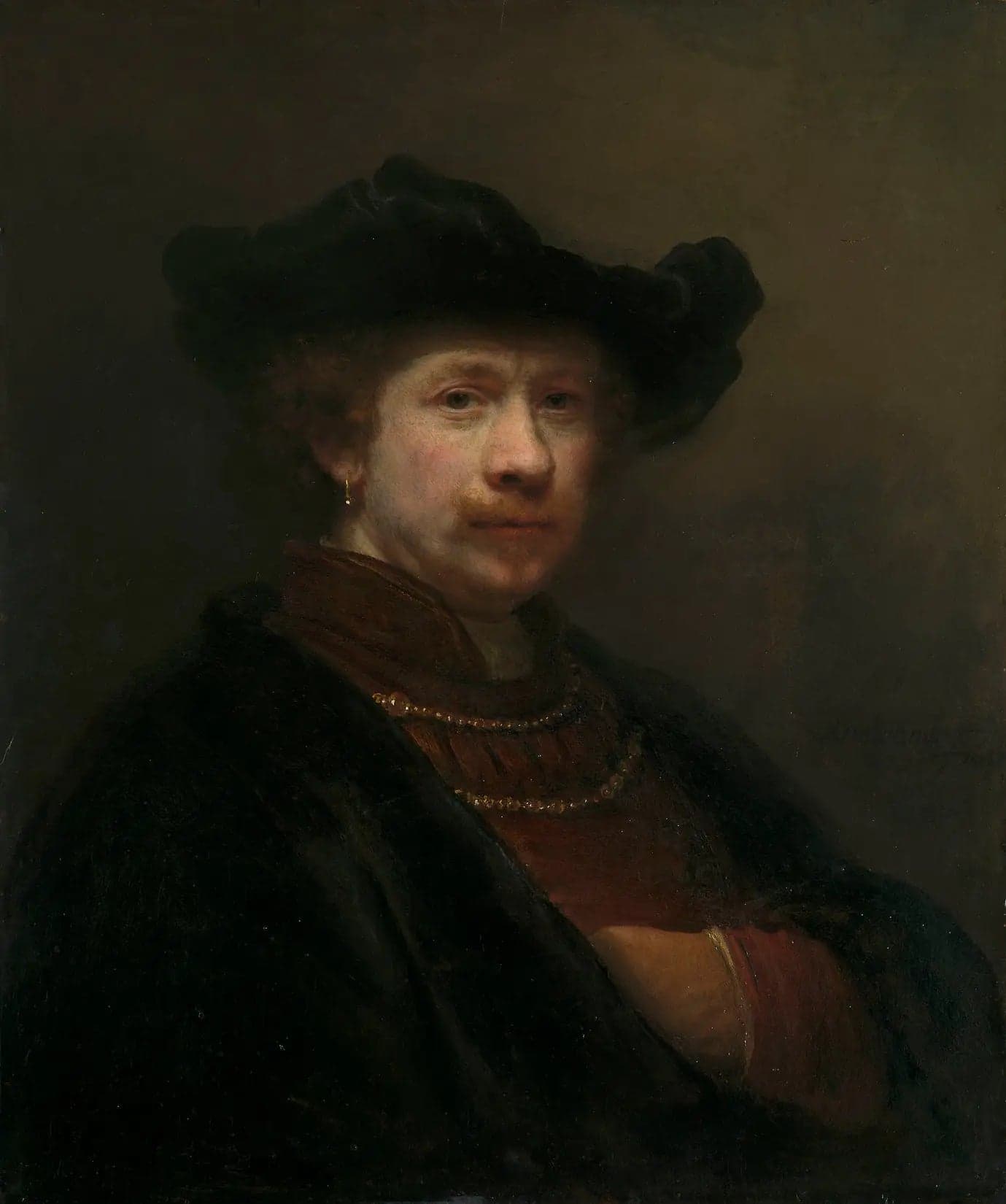
Portrait of the Artist, painted in 1641
- Original dimensions
- 58.8 x 70.4 cm
- Museum
- Royal Collection
- Year
- 1642
Scene depicted
This painting embodies the creative spirit of Rembrandt , an intimate reflection of the artist himself. The composition, imbued with power and vulnerability, reveals a face marked by experience and authenticity, enveloped in a mysterious aura that draws the viewer into a silent dialogue.
Historical context
This masterpiece was conceived in Amsterdam, the capital of the United Provinces, a blazing hub of art and innovation in the 17th century. In this period marked by Caravaggism, Rembrandt outlined the contours of an emblematic work. The painting is currently part of the Royal Collection, an eternal celebration of the artistic treasures presented to the world.
Place in the artist's career
The Portrait of the Artist, painted in 1641, fits into the flourishing phase of Rembrandt 's career. This canvas brilliantly positions itself alongside The Night Watch and The Anatomy Lesson of Dr. Tulp, revealing the evolution of his distinctive style, from the brilliance of baroque to the psychological subtleties of his portraits.
Anecdote
“Every brushstroke is a note of my soul.” In the studio of Rembrandt , bathed in morning light, he captures the precise moment of inspiration. A glance in the mirror, a gentle breeze, and this painting comes to life, filled with emotions.