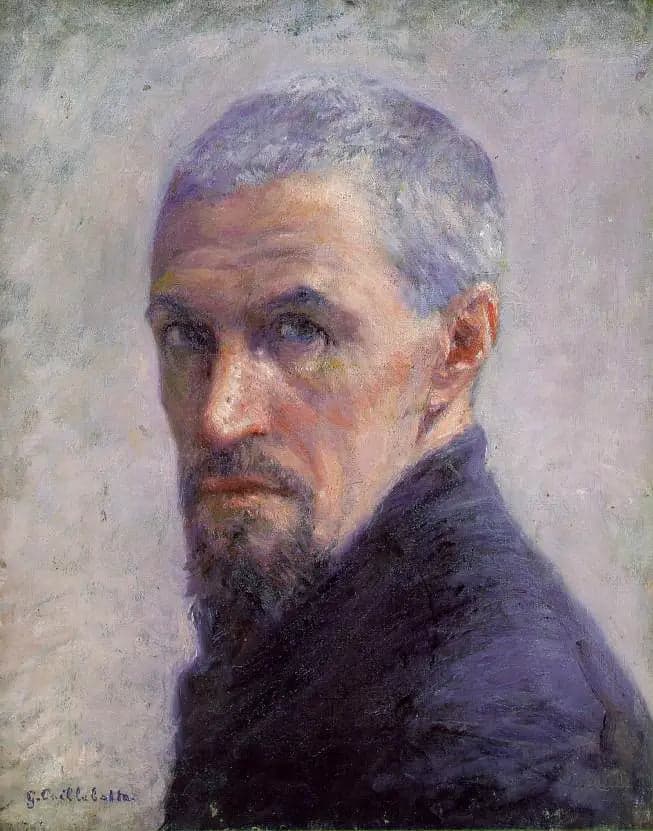
Portrait of the Artist
- Original dimensions
- 32.5 x 40.5 cm
- Museum
- Orsay Museum
- Year
- 1892
Scene depicted
In this canvas , Caillebotte portrays himself with natural grace, blending intimacy and introspection. The artist, absorbed in his own world of creation, draws the gaze and invites the viewer to share a precious moment where art transcends reality.
Historical context
Created in 1892, this iconic painting is set against the vibrant backdrop of post Impressionist France, where Gustave Caillebotte , a leading figure of this artistic movement, crafted a pictorial work that reflects his era. Currently exhibited at the Orsay Museum in Paris, this canvas captures the essence of a generation marked by modernity, urban transformations, and the attention to detail that characterizes the artist.
Place in the artist's career
The Portrait of the Artist marks a turning point in Caillebotte's career, positioning him at a crossroads between realism and Impressionism , while highlighting his growing mastery. Echoing other canvases like “The Floor Scrapers” and “The Bridge of Europe,” this work reveals a technical evolution where light and form harmonize to create a touching depth.
Anecdote
“For every face I encounter, there is a story waiting to be told,” Caillebotte might have said while admiring a morning freshness. It is in these simple moments of contemplation that the inspiration for this masterpiece was born, reinforcing the bond between the artist and his canvas , a gentle and poetic introspection.