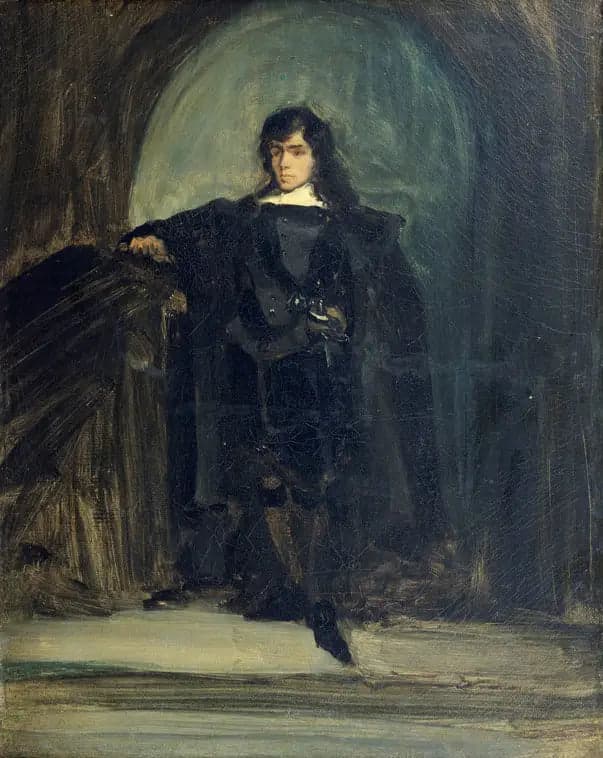
portrait of the artist
- Original dimensions
- 33 x 41 cm
- Museum
- National Museum Eugène-Delacroix
- Year
- 1821
Scene depicted
In this captivating canvas , Delacroix paints himself, translating onto the canvas his essence, doubts, and creativity. The composition reveals his penetrating gaze; each brushstroke unveils the soul of an artist in full creative flow, immersed in his thoughts. The work then becomes a mirror of his inner world, celebrating the complexity and depth of the human condition.
Historical context
Created in 1821, this painting is set against the vibrant backdrop of Paris, the romantic cradle of the arts. A delegate of the emotions of the romantic movement, the painting represents the imprint of a fervent era, a time when art emancipated itself from academic constraints. Currently exhibited at the National Museum Eugène-Delacroix, this canvas still resonates with the majestic echoes of daily Parisian life from this pivotal period.
Place in the artist's career
This painting is situated at a significant turning point in Delacroix's career, marking an artistic maturity. At this moment, he boldly asserts himself, presenting a flamboyant sketch of his emotional range. Alongside other paintings such as “ Liberty Leading the People ” and “The Massacre at Chios,” this painting embodies the qualitative leap towards a more mature style, revealing more vivid and introspective emotions.
Anecdote
“Art is a passion, a pain in its purest form.” In this breath of inspiration, one spring morning, the artist crossed the gaze of a passerby on a quiet street. This fleeting moment on the street was the genesis of the masterpiece . Thus, this painting becomes an intimate reflection on hope and the quest for self.