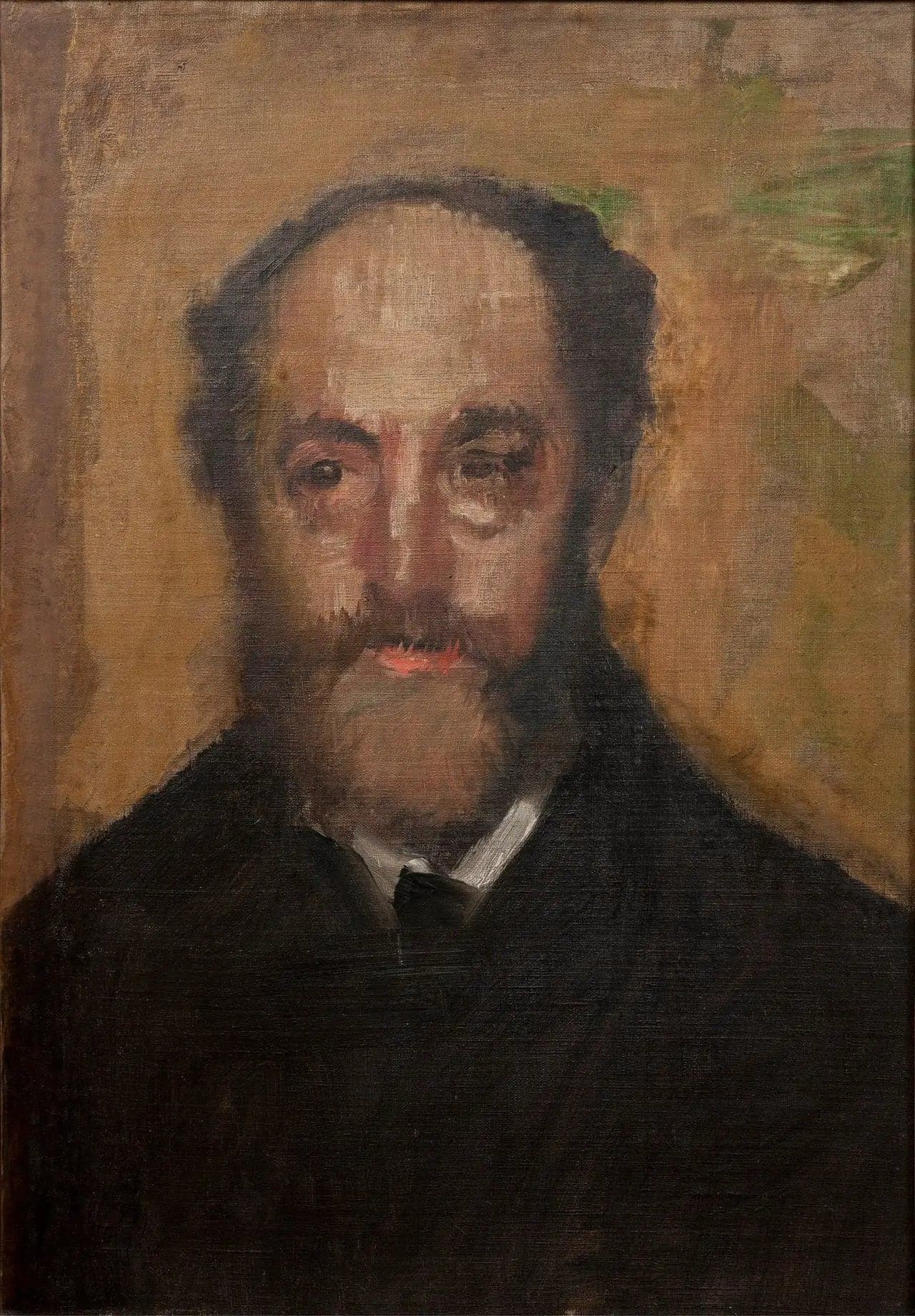
Portrait of the art critic Durand-Gréville
- Original dimensions
- 37 x 50 cm
- Museum
- Nationalmuseum
Scene depicted
In this iconic composition, Degas depicts with remarkable finesse the art critic Durand-Gréville, a central figure of the time. His thoughtful posture, pensive gaze, and writing tools highlight the crucial role of critics in artistic evolution. The work captivates the viewer with its psychological richness, revealing both contemplation and introspection that are so necessary in a critic's career.
Historical context
Created in 1879 in Paris, the vibrant heart of artistic France, this painting fits perfectly into the Impressionist movement, which seeks to capture modern life through captivating brush strokes and subtle plays of light. The canvas , now displayed at the prestigious Nationalmuseum , bears witness to a time when art emancipated itself from established conventions, offering a deep and nuanced reflection of the society of its time.
Place in the artist's career
The Portrait of the art critic Durand-Gréville marks a turning point in the career of Edgar Degas , testifying to his period of maturity. This canvas is closely related to two other iconic works, "The Dance Class" and "The Dancers," where he explores his interest in movement and the psychological study of characters. The mastery of forms and lights in this composition reveals the culmination of his artistic development.
Anecdote
“Looking beyond the surface is the true essence of art.” said Degas while contemplating the inspiration behind each masterpiece . One spring morning, as he walked through the bustling streets of Paris, he met the gaze of Durand-Gréville, a passionate art critic. This fleeting moment became a source of inspiration, translating into this canvas , capturing the intensity and depth of a man whose critiques shaped the art world.