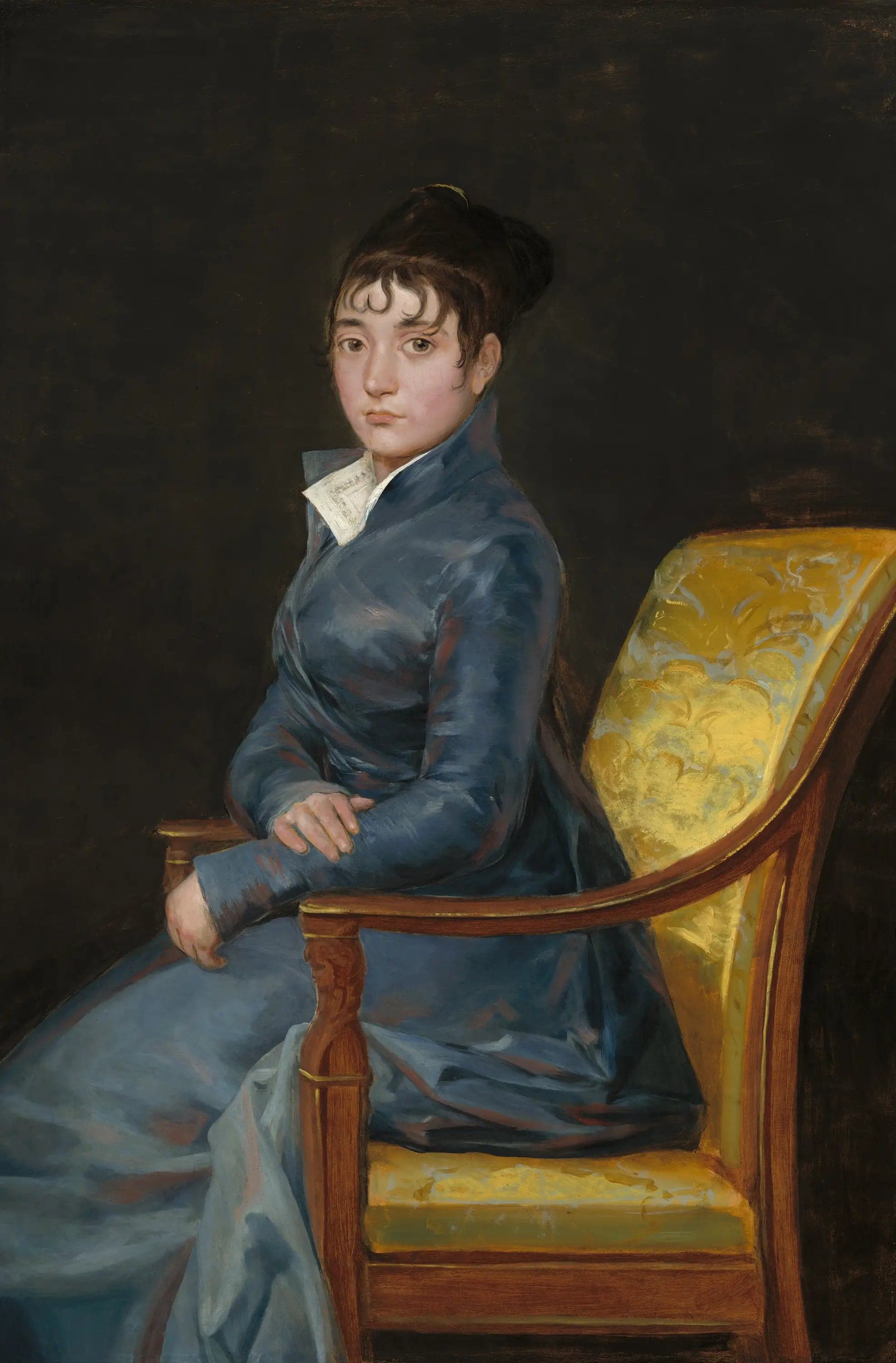
Portrait of Teresa Sureda
- Original dimensions
- 79.4 x 119.7 cm
- Museum
- National Gallery of Art
- Year
- 1804
Scene depicted
The painting "Portrait of Teresa Sureda" is a celebration of feminine grace. Goya captures the very essence of his model: a face marked by softness, intelligence, and a mysterious melancholy. Teresa, bathed in warm light, is not simply represented; she comes alive on the canvas and invites the viewer to share her inner world. The choice of drapery and textures enhances the impression of realism , giving the scene an almost tangible dimension.
Historical context
Created in 1804, the painting "Portrait of Teresa Sureda" is an emblematic work of the Spanish master Francisco de Goya . This painting was conceived in Madrid, a vibrant city of art and culture, at the heart of a tumultuous period that foreshadowed the upheavals of the Spanish War of Independence. Classified among the masterpieces of the romantic movement, this canvas bears witness to a revolutionary style, both profound and intimate. Currently, it proudly resides at the National Gallery of Art, captivating every visitor with its impressive dimensions.
Place in the artist's career
This painting , the result of a period of intense reflection for Goya, stands as a milestone in his career. At this moment, the artist begins to move away from neoclassicism to embrace a more personal and expressive style. Compared to other works such as "La Maja desnuda" and "The 3rd of May 1808", this painting reveals the evolution of his artistic approach, oscillating between sensuality and social engagement.
Anecdote
Goya once declared: "Every face I paint tells a story." It is in this thought that the inspiration was born for the masterpiece of Teresa Sureda. At the dawn of a spring morning, while walking through the streets of Madrid, he crossed paths with the hopeful gaze of a young woman. This fleeting moment became the very essence of his painting , evoking a timeless beauty and depth that continues to move today.