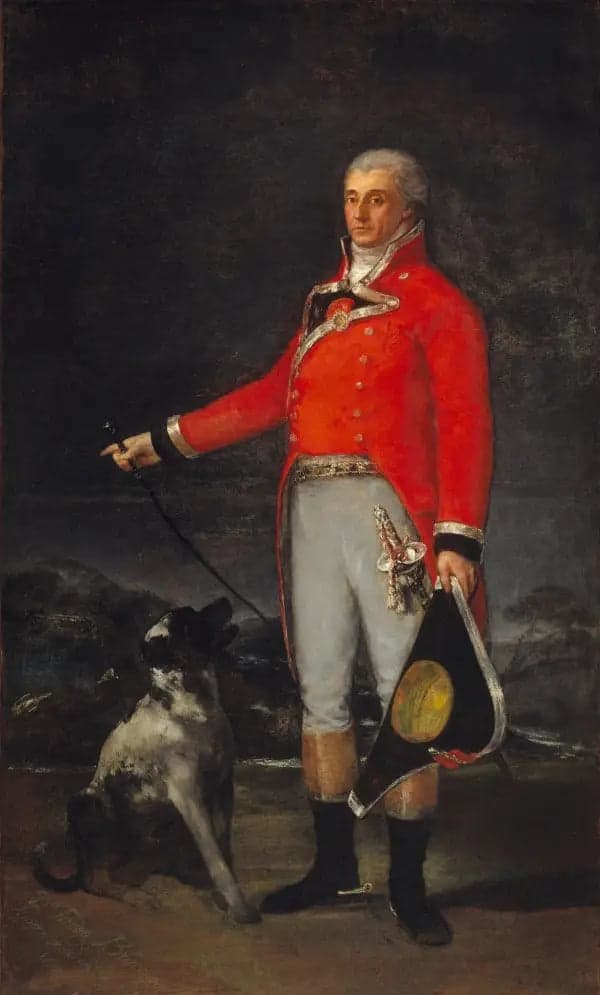
Portrait of Tadeo Bravo de Rivero
- Original dimensions
- 116 x 207 cm
- Museum
- Brooklyn Museum
- Year
- 1806
Scene depicted
In this painting , Goya captures the very essence of his model, depicting a man with a strong personality, dressed in a refined outfit that subtly illuminates his character. Tadeo's penetrating gaze seems to transcend time, inviting the viewer into a universe where the dignity and nobility of the human spirit intertwine. The dark background highlights the light playing on the textures, a stylistic signature of the artist that brings every detail to life.
Historical context
Created in 1806, this painting finds its roots in Madrid, Spain, during a time marked by the excitement of the romantic artistic movement. Goya, an emblematic figure of this period, delivers here a striking representation of his model, Tadeo Bravo de Rivero. This canvas , currently exhibited at the Brooklyn Museum , measures 116 by 207 cm, and bears witness to a time when art becomes a mirror of human passions.
Place in the artist's career
This canvas , a major work of Goya, is situated at a turning point in his career. In the mid-20th century, he asserts his unique style while drawing closer to the social realities of his time. Following other canvases like “Las Meninas” and “The Charge of the Mamelukes,” this painting demonstrates a singular evolution towards raw emotion, capturing the depth of the human soul in all its grandeur.
Anecdote
“The artist does not paint what he sees, but what he feels.” Such could be Goya's words, crossing the intense gaze of Tadeo Bravo de Rivero one golden morning illuminated by the first spring light. This fleeting moment infused a new life into the canvas , transforming a simple scene into a vibrant pictorial work, filled with authentic emotions and palpable intimacy.