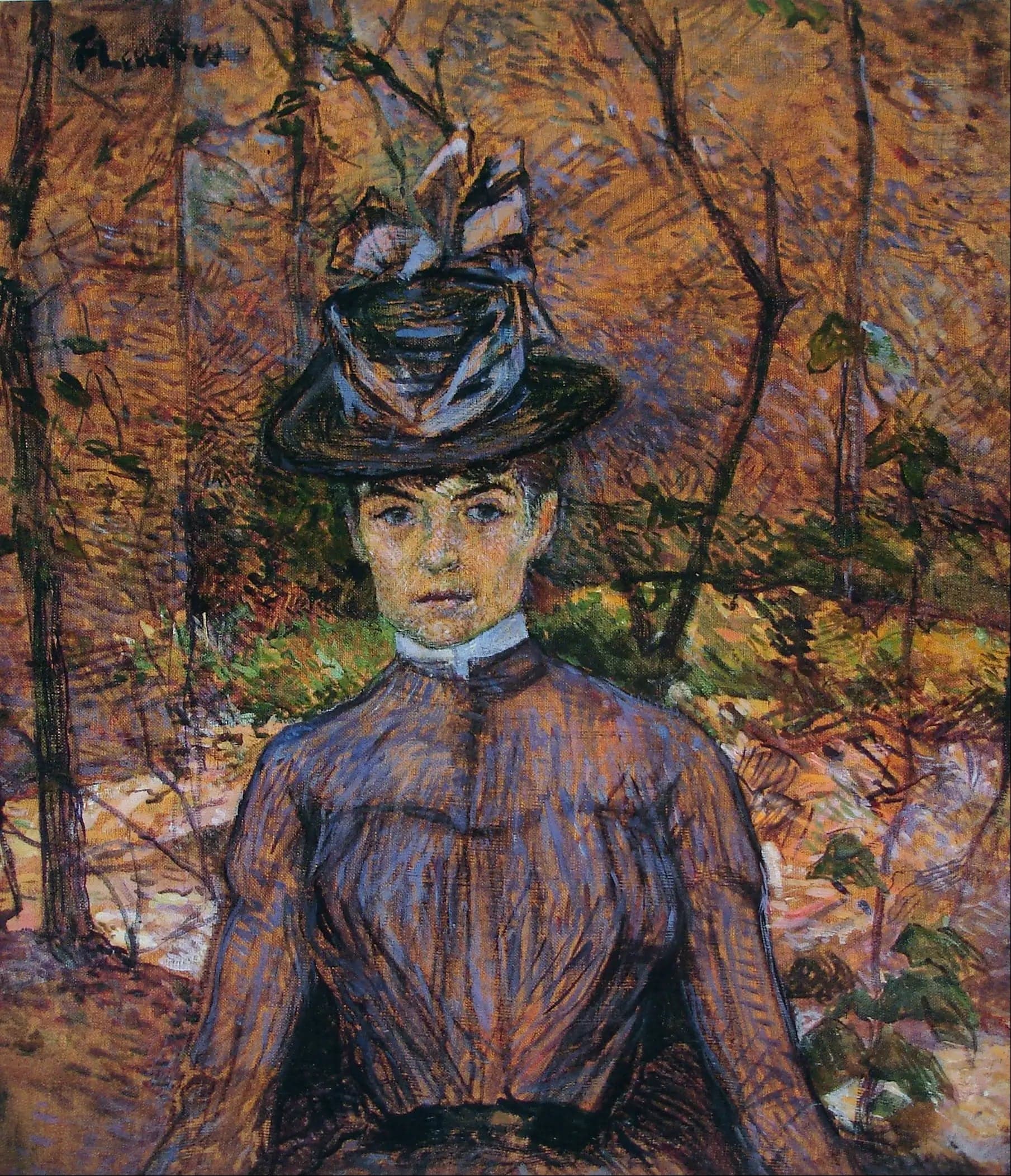
Portrait of Suzanne Valadon - Henri de Toulouse
- Original dimensions
- 46 x 55 cm
- Museum
- National Museum of Fine Arts Buenos Aires
- Year
- 1885
Scene depicted
This canvas highlights Suzanne Valadon, a fully-fledged artist, who embodies the female emancipation of the 19th century. On this canvas , she presents herself with delicate confidence, as both a model and creator, offering an introspective and intimate look at the psychology of a woman at the time. The choice of colors and fluid lines testify not only to Toulouse-Lautrec's technical mastery but also to the authenticity of his subject.
Historical context
This painting emblematic, created in 1885, is part of the famous post-impressionist movement. Toulouse-Lautrec, a true innovator, captured the artistic effervescence of Montmartre, where love, art, and bohemia mingled in a unique harmony. The canvas is currently located at the National Museum of Fine Arts in Buenos Aires, testifying to the lasting impact of this pictorial work. Its dimensions, 46 x 55 cm, invite close contemplation of this striking representation.
Place in the artist's career
The Portrait of Suzanne Valadon represents a key moment in Toulouse-Lautrec's career. After modest beginnings, the artist established himself with significant works such as “The Dance at the Moulin Rouge” and “The Troupe of Mademoiselle Églantine.” This painting marks a stage where he skillfully merges traditional portraiture with his avant-garde approach, creating an unbreakable link between form and emotion.
Anecdote
“Beauty lies in the ephemeral, in a moment captured forever.” These words of Toulouse-Lautrec resonate through the masterpiece that is the Portrait of Suzanne Valadon . By painting this expressive face one spring morning, where soft light filtered through the drapes, the artist managed to immortalize not just a face, but a soul vibrant with life.