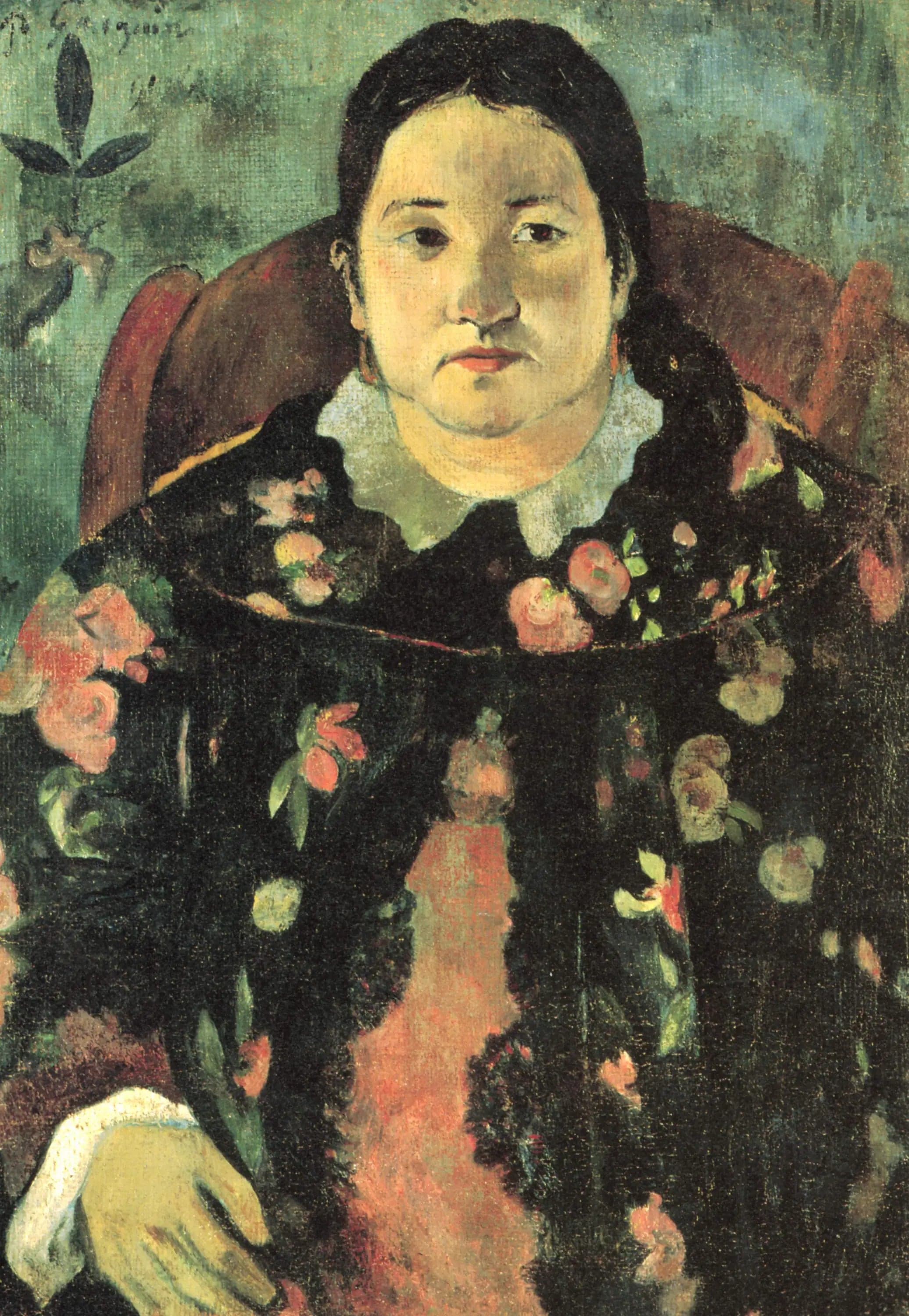
Portrait of Suzanne Bambridge
- Original dimensions
- 50 x 70 cm
- Museum
- musée Fin-de-Siècle
- Year
- 1891
Scene depicted
The Portrait de Suzanne Bambridge depicts a woman of delicate beauty, immersed in intimate contemplation. Every feature, every vibrant color of the canvas evokes a narrative, a story of the human soul, transcended by the nuances of everyday life. It is much more than a simple portrait; it is an introspection on the nature of femininity at the end of the 19th century, captured with exceptional wisdom.
Historical context
Created in the heart of 1891, this painting is the result of a time when Paul Gauguin was able to capture the very essence of the post-impressionist movement in Pont-Aven, Brittany. In this small coastal town, the canvas was born, inspired by the wild beauty of nature and the richness of human interactions of his time. Currently housed in the musée Fin-de-Siècle, this dazzling work transports us to a vibrant world blending colors and emotions.
Place in the artist's career
This canvas is situated at a pivotal time in Gauguin's career, marking the transition to a bolder and more symbolic style. In parallel, works such as "Vision after the Sermon" and "Where Do We Come From? What Are We? Where Are We Going?" highlight his technical and emotional evolution, where personal expression takes precedence over realistic representation.
Anecdote
In a burst of creativity, Gauguin reportedly said: “Art is not the representation of the visible, but the expression of the invisible.” This phrase resonates strongly when contemplating the masterpiece that is the Portrait de Suzanne Bambridge. Imagine him, on a sunny morning, wandering the paths of the Breton countryside, crossing the captivating gaze of Suzanne, his muse. This encounter nourished an inspiration that would accompany him endlessly.