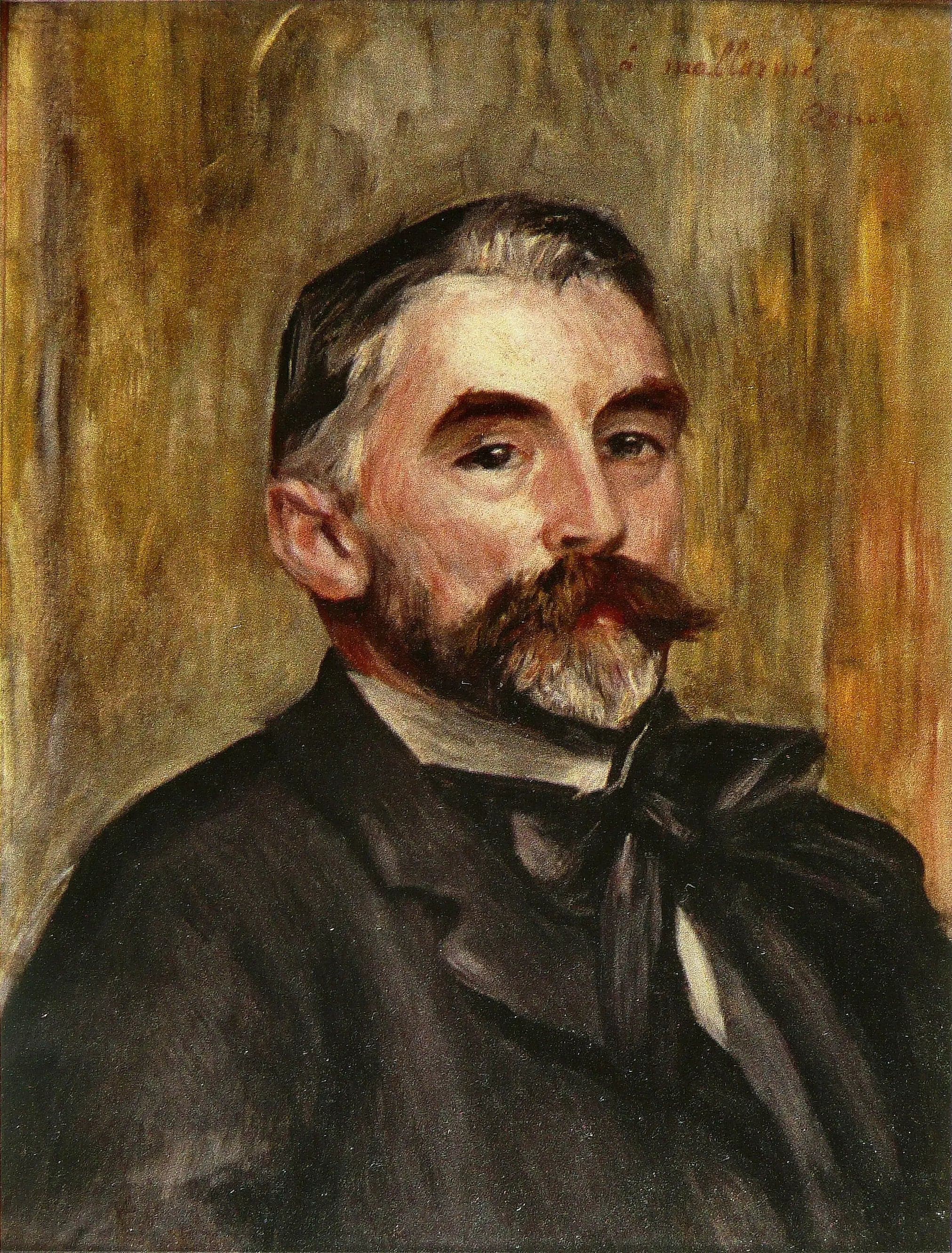
Portrait of Stéphane Mallarmé - Pierre
- Original dimensions
- 40 x 50 cm
- Museum
- château de Versailles
- Year
- 1892
Scene depicted
In the painting “Portrait de Stéphane Mallarmé,” Renoir succeeds in transcending mere representation to offer a snapshot of the soul of his subject. The poet, immersed in his thoughts, seems to float between dream and reality. The meticulously worked canvas reveals the intensity of his gaze and the nobility of his being, inviting the viewer to contemplate the beauty of art and words. Each brushstroke evokes a silent conversation between the viewer and the composition, highlighting the complexity of human emotions.
Historical context
Created at the heart of the late 19th century, this painting is situated at the intersection of impressionism , a movement that celebrates light and color. Made in Paris, this pictorial work by Auguste Renoir immortalizes one of the major poets of his time, Stéphane Mallarmé, whose influence will mark French literature. The painting is now located in the majestic gallery of the château de Versailles, where it testifies to the artistic ingenuity of its era.
Place in the artist's career
This painting stands as a pivotal moment in the career of Auguste Renoir . The richness of colors and the depth of expressions testify to an artistic maturity in full evolution. It is linked to other of his famous works such as “Les Baigneuses” and “Le Déjeuner des canotiers,” where one perceives a constant quest for light and life. In this canvas , the artist merges technique and emotion, laying the groundwork for a flourishing creative path.
Anecdote
“I do not paint what I see, but what I feel.” This quote from Auguste Renoir resonates in the genesis of his masterpiece , created during a meeting with Mallarmé, one sunny spring morning. The artist, captivated by the melancholy and depth of his model's gaze, infuses an intimacy into this canvas , capturing not only the face but the very essence of the man.