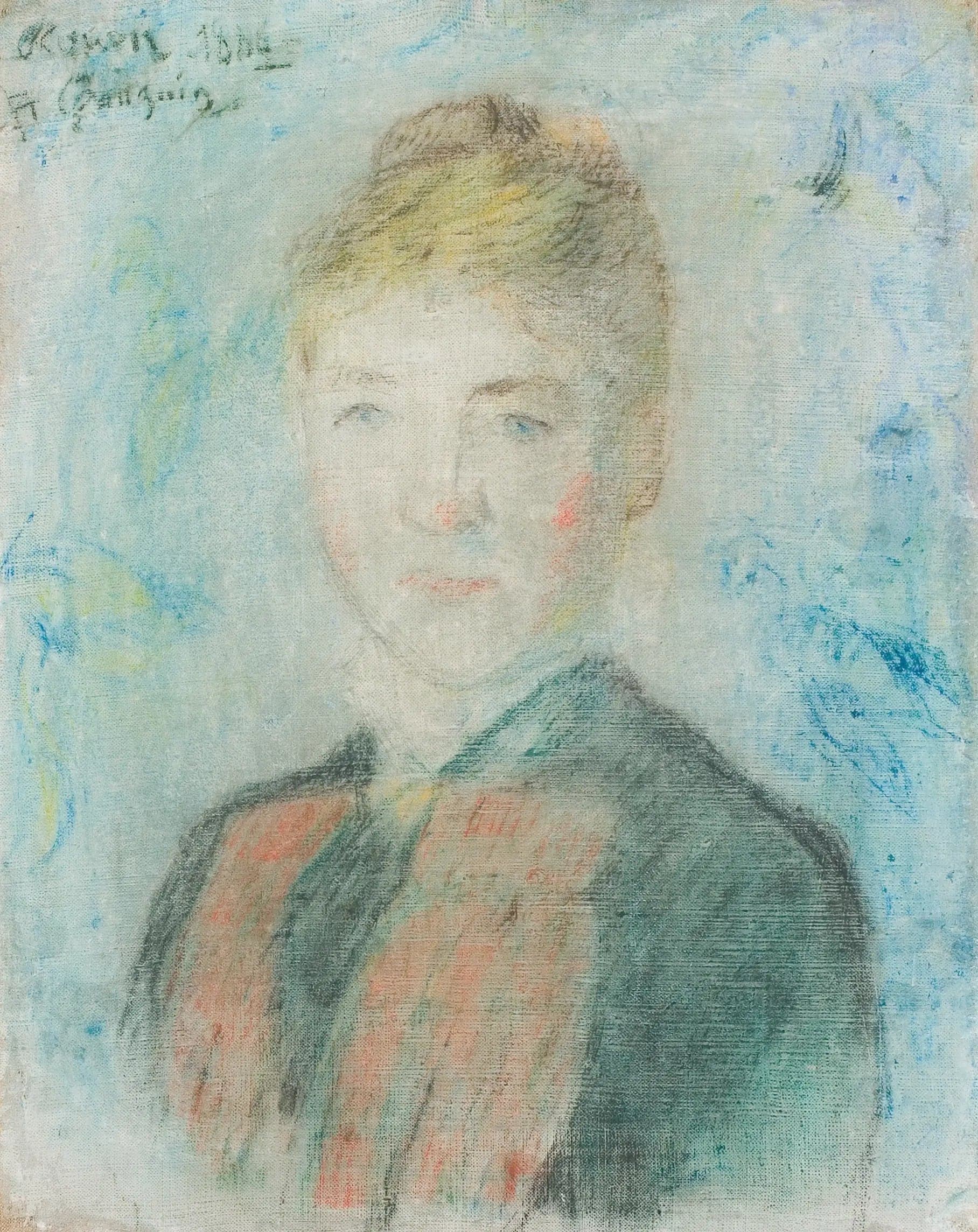
Portrait of Sophie Margrethe Manthey
- Original dimensions
- 33 x 41 cm
- Museum
- Kröller-Müller museum
- Year
- 1884
Scene depicted
In this canvas , Gauguin offers an intimate and poignant representation of Sophie Margrethe Manthey, capturing not only her appearance but also an emotional depth. The composition features a woman whose expression sketches a blend of melancholy and serenity, reflecting an era in search of authenticity and personal expression.
Historical context
Created in 1884, this painting remarkable takes its roots in Paris, at the heart of a post-impressionist movement that revolutionizes art. The canvas is currently preserved at the Kröller-Müller museum , a showcase that pays tribute to the richness of Gauguin's work. This masterpiece illustrates the essence of the era, marked by a spiritual quest and a bold exploration of colors.
Place in the artist's career
This canvas , while Gauguin is in full exploration of his style, marks a significant turning point in his career. In parallel with works like “The Virgin's Cloak” and “Vision after the Sermon,” the “Portrait of Sophie Margrethe Manthey” testifies to the technical and emotional evolution of the artist, highlighting his creative boldness.
Anecdote
“Color is a cry of the soul.” Thus expresses Gauguin, evoking the moment when, after crossing the face of Sophie, he was struck by her singular beauty. It was a morning vibrant with soft light, where the silence of the studio was interrupted by the song of a bird, inspiration then materialized under his fingers. The painting capturing her essence became the testimony of this ephemeral meeting.