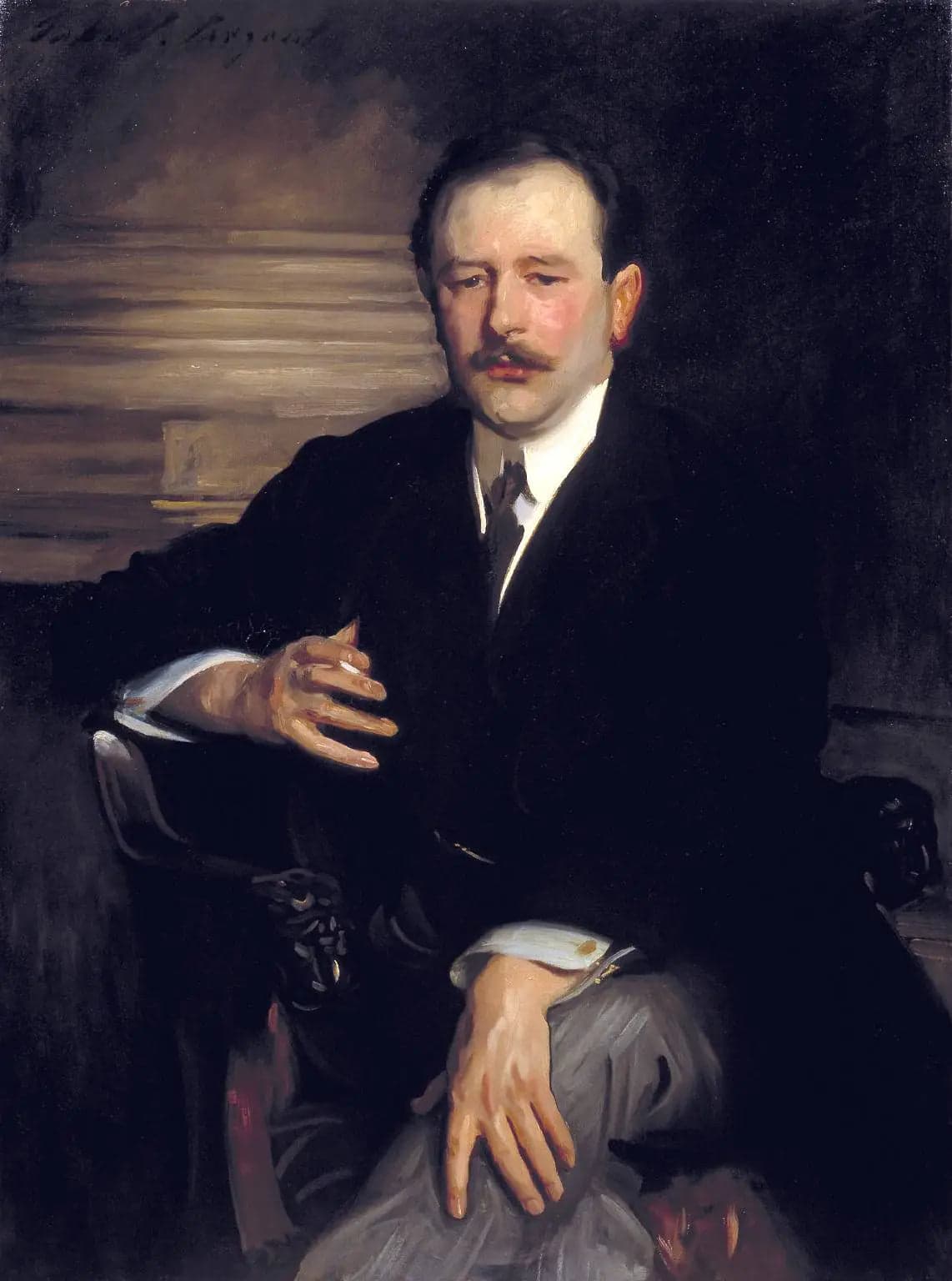
Portrait of Robert Mathias
- Original dimensions
- 101.7 x 76 cm
- Museum
- Tate
- Year
- 1913
Scene depicted
The painting “Portrait of Robert Mathias” illustrates a meeting between the artist and his subject, where Mathias's confident posture reveals a peaceful nobility. The work bears witness to the influence of the classical portrait style while integrating a modern touch. Sargent, through his refined technique, manages to inject palpable life into the painting , capturing not only Mathias's face but also the environment surrounding him.
Historical context
Created in 1913, this painting is set in the vibrant context of the early twentieth century, a period where traditional art mingled with new avant-gardes. Made in London, at the heart of the impressionist movement that was redefining aesthetic norms, the canvas is now housed in the Tate museum in the United Kingdom. Its size, 101.7 x 76 cm, provides a space conducive to the contemplation of this masterpiece that transcends time.
Place in the artist's career
This painting represents a turning point in Sargent's career, a moment when he dominated the art of portraiture. Among his other masterpieces such as “Madame X” and “The Daughters of Edward Darley Boit,” this canvas highlights a fascinating technical evolution: the shift from more austere compositions to a freer and more luminous expressiveness. Each work, while unique, feeds off the previous one, demonstrating Sargent's artistic growth.
Anecdote
It is often said that John Singer Sargent claimed: “Light is the spirit of painting.” That spring morning, as he observed Robert Mathias, a gentle breeze scented with budding flowers caressed his face. Inspiration struck him forcefully, capturing the essence of his model in a canvas vibrant with the soft light of that timeless morning.