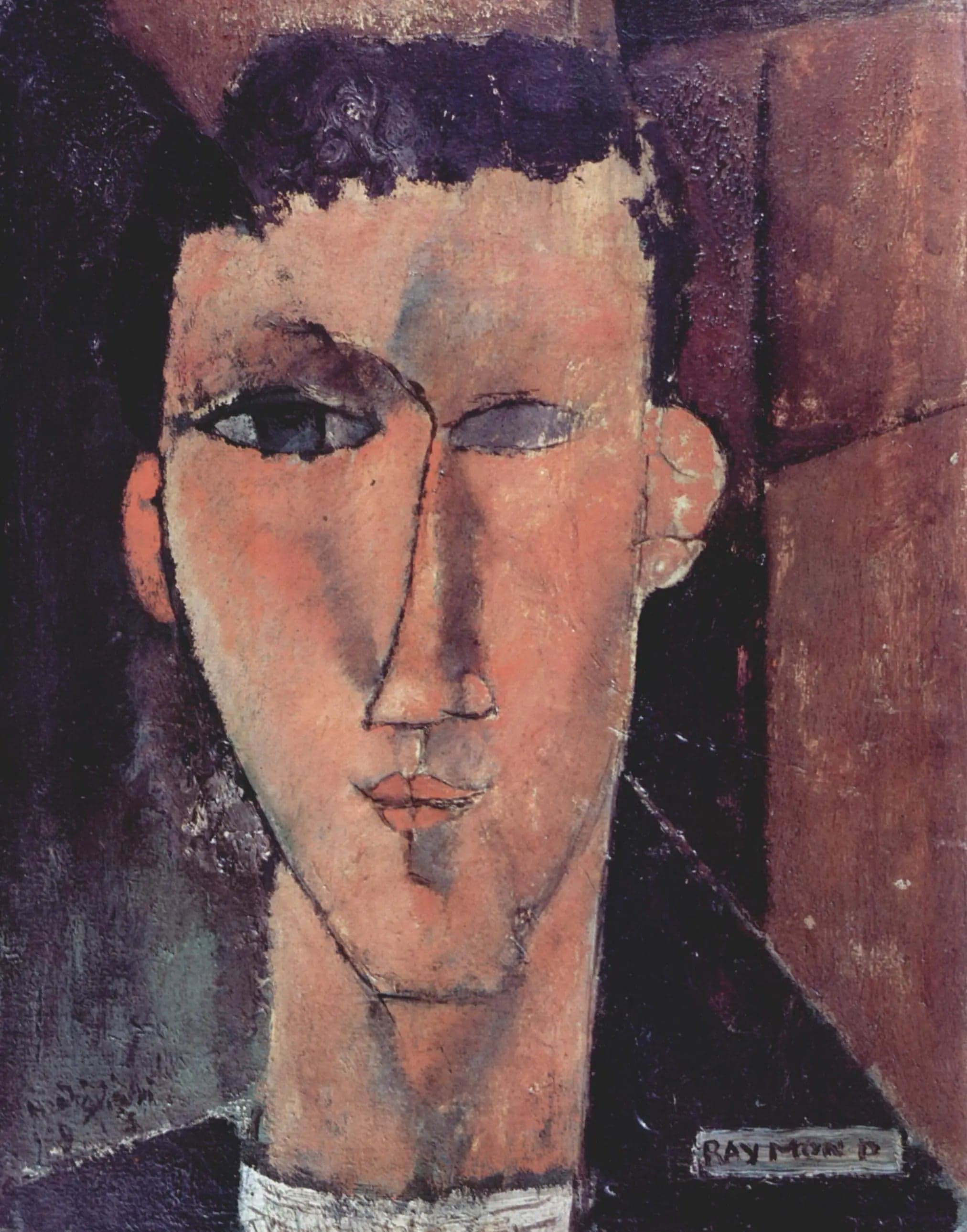
Portrait of Raymond
- Original dimensions
- 29 x 37 cm
- Museum
- Not specified
- Year
- 1915
Scene depicted
The painting “Portrait of Raymond” reveals a face imbued with tenderness and mystery. The fluid lines of the composition invite the viewer to dive into the model's mind, capturing their essence with unmatched delicacy. The simplicity of the features, combined with deep introspection, pays homage to the beauty of human vulnerability. Everything in this canvas evokes a palpable connection between the artist and their subject, whispering a story of affection and memory.
Historical context
Created in 1915, the painting Portrait of Raymond emerges in the vibrant city of Paris, an artistic epicenter of the early 20th century. This painting is part of the modernism movement, marked by a quest for beauty and human sensitivity. The work is the result of an era where experimentation and innovation intertwine to give birth to a new aesthetic. Although its current location is not specified, this work remains a strong symbol of Modigliani's artistic era.
Place in the artist's career
This painting is situated at a major turning point in Modigliani's career. In 1915, the artist is already recognized for his mastery of portraiture and his distinctive style. Alongside other iconic works, such as “Reclining Nude” and “Portrait of Jeanne Hébuterne,” the Portrait of Raymond asserts itself as a masterpiece revealing the evolution of his approach: from pure representation to an intimate exploration of human emotions.
Anecdote
Modigliani once stated: “Beauty is an accessible path that requires a pure gaze.” It was in a small Parisian café, on a quiet morning, that the face of Raymond, penetrating and delicate, etched itself in his memory. This painting pays tribute to that fleeting moment, encapsulating the essence of a human encounter. The masterpiece radiates a fresh emotion, like the subtle scent of coffee and the warmth of the first rays of sunlight.