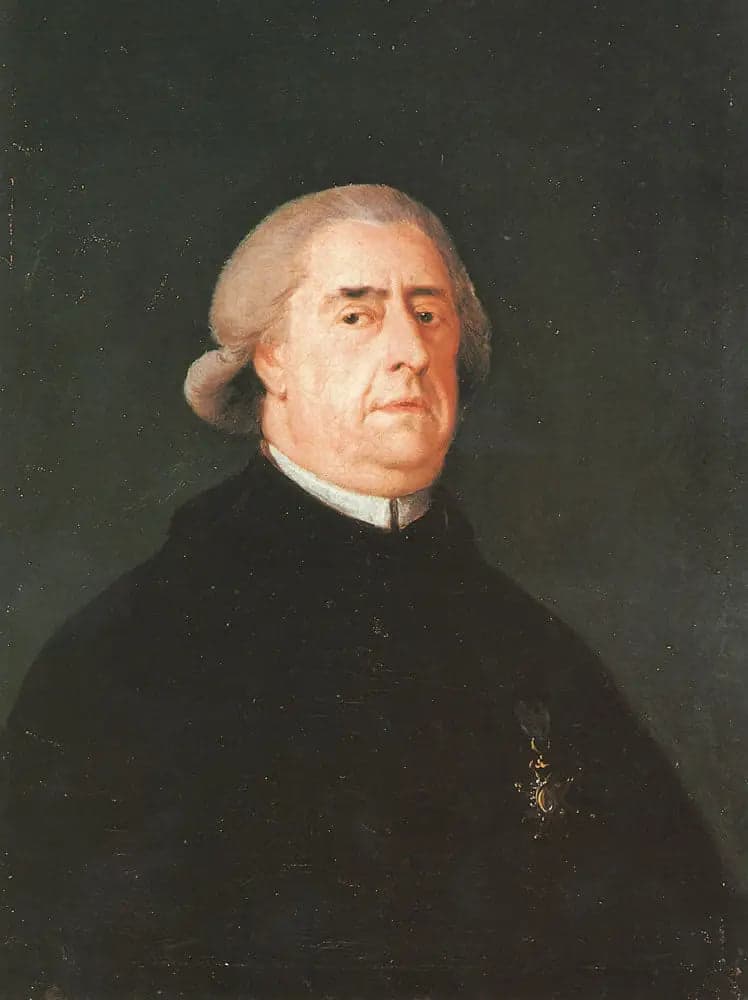
portrait of Ramón Pignatelli
- Original dimensions
- 62 x 79 cm
- Museum
- Not specified
- Year
- 1790
Scene depicted
In this canvas , Goya depicts Ramón Pignatelli, an influential statesman, with remarkable visual intensity. His penetrating gaze and thoughtful posture reflect not only his status but also the era in question, the end of the Age of Enlightenment. This pictorial work captures the spirit of a time marked by power and intellect, paying tribute to the legacy of a man whose impact endures.
Historical context
Created in 1790, this painting is emblematic and has its roots in the vibrant city of Madrid, a cultural epicenter where the artistic currents of the late 18th century collide. [title of the painting] belongs to the early romanticism scene, where Goya begins to develop his unique and bold style. Today, this canvas is preserved in an unspecified collection, evoking the mystery that surrounds it, while its dimensions of 62 x 79 cm instantly capture the eye.
Place in the artist's career
This [title of the painting] represents a key moment in Goya's career, a pivotal period between his promising beginnings and his stylistic quest for emotional depth. Compared to works such as “The Pilgrimage of Saint Isidore” and “The Naked Maja,” one can distinguish Goya's technical evolution. The life stories he captures reveal a growing richness in his work, an apparent maturity that asserts itself through each of his paintings .
Anecdote
“I paint the world as it is, but dream of what it could be.” Goya may have meditated on this reflection during a sweet spring morning in Madrid, thus capturing the essence of the noble character of Count Pignatelli in this painting . This light and these shadows contrast with the personal reflection of this portrait, creating a strong emotional bond between the artist and his subject.