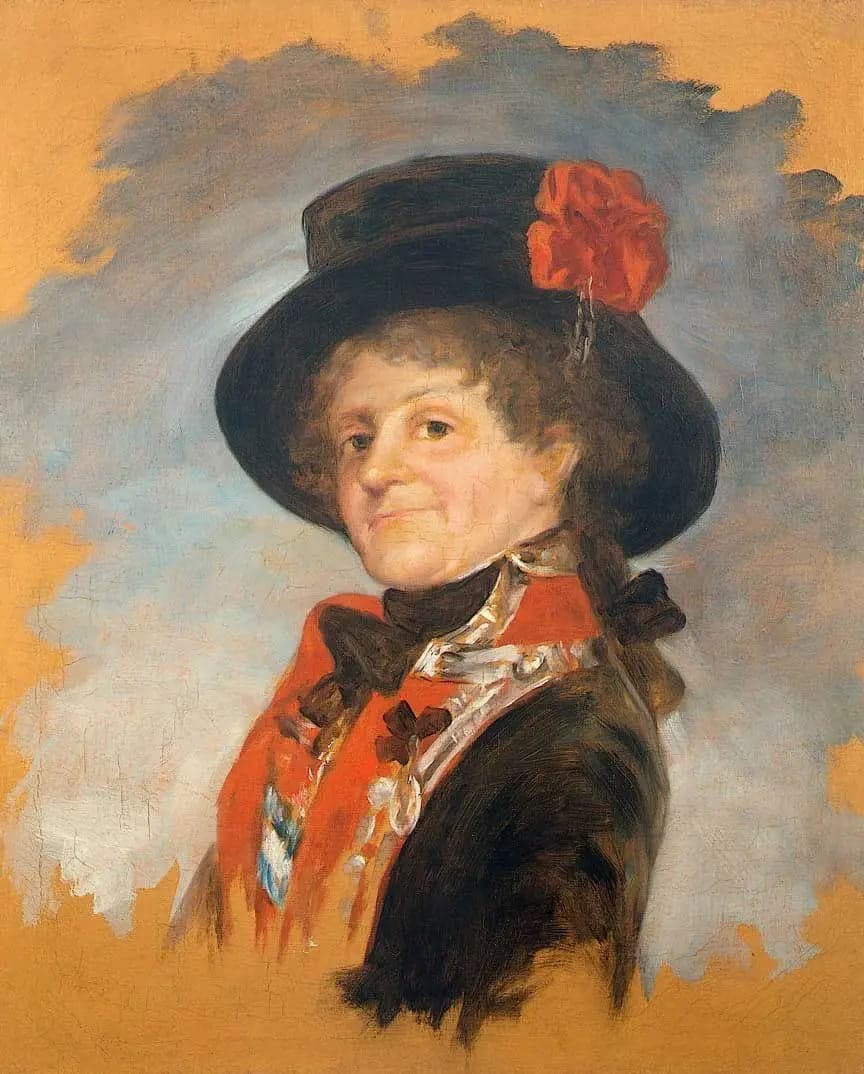
Portrait of Queen Maria Luisa of Spain
- Original dimensions
- 52 x 63 cm
- Museum
- Not specified
- Year
- 1799
Scene depicted
This painting is a striking representation of Maria Louise of Spain, capturing her charisma and dignity. The queen, a luminous silhouette amidst a nuanced backdrop, seems to radiate seriousness and grace. Goya, through his extraordinary skill, manages to convey both the power of royalty and human vulnerability, echoing the turmoil of his time.
Historical context
Created in 1799, this painting emblematic of Francisco de Goya is rooted in the rich Spanish artistic tradition. The canvas, made at the threshold of the 19th century, embodies the essence of the romantic movement, while capturing the majesty of a time of political turmoil and social change. The painting, although not displayed in a specific museum today, remains a revealing work of Spanish identity during this period, measuring 52 by 63 cm.
Place in the artist's career
The Portrait of Queen Maria Louise represents a crucial milestone in Goya's career, illustrating his artistic maturity and ability to capture the human soul. Alongside other paintings like "La Maja Desnuda" and "The Executions of May 2nd", this work highlights his stylistic evolution, which oscillates between bold realism and sensitive romanticism .
Anecdote
“Beauty is the echo of a troubled soul,” Goya might have said while contemplating the face of Queen Maria Louise. Imagine a spring morning, when the sun gently caresses the walls of the painter's studio. In this golden atmosphere, a fleeting encounter with the queen would have inspired a moment of eternal grace, giving birth to this pictorial work filled with emotion.