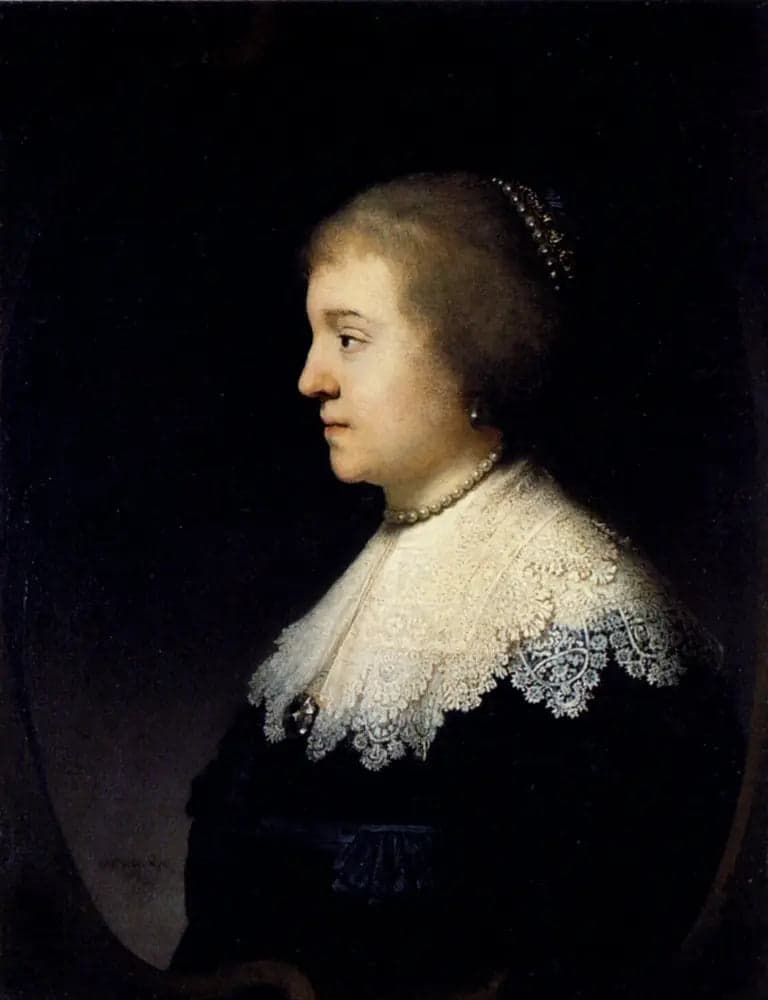
Portrait of Princess Amalia van Solms
- Original dimensions
- 54.5 x 69.5 cm
- Museum
- Jacquemart-André Museum
- Year
- 1632
Scene depicted
The composition of the painting highlights the nobility and dignity of Princess Amalia van Solms, embracing the sobriety of the background that amplifies the richness of the costume details. The delicate shadows and bursts of light make her expression fascinating, bringing to life a canvas that tells a timeless story.
Historical context
Created in 1632, in the historic city of Amsterdam, this iconic painting is part of the Baroque movement. At that time, the Netherlands was experiencing an era of artistic prosperity, and Rembrandt , with his genius, managed to capture the very essence of his subjects. The painting is now displayed at the Jacquemart-André Museum, offering a window into this golden age.
Place in the artist's career
This painting is situated at a crucial moment in Rembrandt's career, illustrating the mastery of light and color that will mark all his work. Alongside The Night Watch and The Anatomy Lesson of Dr. Tulp , this painting represents a stage of maturity, where each brushstroke becomes a breath of life.
Anecdote
It is said that Rembrandt , in the freshness of a spring morning, looked at the reflection of colors in the windows of Amsterdam, exclaiming: “Light is the heart of painting .” It is this luminous quest that nourished the soul of the masterpiece that is the portrait of Princess Amalia van Solms, a model of elegance and human depth.