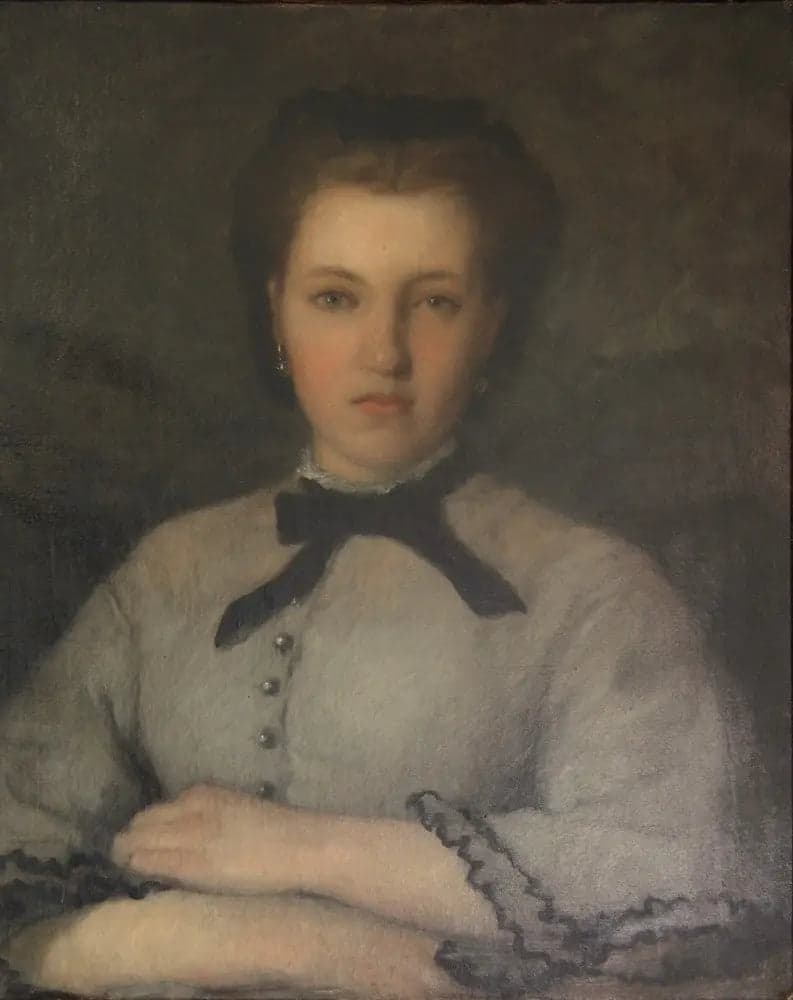
Portrait of Marie-Zélie Laporte - Pierre
- Original dimensions
- 67.6 x 80.4 cm
- Museum
- musée des Beaux-Arts de Limoges
- Year
- 1864
Scene depicted
The canvas “Portrait de Marie-Zélie Laporte” depicts a moment of intimacy and delicacy, where Marie-Zélie reveals herself with grace and serenity. Her radiant presence draws the eye, while the blurred background emphasizes her elegance. Through this canvas, Renoir does not merely reproduce an image, but he creates an atmosphere, a story to live, inviting the viewer to feel every nuance of this scene frozen in time.
Historical context
This painting emblematic, created in 1864, finds its roots in the beautiful city of Limoges, in the heart of a France in full artistic effervescence. Renoir, a major figure of the impressionist movement, captures here the essence of a moment, an emotion, in a setting where freedom of expression is in full bloom. Today, this canvas precious is preserved in the musée des Beaux-Arts de Limoges, welcoming visitors into the fascinating world of 19th-century art.
Place in the artist's career
This canvas marks a crucial step in Renoir's career, illustrating his evolution towards a mastery of light and colors, while remaining true to the impressionist sensitivity. At the same time, this work can be compared to “Le Déjeuner des canotiers” and “La Grenouillère,” which also show the fine analysis of human interactions and light, thus marking the maturity of his style.
Anecdote
“Art is an emotion that one can touch,” Renoir is said to have remarked when discussing his masterpiece . The inspiration for this canvas was born on a gentle spring morning, where the light delicately caressed the features of Marie-Zélie Laporte, plunging the viewer into a living painting, vibrant with emotion. Thus, each brushstroke became the reflection of a story, of a universal human connection.