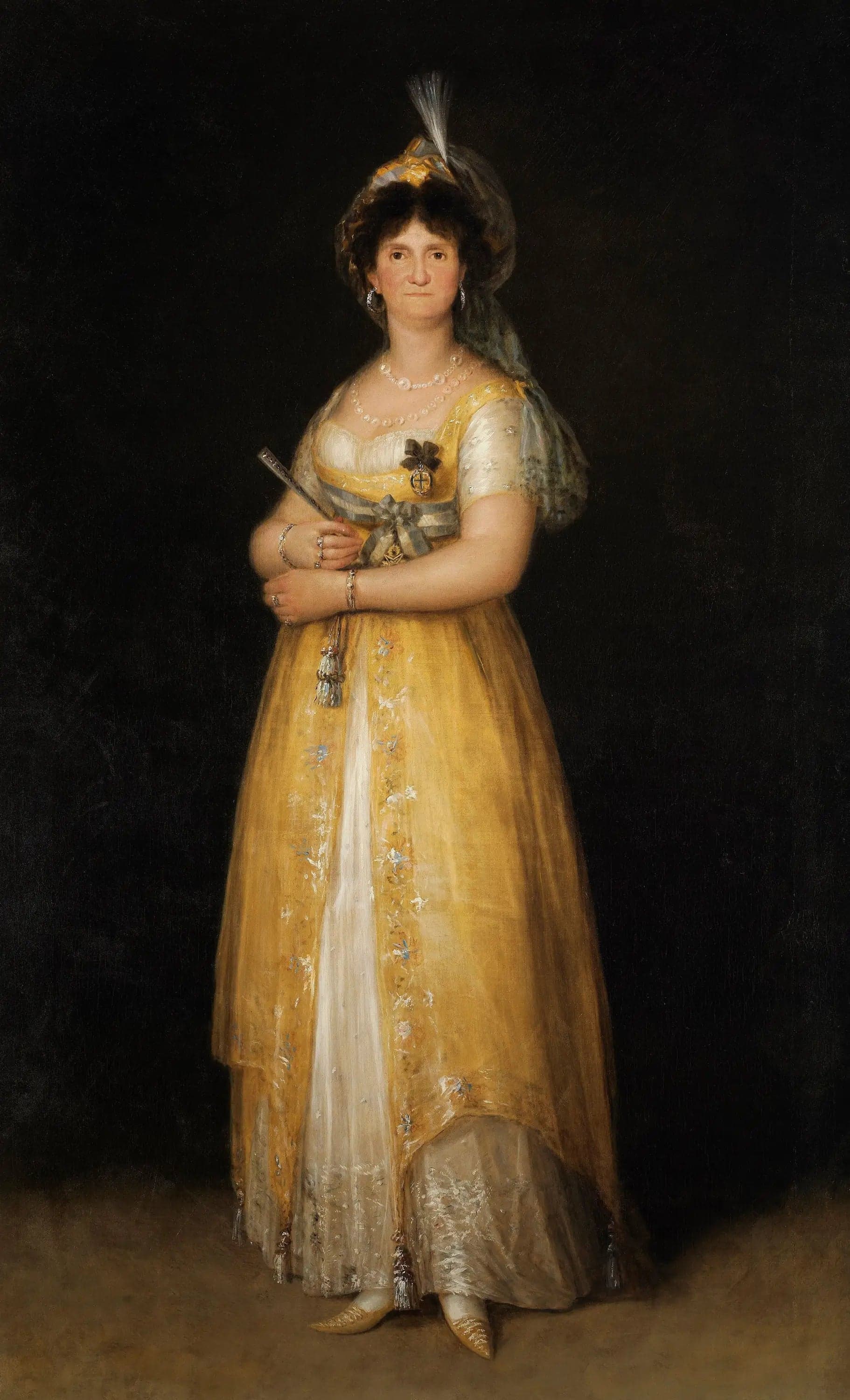
Portrait of Marie-Louise of Parma
- Original dimensions
- 132 x 205 cm
- Museum
- Museo del Prado
- Year
- 1789
Scene depicted
In this masterpiece , Goya immortalizes Marie-Louise de Parme, a royal figure, reflecting the nobility and dignity of her time. The artist uses a refined posture to traverse her beauty, enhanced by a peaceful background that evokes luxury and serenity, the grandeur of the Spanish aristocracy is felt in every brushstroke.
Historical context
Created in 1789, in the vibrant city of Madrid, this canvas is emblematic of the Romanticism movement. At that time, Spain was going through a period of profound social and political upheaval, but it was also the cradle of great artistic minds. The painting is currently displayed at the Museo del Prado, a treasure of European art, where it continues to fascinate entire generations.
Place in the artist's career
The painting “Portrait de Marie-Louise de Parme” marks the pinnacle of Goya's career, as he consolidates himself as the court portraitist. This pivotal moment precedes other famous works such as "The Executions of May 3" and "The Caprichos," reflecting a technical and emotional evolution that radicalizes his art.
Anecdote
“I paint to immortalize not just a face, but an entire soul.” Thus speaks Goya, inspired by the delicate beauty of Marie-Louise. Imagine a spring morning in Madrid, soft light flooding the artist's studio, revealing the subtleties of the hues that will compose this painting , capturing the very essence of its subject.