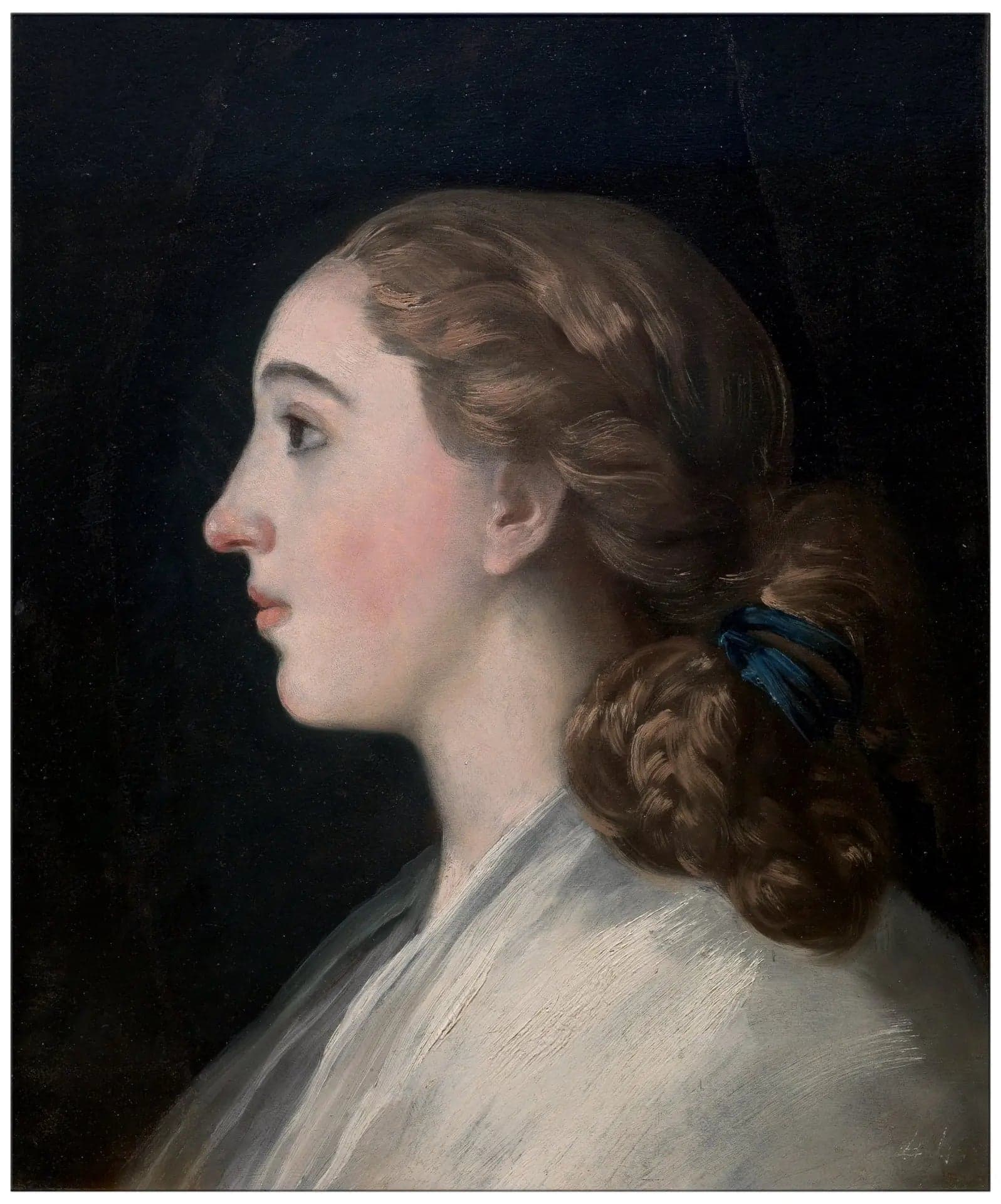
Portrait of María Teresa de Vallabriga
- Original dimensions
- 39.6 x 48 cm
- Museum
- Museo del Prado
- Year
- 1783
Scene depicted
The painting “Portrait de María Teresa de Vallabriga” illustrates the noble lady in a refined setting, surrounded by simple yet evocative luxuries. She is dressed in a sumptuous gown that reflects her status while exuding a sincere simplicity. Goya meticulously depicts the details, absorbing light to offer brilliant reflections on the fabric and enveloping his subject in an atmosphere that is both intimate and majestic.
Historical context
It was in 1783 that Francisco de Goya executed this painting , while he was in Madrid, the nerve center of Spanish art. This masterpiece is an integral part of the Romanticism movement and fits into a time when aristocratic portraits were flourishing, reflecting a society in full effervescence. The canvas , displayed at the Museo del Prado, reveals the depth of human emotions and the delicacy of a private moment captured for eternity.
Place in the artist's career
This painting marks a decisive step in Goya's career, as he begins to forge a reputation as a portraitist of high society. At this time, works like “La Maja Desnuda” and “The Family of Charles IV” attest to his growing genius. “Portrait de María Teresa de Vallabriga” fits into a pivotal period where Goya combines impeccable technique and raw emotion, increasing the impact of his canvases .
Anecdote
“Art must evoke deep feelings, like the beats of the heart on the canvas.” This quote, attributed to Goya, reminds us of the passion that inhabits him. Imagine him one spring morning, strolling through the streets of Madrid, where he crosses the gaze of María Teresa, a unique muse whose beauty and grace will nourish the soul of his masterpiece . The painting then imposes itself as a silent ode to femininity, capturing a moment of life.