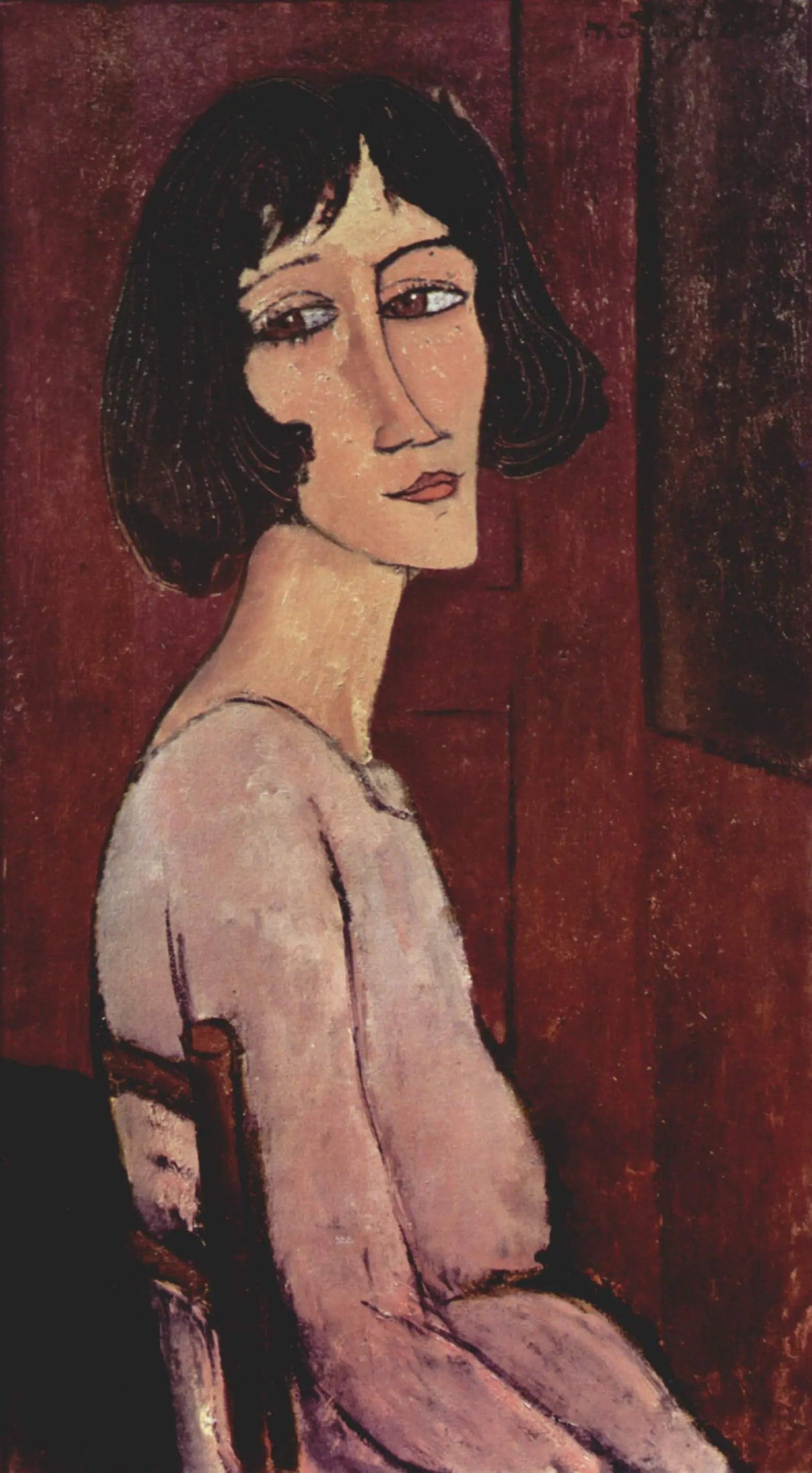
Portrait of Margherita
- Original dimensions
- 50 x 73 cm
- Museum
- Not specified
- Year
- 1916
Scene depicted
The painting "Portrait of Margherita" is an intimate exploration of the face of Modigliani's muse, capturing psychological and emotional nuances. The work does not merely present Margherita, but evokes a depth of soul through elongated features and warm colors, bringing to life a gaze that is both melancholic and enigmatic, characteristic of the Modigliani style.
Historical context
Created in 1916, the painting "Portrait of Margherita" is set in the context of Paris, a bustling city of art and creativity in the early 20th century. This iconic painting belongs to the modernist movement, where Modigliani, with his distinctive style, captured the essence of his subjects through clean lines and stylized forms. Currently, this pictorial work is found in private collections, showcasing its dimensions of 50 x 73 cm that recall the delicacy of the artist and his unique approach to portraiture.
Place in the artist's career
This painting marks a significant milestone in Modigliani's career, representing not only his iconic style but also a period of artistic maturity. Placed alongside paintings such as "Reclining Nude" and "Portrait of Jeanne Hébuterne," one observes an evolution in his use of color and form, rendering the character of his models in an increasingly universal and timeless manner.
Anecdote
"Beauty is not created, it is revealed," said Amedeo Modigliani . That morning, in a sunny alley of Montmartre, he crossed the gaze of Margherita, a fascinating muse. This fleeting moment infused the canvas with her essence, transforming the masterpiece into a visual celebration of timeless beauty.