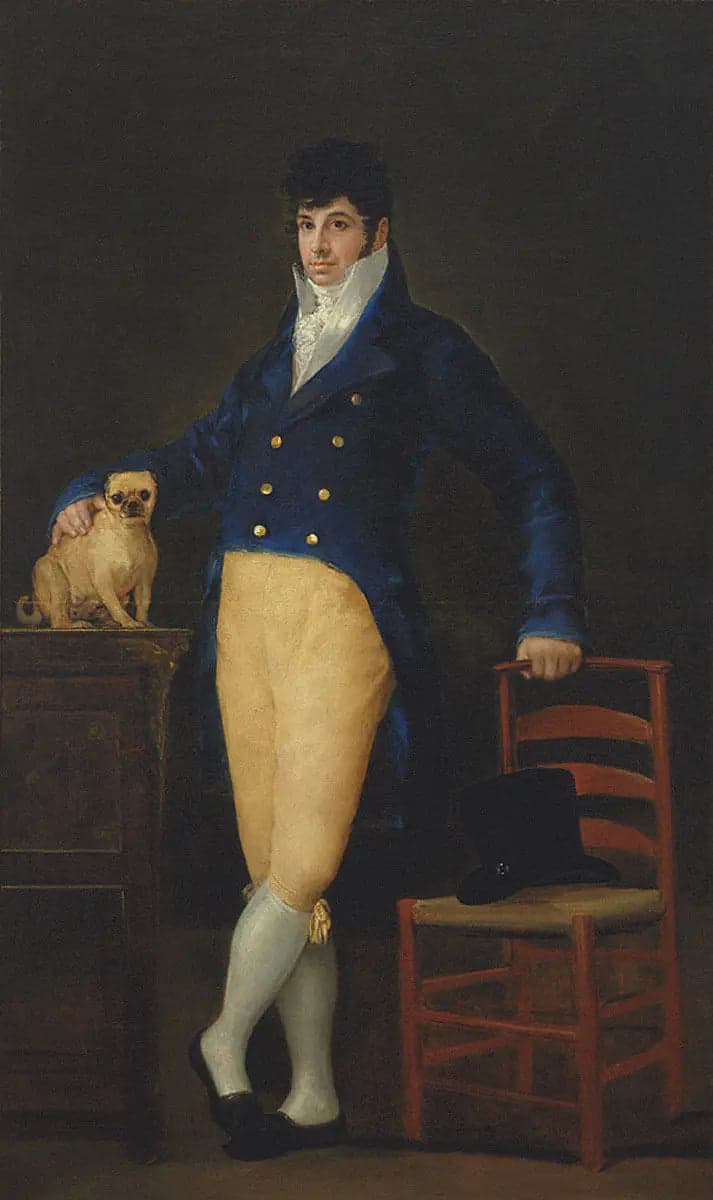
Portrait of Manuel García de la Prada
- Original dimensions
- 125 x 207 cm
- Museum
- Des Moines Art Center
- Year
- 1805
Scene depicted
The painting “Portrait of Manuel García de la Prada” is a celebration of character and human dignity. Goya, master of portraiture, succeeds in capturing not only the physical appearance of his subject but also a psychological depth that resonates even today. The choice of clothing and facial expression enriches this painting with a personal story, that of a man in search of recognition and identity.
Historical context
Created in Madrid, the capital of Spain, in 1805, this painting is part of the romantic movement that characterizes Goya's work. Charged with political and social tensions, this era is marked by upheavals that inspire the artist. The canvas is currently housed at the Des Moines Art Center, where it invites visitors to explore the complexity of its time.
Place in the artist's career
This canvas appears as one of the milestones in Goya's artistic maturation, marking a shift towards more psychological portraits than purely realistic ones. It can be related to other impactful works, such as “La Maja Desnuda” and “Le Parasol,” which demonstrate the stylistic and narrative evolution of the artist towards compositions where psychological intensity blends with technical mastery.
Anecdote
“The truth is in the eyes,” Goya might have drawn out while painting the expressive face of Manuel García de la Prada in a morning burst of light. This fleeting moment, where the artist crossed the gaze of a man at the point of crossing destinies, highlights the emotional intensity encapsulated in this pictorial work .