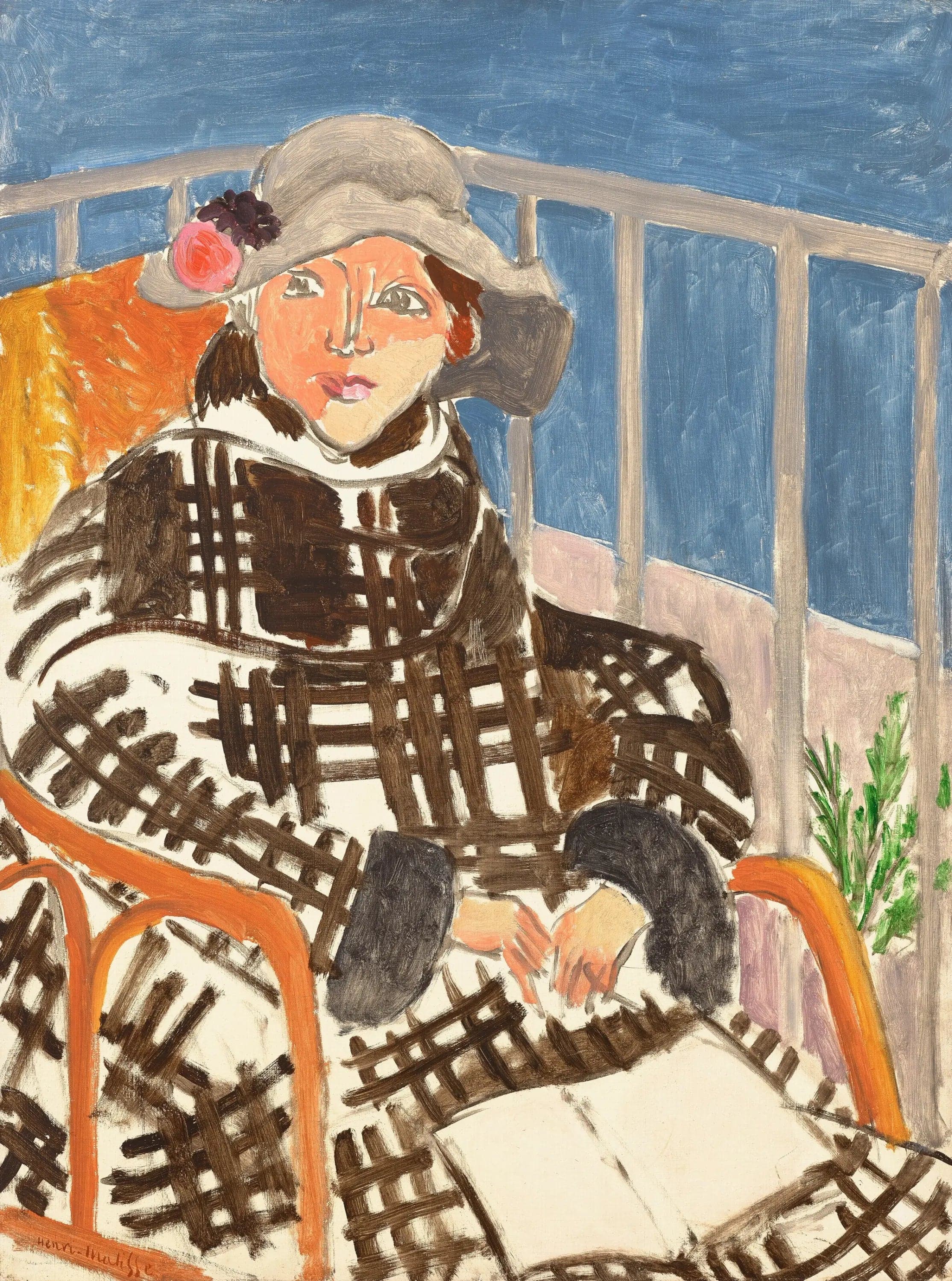
Portrait of Mademoiselle Matisse
- Original dimensions
- 53.9 x 72.9 cm
- Museum
- Ōhara Art Museum
- Year
- 1918
Scene depicted
The painting "Portrait of Mademoiselle Matisse" does not merely reproduce an image. It captures a moment of tenderness, testifying to a deep connection between the artist and his model. In this canvas , Mademoiselle Matisse appears in all her splendor, surrounded by vibrant hues that convey both joy and wonder. Her gaze, turned towards the viewer, seems to invite a surreal introspection, where the suspended time accentuates the beauty of the moment.
Historical context
This painting emblematic was created in 1918, at a time when the world was seeking renewal after the turmoil of World War I. Made in Nice, in the heart of the Provence-Alpes-Côte d'Azur region, it is part of the Fauvist movement, an innovative artistic current that celebrates pure color and personal expression. The canvas is currently housed in the Ōhara Art Museum , a setting that allows for the rediscovery of the emotion that animates each brushstroke of the painting .
Place in the artist's career
"Portrait of Mademoiselle Matisse" stands as a major milestone in the career of Henri Matisse . Created during a period of artistic maturity, this painting marks a turning point where Fauvist technique reaches its peak. For comparison, one can mention "The Dance" and "The Joy of Life," each marking a chapter in Matisse's evolution, both stylistically and emotionally, plunging the viewer into the heart of modern art.
Anecdote
In a breath of inspiration, Matisse once declared: "Art does not reproduce the visible; it makes visible." This testimony of his thought resonates with the realization of this masterpiece . Imagine a gentle spring morning, where golden light filters through the curtains to caress the features of Mademoiselle Matisse, revealing a beauty full of promise. This intimate scene is captured with a virtuosity that makes this painting an unforgettable work of art.