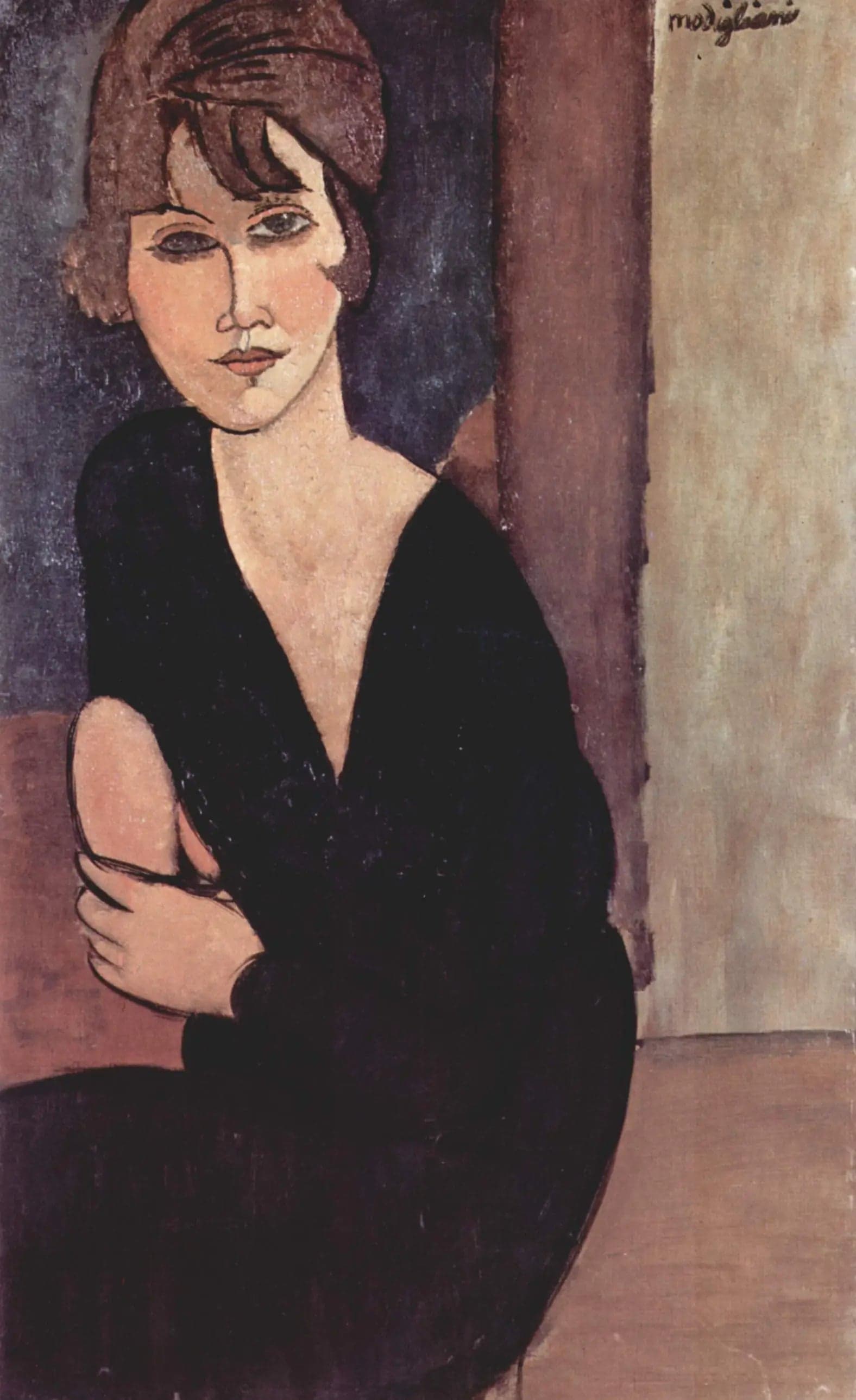
Portrait of Madame Reynouard
- Original dimensions
- 50 x 81 cm
- Museum
- Not specified
- Year
- 1916
Scene depicted
In the painting “Portrait of Madame Reynouard,” an elegant silhouette unfolds, crowned with mystery and grace. The female figure, immersed in a soft and meditative expression, seems to almost float beyond time. Elongated and stylized forms, characteristic of Modigliani, create an atmosphere that is both close and distant, inviting the viewer to explore their own inner world. Each brushstroke of painting tells a story, awakens memories, while leaving room for imagination.
Historical context
Created in 1916, this iconic work finds its roots in Paris, the vibrant heart of modernism in art. The painting merges the lightness of the avant-garde period with the depth of human emotions, characteristic of the expressionist movement. Through this painting , Modigliani captures the fragile essence of feminine beauty, while playing with the idea of timelessness. Currently, the painting , although not exhibited in a known museum, remains a coveted piece by private collectors. Its dimensions, 50 by 81 centimeters, offer an ideal format to showcase this delicate composition.
Place in the artist's career
This painting represents a key milestone in Modigliani's career, marking the peak of his stylistic expression. While he had just completed other major works such as “La Léopoldine” and “Femme assise,” “Portrait of Madame Reynouard” testifies to a new maturity and confidence in his painting technique. The representation of the female figure, always in motion and in search of authenticity, reflects a fascinating evolution in his work.
Anecdote
“Beauty can only exist if it is lived, felt,” would have declared Amedeo Modigliani one sunny morning, inspired by the play of shadows and light on the faces he encountered in the streets of Montparnasse. It is in this surge of authenticity that this painting was born, embodying the quintessence of his art, intimately linked to human emotions and the ephemeral.