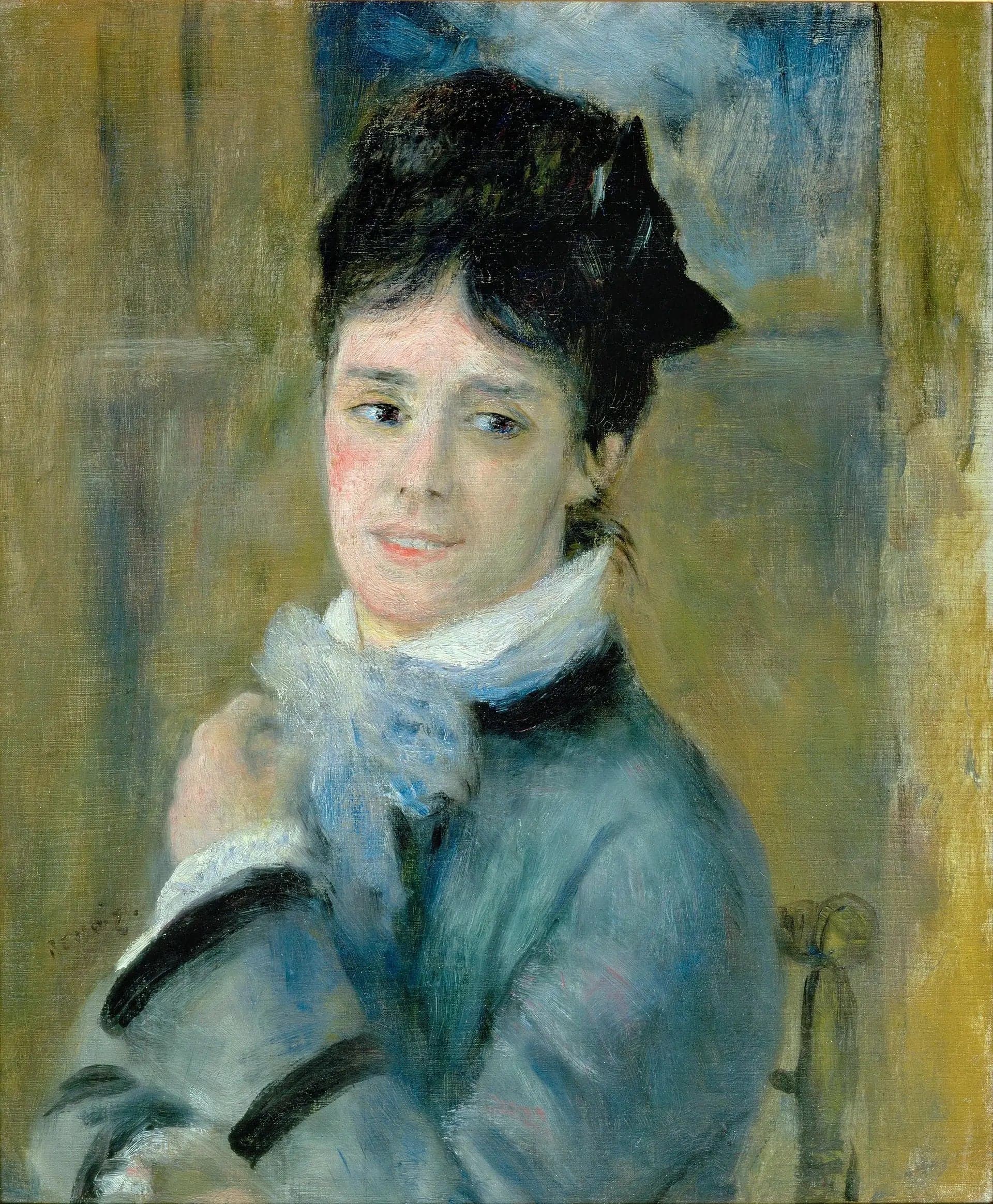
Portrait of Madame Claude Monet - Pierre
- Original dimensions
- 50 x 61 cm
- Museum
- Marmottan Monet Museum
- Year
- 1872
Scene depicted
In the painting “Portrait of Madame Claude Monet,” Renoir captures Madame Monet with extreme delicacy. Her face, emanating a serene softness, is brought to life by a gentle light and a warm palette. The composition highlights a palpable intimacy, accompanied by the sophistication worthy of the greatest portraits of the time. The scene is set in an intimate frame, a true conversation between the artist and his model, materialized on this canvas.
Historical context
Created in 1872 in Paris, a true epicenter of the Impressionist movement, this painting embodies a key moment in the history of art. The canvas, which captivates with its charm, is currently displayed at the Marmottan Monet Museum , offering visitors a fascinating insight into this virulent period of artistic innovation. Through the prism of this pictorial work , Renoir captures not only a face but also the essence of an era where light and color reign supreme.
Place in the artist's career
This painting is situated at the beginning of Renoir's career, marking his rise in the Impressionist milieu. It finds its place alongside other iconic works such as “Le Bal au Moulin de la Galette” and “La Grenouillère,” thus showcasing Renoir's stylistic evolution, both in the treatment of light and in the expression of human emotion.
Anecdote
Renoir once said: “Light is life,” a maxim that resonates in every brushstroke of this masterpiece . The inspiration for this painting sprouted one spring morning, when the sweet scent of cherry blossoms filled the air, and a golden light bathed Madame Monet's face, creating an almost magical atmosphere.
Major exhibitions
Monet Collector