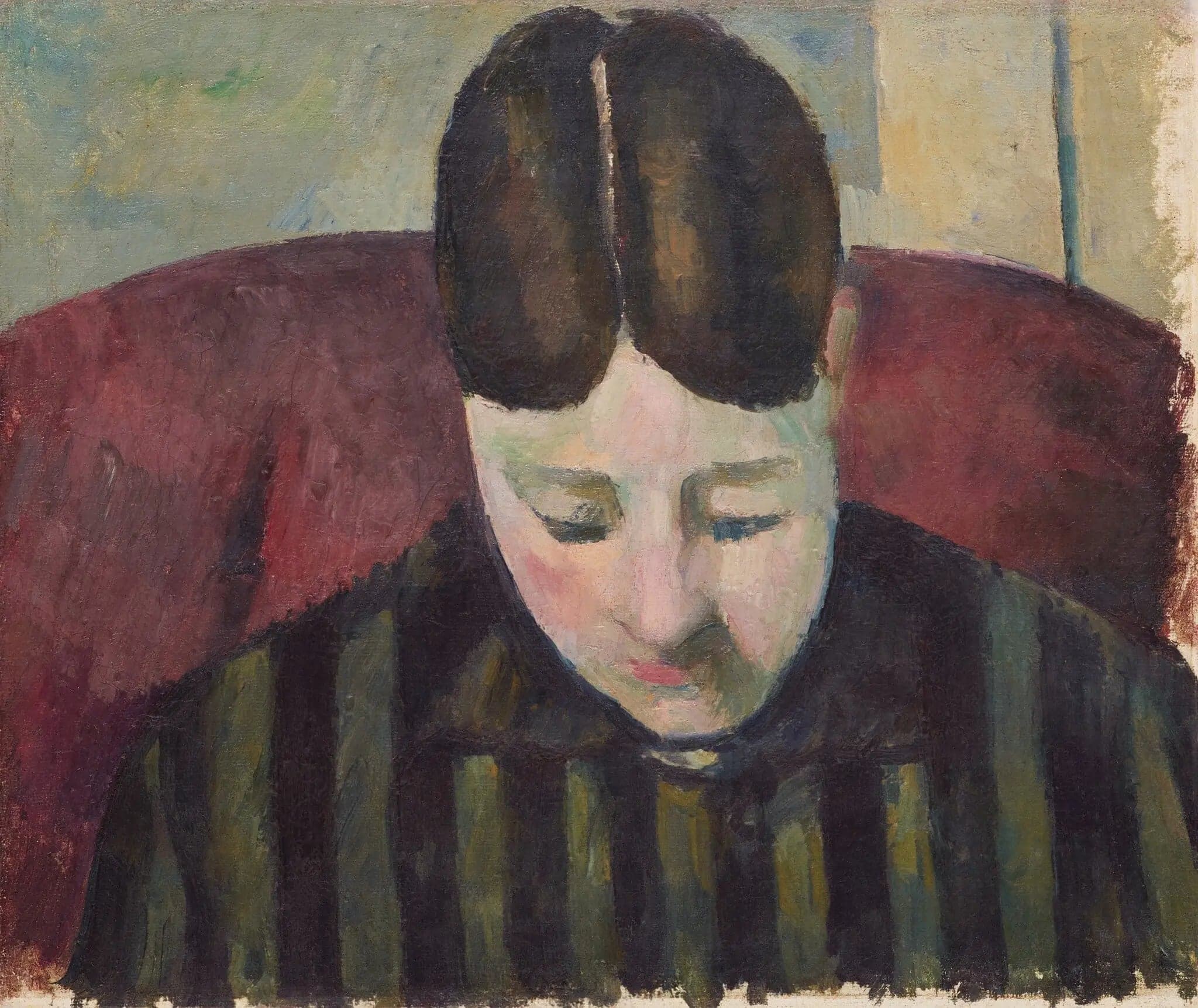
Portrait of Madame Cézanne
- Original dimensions
- 650 x 810 cm
- Museum
- Orangerie Museum
- Year
- 1890
Scene depicted
The painting “Portrait of Madame Cézanne” captures a moment of life, where the artist presents his companion in all her splendor. The penetrating gaze, delicate hands, every detail of this pictorial work evokes an intimate connection, a love story woven through vibrant brushstrokes. The composition highlights the dialogue between light and shadow, revealing the nuances of human emotion in an impressive visual symphony.
Historical context
Created in 1890, Portrait of Madame Cézanne is rooted in the city of Aix-en-Provence, the birthplace of the famous painter. This painting is emblematic of the post-impressionist movement, a time when color and form bubble with new energy. Currently exhibited at the Orangerie Museum , this masterpiece, measuring 650 by 810 cm, embodies a significant moment in art history, where Cézanne explores the depth of the human soul through the portrait of his muse and wife.
Place in the artist's career
This painting marks a turning point in Cézanne's career, reflecting his evolution towards a mature style. Let’s follow this journey by comparing it to other iconic paintings such as “The Card Players” and “The Montagne Sainte-Victoire,” where his approach to forms and colors finds an ever-stronger resonance, marking a before and after in the history of art.
Anecdote
“Beauty is a matter of light, and my wife is the radiance of my life,” Cézanne once said while reflecting on the inspiration behind this painting . Imagine him, sitting in his studio, the sweet scent of spring flowers floating in the air, as the golden morning light caresses a familiar face. This moment of grace gave birth to a painting that resonates with passion and tenderness.
Major exhibitions
Apollinaire, the poet's gaze