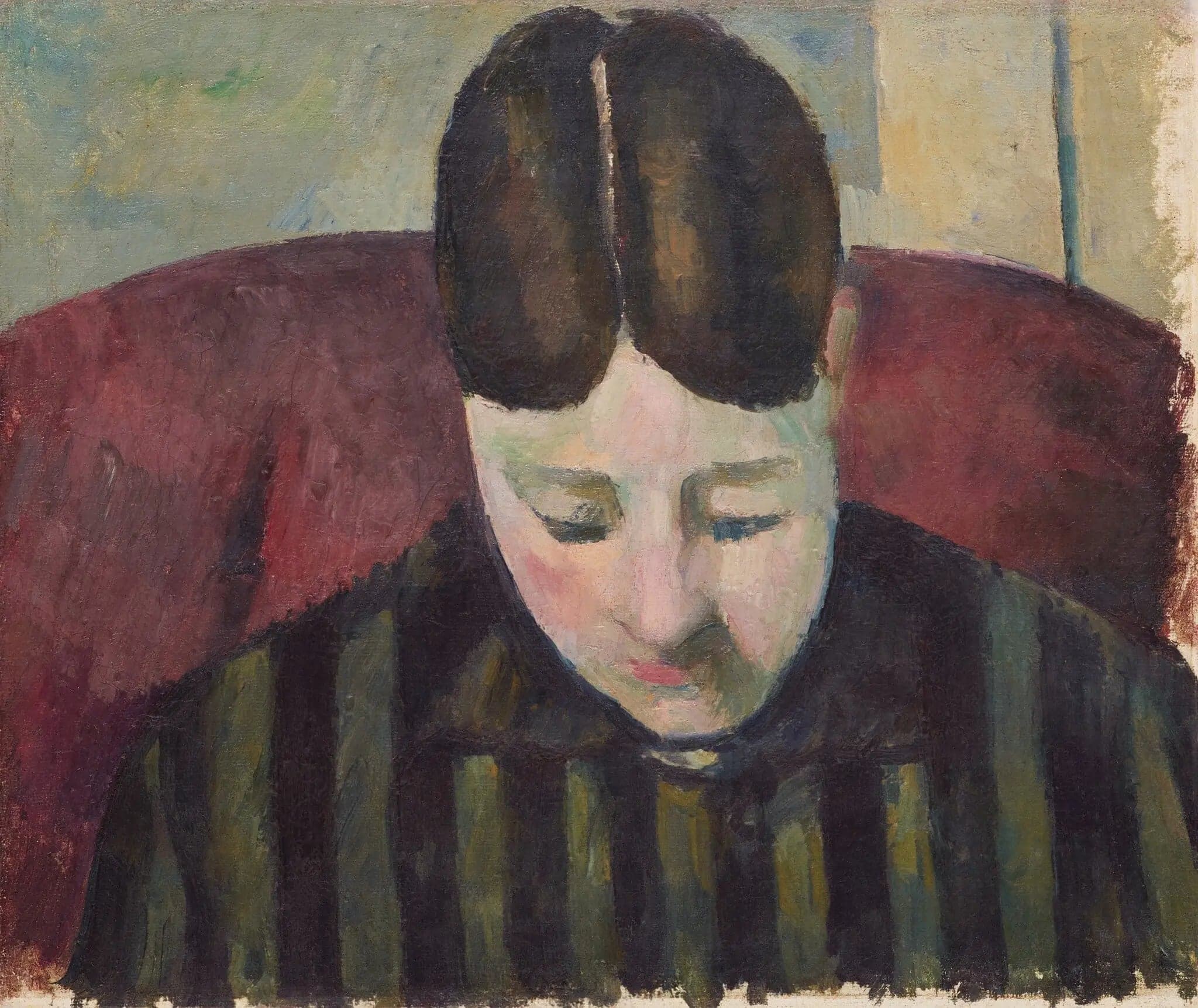
Portrait of Madame Cézanne
- Original dimensions
- 81.3 x 100.6 cm
- Museum
- Detroit Institute of Arts
- Year
- 1886
Scene depicted
In this painting , Cézanne captures the essence of his wife, Hortense, with unparalleled intimacy. The serene face of the muse is bathed in soft light, the fabric of the canvas blossoming around her. The elements of the background are subtly shaded, contributing to create a warm and welcoming atmosphere, placing the viewer at the heart of this fragile and powerful composition.
Historical context
Created in 1886, the painting by the famous artist Paul Cézanne is part of the post-impressionist movement that emerged in France. In the midst of the artistic effervescence of the late 19th century, this canvas unfolds in Aix-en-Provence, a city rich in history that witnessed the flourishing of Cézanne's creativity. Today, this iconic work is displayed at the Detroit Institute of Arts , where it continues to fascinate visitors with its impressive dimensions.
Place in the artist's career
This portrait marks a crucial milestone in Cézanne's career, illustrating his transition to a new artistic maturity. In parallel with works such as “The Card Players” and “The Montagne Sainte-Victoire,” it highlights a deeper evocation of light and forms, revealing the artist's relentless quest for truth in painting .
Anecdote
“Nature is my muse, every brushstroke is a tribute to its beauty,” said Cézanne. Imagine an April morning, the first light of day filtering through the trees, as he locked eyes with his wife, Hortense, a moment that breathed life into this masterpiece . This inspiration resonates in every hue of the painting , revealing the depth of the feelings that united the couple.