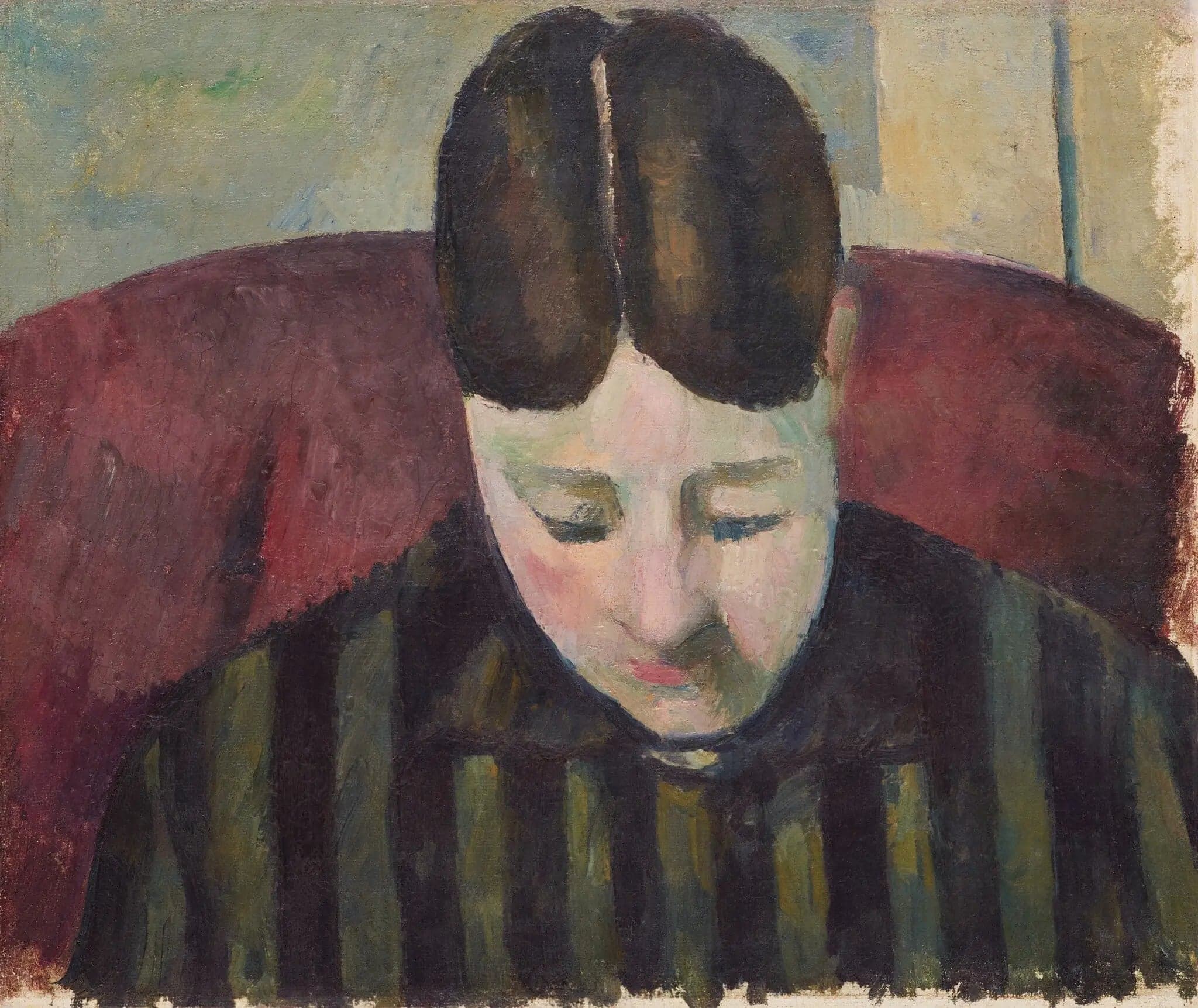
Portrait of Madame Cézanne
- Original dimensions
- 38 x 46 cm
- Museum
- musée Granet
- Year
- 1885
Scene depicted
This pictorial work explores the depths of intimacy between Cézanne and his wife, transcribing through brushstrokes an atmosphere of tenderness. The painting reveals a face imbued with melancholy, where every detail, from the draping of the clothes to the light that caresses the skin, tells a story of love and complicity.
Historical context
Created in 1885, this painting emblematic is a testimony of the Impressionist movement, anchored in Aix-en-Provence, the artistic cradle of the famous painter. The painting, now carefully preserved at the musée Granet, transports us into a world where shadow and light dance on the canvas, revealing the nuances of the human soul. Its dimensions, 38 x 46 cm, make it an intimate piece, revealing the complicity between the artist and his model.
Place in the artist's career
The painting “Portrait de Madame Cézanne” represents a pivotal moment in the career of Paul Cézanne . This masterpiece is part of a period of maturity, alongside other creations, such as "The Card Players" and "Mont Sainte-Victoire", thus revealing a remarkable technical evolution, where forms simplify and colors intensify.
Anecdote
“Art is not a pastime, but a necessity.” These words resonate with the inspiring strength of Cézanne's painting . Imagine him, one spring morning, sitting in his studio, capturing the bright gaze of his wife, Hortense. The moment is frozen in time, a silent conversation between two beings at the heart of a deeply personal creative process.