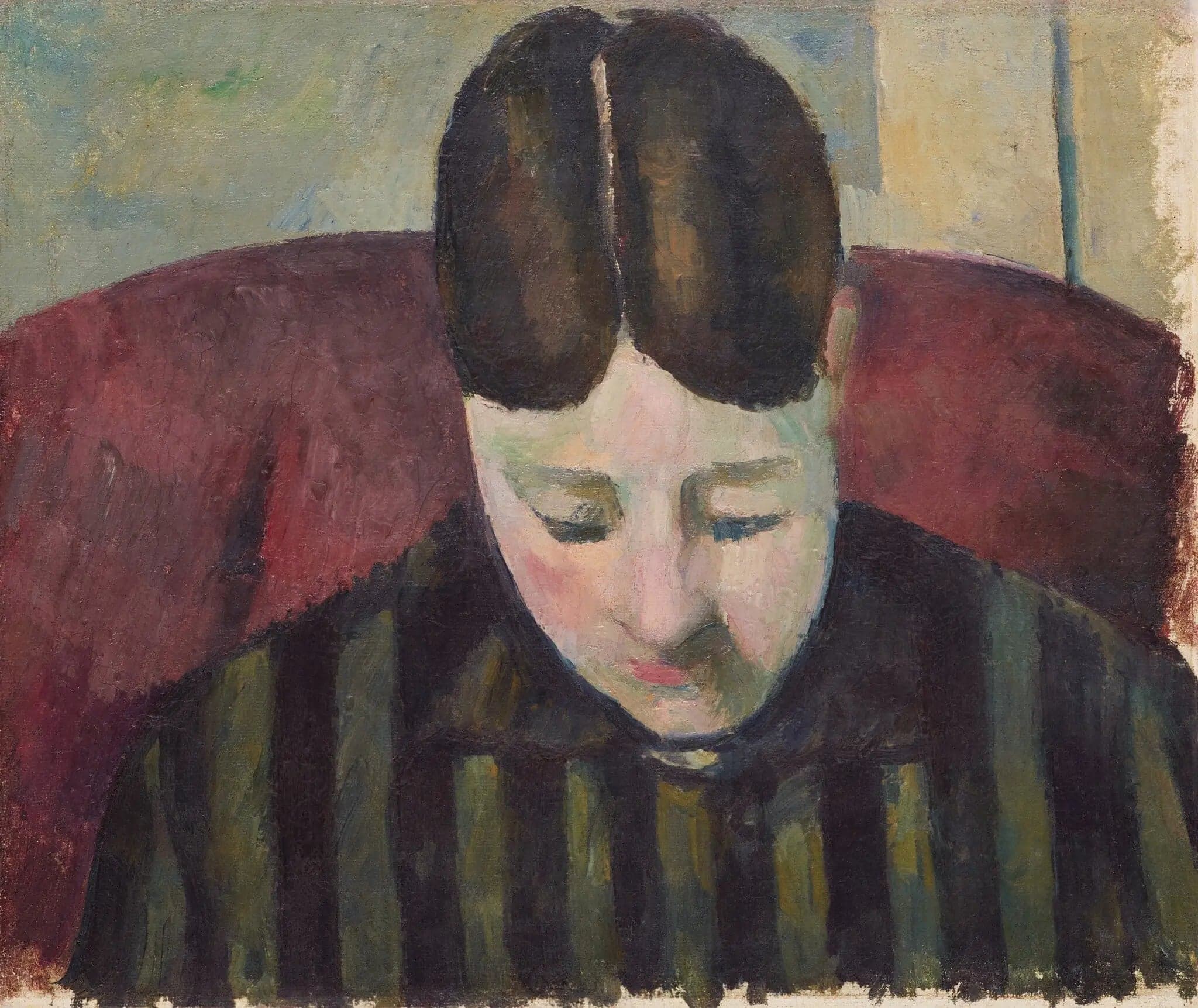
Portrait of Madame Cézanne
- Original dimensions
- 26.5 x 32.3 cm
- Museum
- Not specified
- Year
- 1877
Scene depicted
The canvas depicts Hortense Fiquet, the artist's wife, captured in a moment of grace. The vibrant colors and play of light highlight the almost tangible presence of the female figure, anchored in a space that is both intimate and distant. The work evokes a sweetness and emotional depth, marking the beginnings of Cézanne's exploration through portraiture.
Historical context
Created in 1877, this painting is emblematic of the post-impressionist movement. It is in the region of Aix-en-Provence, in the heart of Provence, that Paul Cézanne gave birth to this work. The canvas , which is not preserved in a specifically designated museum, testifies to a time when art was undergoing a profound revolution and where light and color took on a new dimension.
Place in the artist's career
This Portrait of Madame Cézanne stands as a milestone in Cézanne's career, showing his transition to bolder compositions. It dialogues with other significant works such as "The Card Players" and "Mont Sainte-Victoire," reflecting the stylistic evolution of the artist, combining technique and emotion.
Anecdote
“I aspire to capture the essence of what I see,” said Cézanne, thus evoking the deep bond that unites the artist to his model. This masterpiece was inspired by the intimacy shared between the painter and his wife, Hortense Fiquet. The soft morning light filtering through the windows of their studio provided an ideal atmosphere for the birth of this composition .