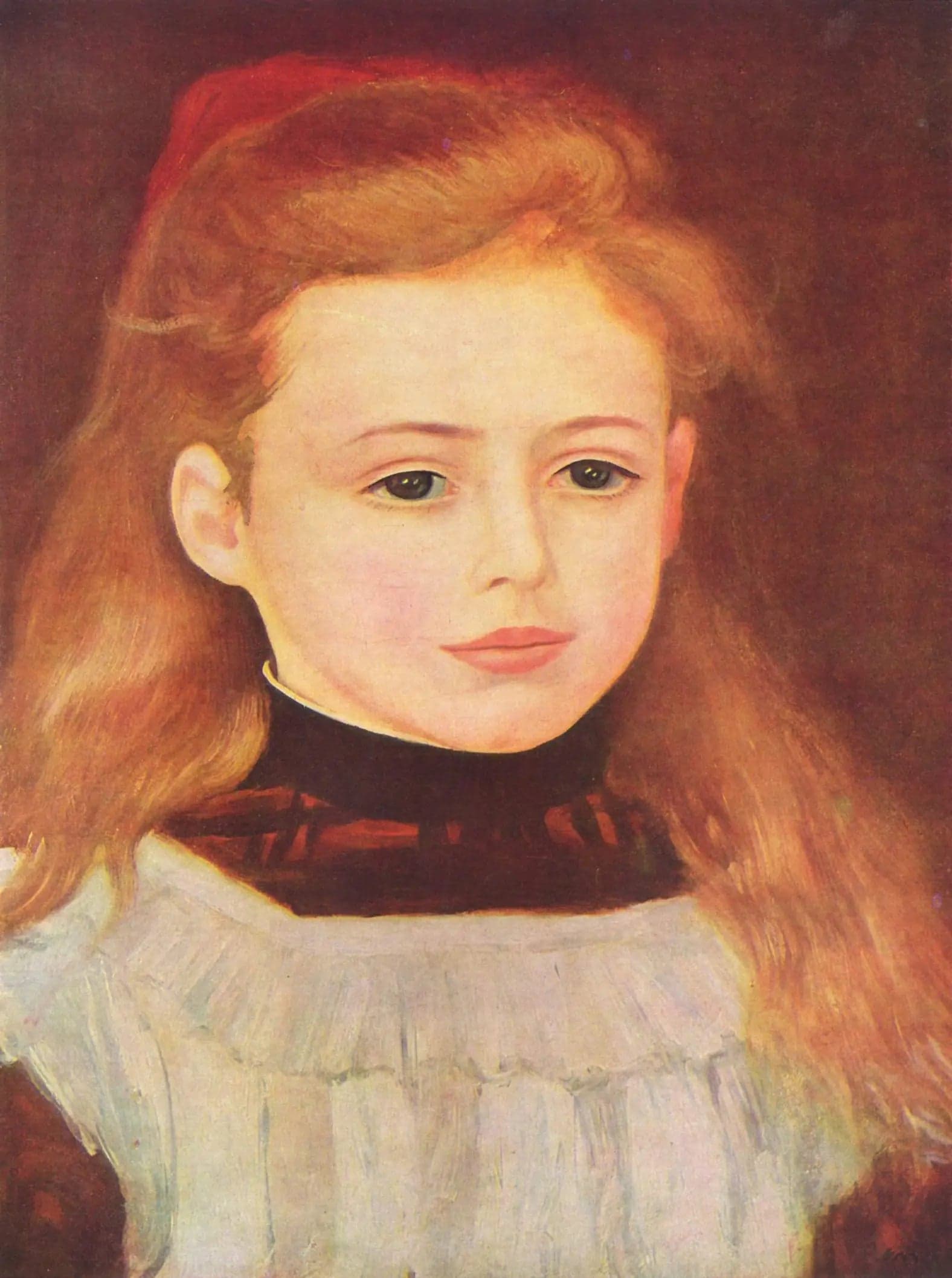
Portrait of Lucie Bérard - Pierre
- Original dimensions
- 27 x 35 cm
- Museum
- Not specified
- Year
- 1884
Scene depicted
This pictorial work captures the delicate beauty of Lucie Bérard, a close friend of the painter, in deep contemplation. The various pastel tones, the diffuse light, and the meticulously worked details tell a story of intimacy, tenderness, and vibrant light, propelling the viewer into a suspended moment.
Historical context
Created in 1884, in the intoxicating setting of Paris, this painting takes place within the impressionist movement that revolutionized art of the time. The light flooding the streets of the city resonates with Renoir's quest to capture the fleeting beauty of his contemporaries. The canvas remains today untraceable in a public museum, its artistic narrative being carried by the hands of private collectors and exhibitions that celebrate the figure of Renoir.
Place in the artist's career
The canvas "Portrait de Lucie Bérard" represents a pivotal period in Renoir's artistic evolution. Following his iconic works, such as "Le Bal du Moulin de la Galette" and "Dans un jardin", this canvas demonstrates his transition from classical rigor to a freer exploration of emotions and textures, revealing the maturity of his impressionist style.
Anecdote
Renoir once declared: "Every face tells a story, and I merely transcribe them onto my canvas." Imagine him then, on the morning of a sunny day, confronted with the grace of Lucie Bérard, his bursting inspiration immortalized in this masterpiece . The very essence of this moment imbued in the painting transcends time.
Major exhibitions
The Impressionists in private