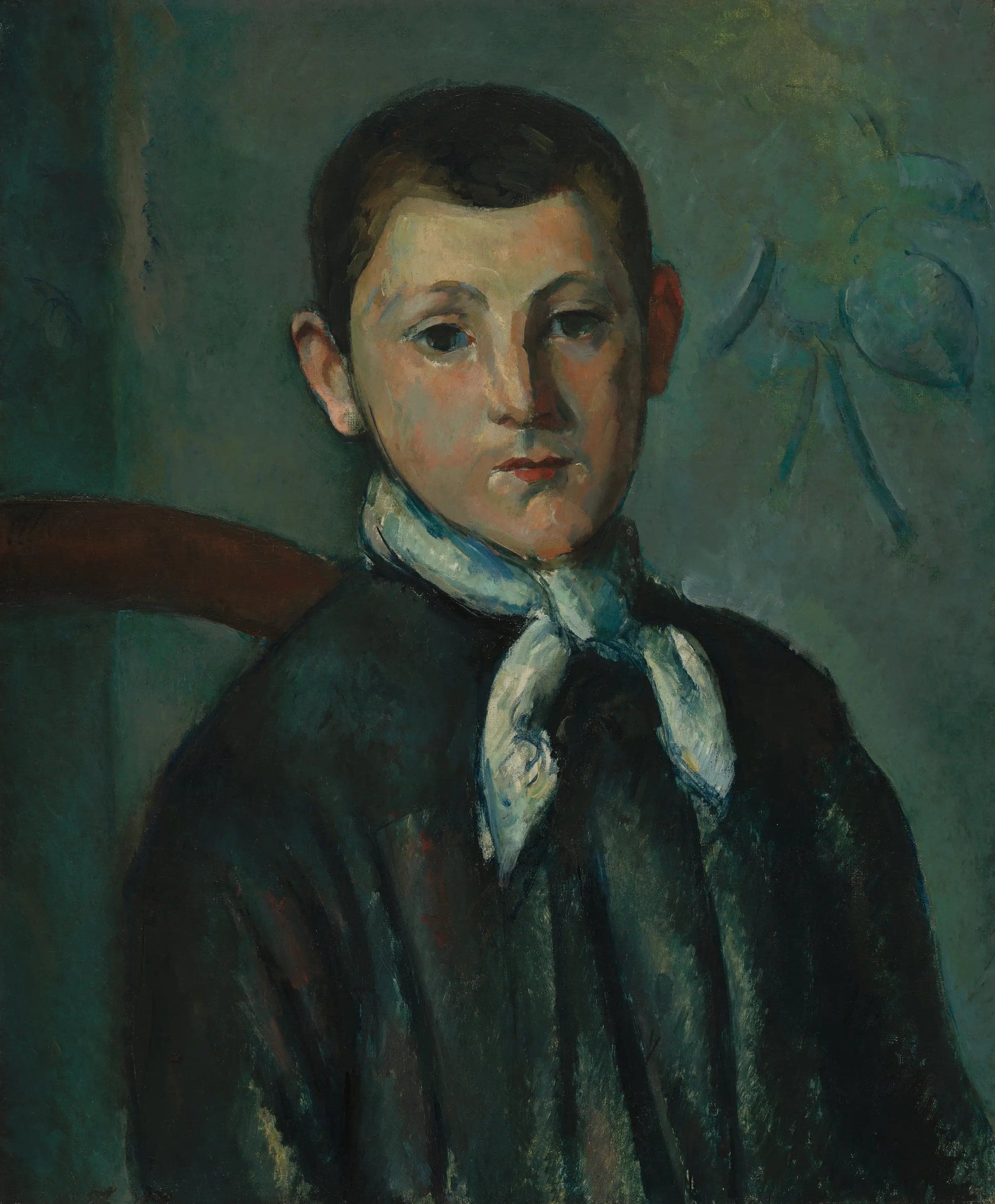
Portrait of Louis Guillaume
- Original dimensions
- 46.7 x 55.9 cm
- Museum
- National Gallery of Art
- Year
- 1882
Scene depicted
The Portrait of Louis Guillaume reveals a man with a deep gaze, capturing a moment of sincere reflection. The composition, although classical, already reflects the emerging modernity in the way Cézanne plays with contours and shadows, making each stroke not only representative but also charged with emotion. One can almost feel the warmth of the spring air mingling with the scent of fresh paint on the canvas.
Historical context
This canvas , created in 1882 in Aix-en-Provence, is part of the Impressionist movement, a movement that revolutionizes the representation of light and color. Through this painting, Cézanne, a true pioneer of modern art, captures the essence of a fleeting moment. Now exhibited at the National Gallery of Art , this masterpiece measures 46.7 x 55.9 cm and testifies to the vibrant era in which the artist was able to immortalize features and emotions while evolving his own pictorial language.
Place in the artist's career
This painting constitutes an essential milestone in Cézanne's career, marking a transition to a more mature style. It lies between "The Artist's House" and "The Card Players," two other paintings emblematic of his artistic evolution, from introspective character to the pictorial dynamism characteristic of his later works.
Anecdote
"To paint is to live. One must savor every moment," Cézanne is said to have remarked while contemplating the face of Louis Guillaume one spring morning. This painting is the result of a significant encounter, a sensation connecting the artist to his model, enveloping the viewer in an intimate and delicate atmosphere, bathed in light.