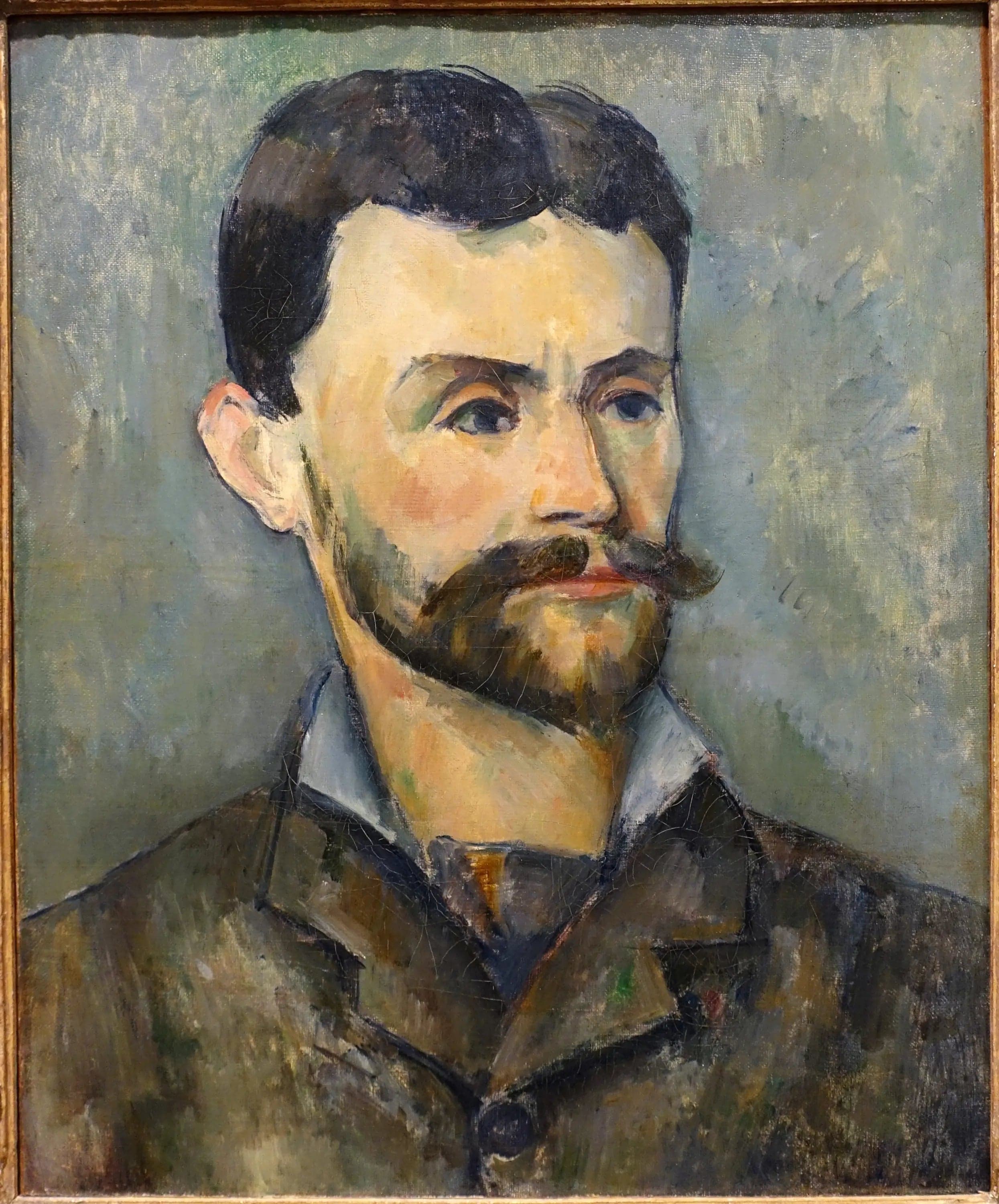
Portrait of Jules Peyron
- Original dimensions
- 38.1 x 46.4 cm
- Museum
- Fogg Art Museum
- Year
- 1885
Scene depicted
This painting features Jules Peyron, a close friend of Cézanne, dressed simply yet with palpable dignity. The artist subtly captures the essence of his subject, highlighting his features marked by life and intellect. The penetrating gaze of the model seems inviting, while being full of inner reflections, enhancing the emotional impact of the pictorial work.
Historical context
Created in 1885, in Aix-en-Provence, this painting is emblematic of the post-impressionist movement, a transitional period where Cézanne redefined the codes of oil painting. The painting is today carefully preserved in the collections of the Fogg Art Museum , a relic of a time rich in creativity. This moment in French artistic history is marked by experimentation and introspection, essential to understanding the work.
Place in the artist's career
The Portrait of Jules Peyron represents a turning point in Cézanne's career, illustrating his artistic maturity. Alongside works such as “La Montagne Sainte-Victoire” and “Les Joueurs de cartes,” this painting testifies to an impressive technical evolution, building a bridge between realism and impressionism .
Anecdote
“Every face has a story to tell; it was enough for me to capture the soul of Jules Peyron.” These words, which one might imagine coming from Cézanne's mouth, evoke the deep connection he had with his models. Inspired by a fresh and bright morning in his native Provence, this moment of creation is palpable in the vigor of the painting .