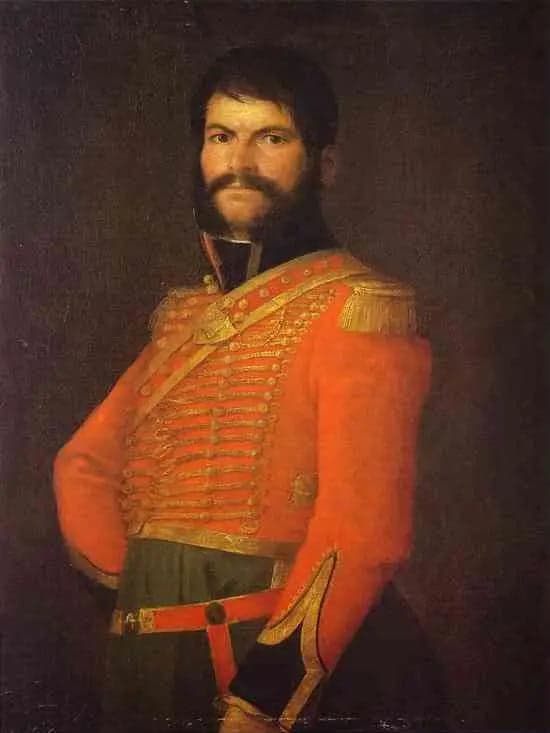
Portrait of Juan Martin Diez, the Empecinado
- Original dimensions
- 65 x 84 cm
- Museum
- national museum of Western Art
- Year
- 1809
Scene depicted
This masterpiece features Juan Martin Diez, nicknamed l'Empecinado, a hero of the Spanish war of independence. Through his strong and engaging gaze, the portrait reflects the complexity of the moral and physical conflicts he faced. The staging also reveals a certain solemnity, offering a striking snapshot of his commitment and passivity, a central point of the virile and patriotic identity of early 19th century Spain, forever capturing the emotion of a time in upheaval.
Historical context
In 1809, while Spain was plunged into the indescribable troubles of the war of independence, Francisco de Goya offered the world his iconic painting "Portrait of Juan Martin Diez, l'Empecinado." This portrait, born in the dynamics of a troubled era, belongs to the romantic movement that seeks to capture the very essence of humanity. The painting is now displayed at the national museum of Western Art , carefully preserved in Tokyo, where the gaze of visitors meets the dramatic luminance of the work.
Place in the artist's career
This painting marks a turning point in Goya's career, propelling him into a new era of psychological depth and realism . Alongside his other works like "La Maja Desnuda" and "The Disasters of War," the intensity of "Portrait of Juan Martin Diez, l'Empecinado" illustrates the artist's transition to darker and more personal themes, while maintaining the technical robustness that would make him famous.
Anecdote
Goya, on a bright spring morning, reportedly declared: "Light reveals the soul as much as darkness conceals it." In this painting , a soft glow illuminates the determined face of Juan Martin Diez, reminding us of the resilience of the warrior spirits of his time. Each brushstroke seems to emphasize the hidden nobility of this man, captured in deep reflection on the fate of his country.