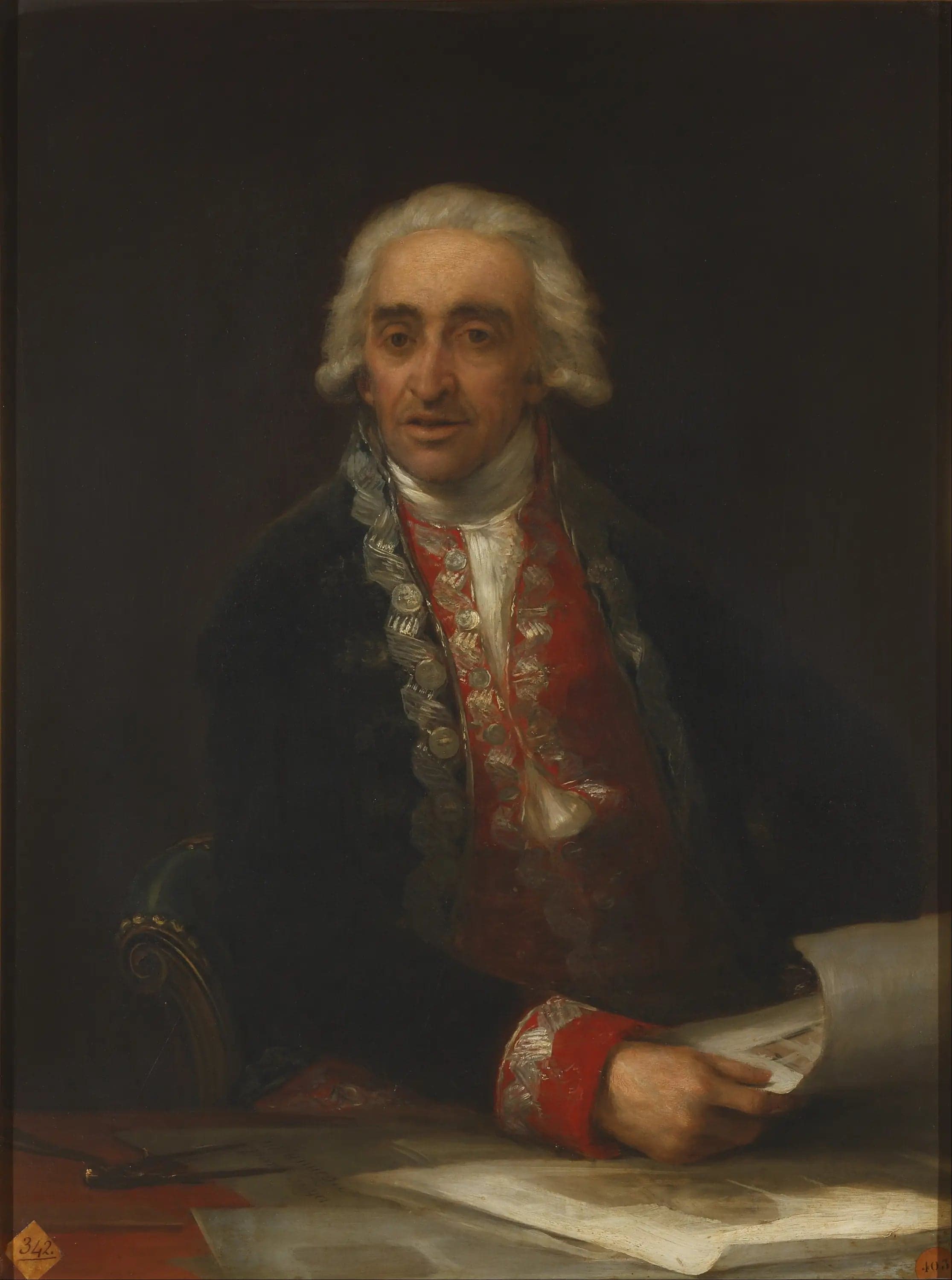
Portrait of Juan de Villanueva
- Original dimensions
- 67 x 90 cm
- Museum
- Royal Academy of Fine Arts of Saint Ferdinand
- Year
- 1805
Scene depicted
This canvas depicts Juan de Villanueva, a visionary architect whose work has left an indelible mark on the city of Madrid. Goya portrays him in a majestic posture, surrounded by symbolic elements evoking his commitment to culture and architecture. Through this captured moment, the artist immortalizes a moment of glory and dignity.
Historical context
Created in 1805, this painting emblematic of Francisco de Goya is part of the burgeoning Romanticism movement in Spain. Madrid, the cradle of art and culture, sees this canvas capture the essence of its time, due to the growing interest in portraiture and individual identification. Today, this masterpiece is preserved at the Royal Academy of Fine Arts of Saint Ferdinand, a sanctuary for artists and art enthusiasts.
Place in the artist's career
This masterpiece is considered a centerpiece in the career of Francisco de Goya , marking a shift towards more intimate and striking portraits. Alongside other canvases like “La Maja Desnuda” and “The Family of Charles IV,” one observes an evolution towards a deeper exploration of human emotions and social interactions.
Anecdote
Goya was an artist who captured the human soul in his works. He is said to have remarked: “The light of a soul can illuminate the canvas, just as it illuminates the heart” while painting this canvas . The morning glow over Madrid undoubtedly inspired his vibrant palette, giving the painting an unparalleled depth of emotions, reflecting the personality of Juan de Villanueva.