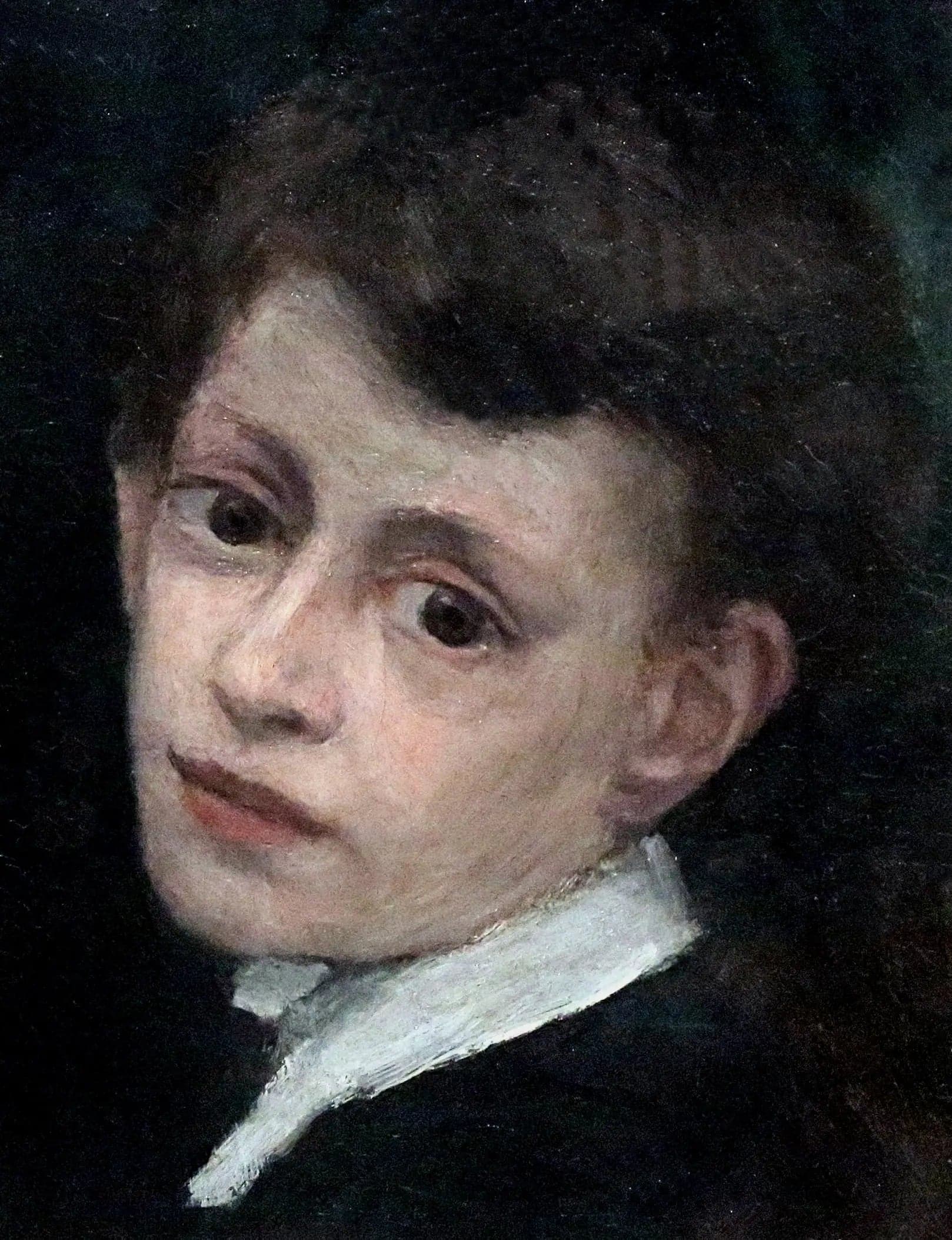
Portrait of Joseph Le Cœur - Pierre
- Original dimensions
- 21.5 x 27 cm
- Museum
- Unterlinden Museum
- Year
- 1870
Scene depicted
The painting “Portrait of Joseph Le Cœur” immerses us in the intimacy of a man whose identity seems to resonate with the surrounding world. Renoir succeeds in immortalizing not only Joseph's face but also his essence, passions, and personal history. It is a call to emotion, a fusion of identities between the viewer and the subject.
Historical context
Created in 1870, in the light of the fragrant alleys of the city of Dijon, this painting belongs to the Impressionist movement, a revolutionary artistic approach that captures the heterogeneity of light and the fleeting movement of reality. Currently exhibited at the Unterlinden Museum , this majestic canvas evokes a time when art was freeing itself from conventions to better express the sensitivity of the individual. Its dimensions, 21.5 x 27 cm, bring it closer to an intimate dialogue between the work and the observer.
Place in the artist's career
This painting marks a pivotal moment in Renoir's career, reflecting a promising beginning in expressing his personal impressions. Alongside other iconic paintings such as “Luncheon of the Boating Party” and “Dance in the City,” “Portrait of Joseph Le Cœur” reveals the evolution of his style, his explorations of light, and his play of nuances.
Anecdote
Renoir once confided: “Every face I encounter transforms into a canvas, every smile becomes a palette of colors.” This feeling particularly emerged on a gentle spring morning, as he crossed the expressive gaze of Joseph Le Cœur, inspiring this vibrant composition . This pictorial work not only captures a frozen moment but the living soul of its subject.