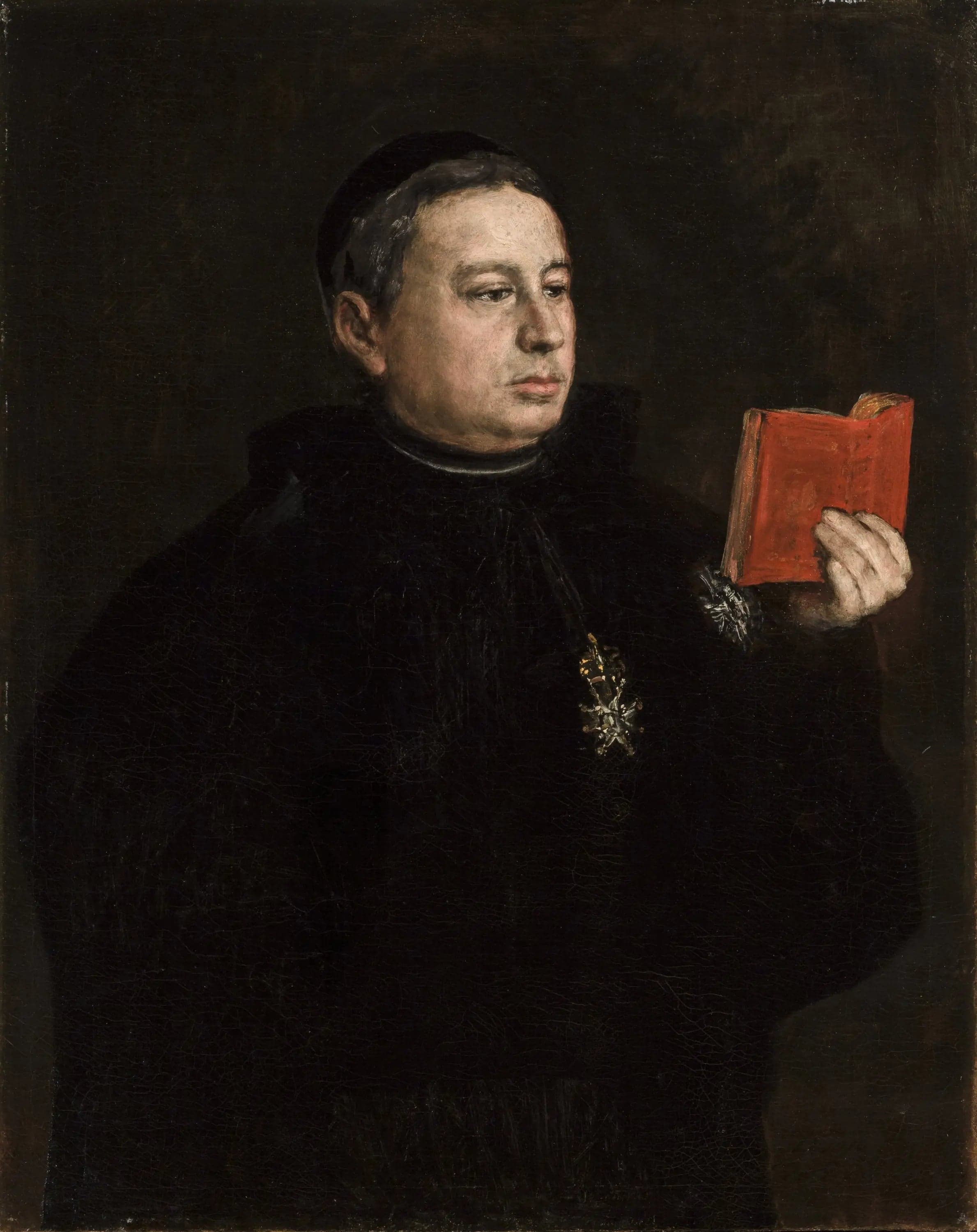
Portrait of José Duaso y Latre
- Original dimensions
- 59 x 74 cm
- Museum
- Museum of Fine Arts of Seville
- Year
- 1824
Scene depicted
In this finely crafted painting , Goya transcends the simple portrait to offer a reflection on dignity and humanity. José Duaso y Latre, in elegant attire, seems to embody a world where tradition clashes with innovation, where the viewer's gaze is immediately captivated by his intensity. This blend of psychological depth and poignant realism unfolds through the delicacy with which Goya juggles between shadows and lights.
Historical context
This painting emblematic, created in 1824, is set in the rich and complex context of post-Napoleonic Spain, where the romantic movement begins to develop. Struck by social and political upheavals, Seville, the birthplace of this canvas , becomes a witness to an artistic renaissance . Currently, this painting rests in the Museum of Fine Arts of Seville, a sanctuary for art that celebrates the genius of Goya.
Place in the artist's career
The painting Portrait of José Duaso y Latre represents a milestone in Goya's career, a time when the master begins to explore darker and more emotional themes. Compared to other paintings such as La Maja Desnuda and The Executions of May 3, one can observe a stylistic transition towards increasingly striking psychological depth and visual power.
Anecdote
“Every face has a story to tell, a light to reveal.” This quote, likely inspired by the artist himself, immerses us in the moment, perhaps a sunny afternoon in his studio, where the spark of inspiration struck him. Armed with his brush, each stroke in the painting became an intimate dialogue with the soul of José Duaso, capturing a living essence that the composition illuminated brilliantly.